[Editorial] High-Tech Industries Are in a Race Against Time—Roads, Water and Power Must Not Hold Them Back
- Input
- 2026-09-21 19:29:36
- Updated
- 2026-09-21 19:29:36
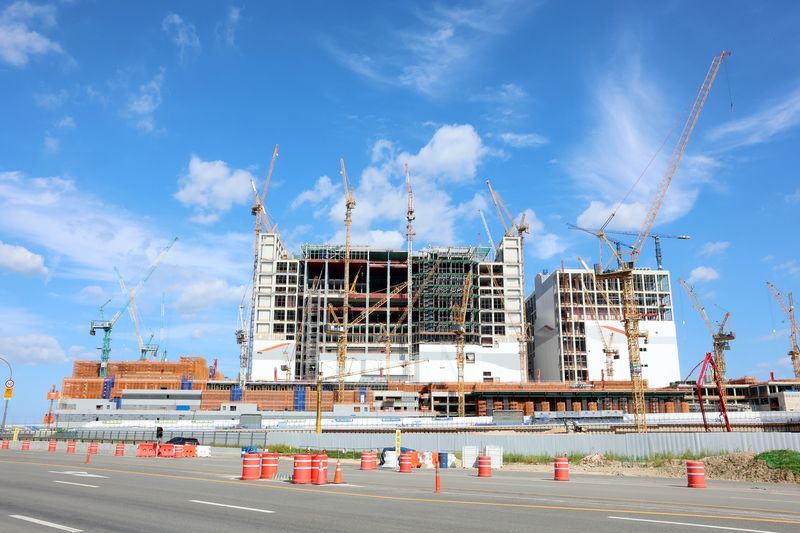
Despite loudly proclaiming that advanced technologies will determine the nation's future, the support provided in practice remains inadequate. Those circumstances are reflected in the 41 requests for regulatory reforms and expanded support that the Federation of Korean Industries compiled from companies in semiconductors, biotechnology, batteries, and robotics and submitted to the government. The Yongin Semiconductor Cluster is set to begin operations in the cleanroom of its first fab (Y1) next February, but the improvement project for Nationally Supported Local Road No. 57, its main access road, is not expected to be completed before operations begin. Even if the factory is finished, it cannot operate if the roads are blocked.
The timely supply of industrial water is also essential to operating a plant. FKI is calling for the period required to obtain permits and begin construction of industrial water facilities to be reduced to no more than 18 months. The same applies to electricity. Business groups are asking the government to establish a zero-carbon power certification system that includes nuclear power and allow companies to purchase directly from large hydropower facilities with installed capacity exceeding 20 MW.
In many cases, an administration focused on regulation fails to keep up with the needs of industrial sites. The battery industry's complaint that tax credits are useless for companies running initial deficits is a case in point, as is its demand to extend the carryforward period for display-industry tax credits from 10 years to 20 years. They are calling for a tax-support system that recognizes the nature of industries whose large-scale investments unfold over extended periods.
Countries around the world are now waging all-out campaigns to attract high-tech investment from both domestic and foreign companies. When a large factory is built, suppliers, jobs, and the local economy follow, making investment attraction a competition over future growth engines. In that respect, the relationship between companies and the government has been turned upside down. Even if a foreign company wants to build a plant in Korea, it will move to a location offering better conditions if roads, electricity, and industrial water are not provided on time. The government laying the infrastructure companies need in advance is the most basic responsibility of all.
If a road is not in place for a company ready to invest, responsibility lies not with the company but with the government and the National Assembly. Of the 41 measures presented by FKI that day, 20 can be pursued without enacting or amending laws. If these measures can be handled swiftly through administrative procedures, there is no reason for them to lose momentum. Even revisions to enforcement decrees and government notices require advance notice, interagency consultations, and review procedures. If the measures are to be ready by next February, starting now would already be a tight schedule.
The remaining 21 measures must be handled by the National Assembly. Measures requiring legislation should be placed on the agenda for priority passage during the current regular session. Greater corporate investment and the resulting growth will lead to more jobs and higher tax revenues. The National Assembly should pass the bills with the determination to revive people's livelihoods.