[Editorial] "The Global Economy Is Facing Multiple Crises": Time to Heed the IMF Chief's Warning
- Input
- 2026-09-21 19:29:34
- Updated
- 2026-09-21 19:29:34
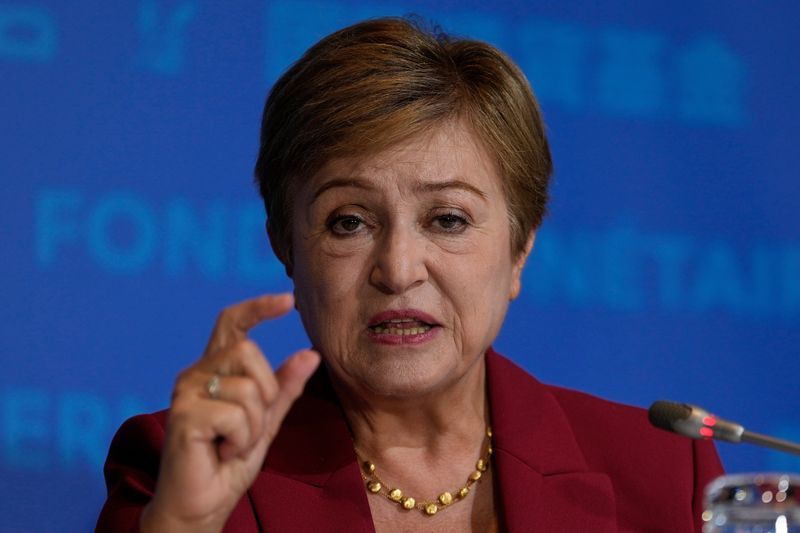
Georgieva emphasized the potential risks of cyclical investment related to AI, saying, "Because the expectations we currently have for AI are so high, if it fails or does not materialize as fully as we expect, there is also a strong possibility that the disappointment alone could trigger a shock to the entire system."
Georgieva's remarks are not unrelated to our economy. Under the fiscal expansionary policies pursued last year, South Korea's national debt stood at 1,304.5 trillion won, or 49% of gross domestic product (GDP). Although it remains just below the 50% mark, this is not a situation in which we can afford to feel secure. As national debt continues to rise, the interest that must be repaid each year is also snowballing. This year's interest costs on national debt are expected to reach 36.5 trillion won.
The sharp increase in national debt is not unique to South Korea. It is being led by the "Big Two" economies, the United States and China, while major countries such as France and Japan are experiencing the same trend. According to the IMF, global public debt is expected to exceed 100% of total GDP by 2029. South Korea's growth rate is expected to be strong this year, so the debt-to-GDP ratio will remain at 50% or below in the figures. However, if the semiconductor cycle turns downward, the ratio could easily rise above 50%.
The surge in debt among major countries is a threat to the global economy. If debt grows beyond a level that can be managed, even a nation can go bankrupt. If even one country declares a moratorium on payments, economies around the world could be affected in a chain reaction. This is by no means someone else's problem.
Cases involving local governments, such as Gyeonggi Province and Pohang City, also warrant close attention. Populist policies are one cause, but the welfare budgets that continue to grow even without new initiatives have recently caused the fiscal conditions of some local governments to deteriorate sharply. They must refrain from populist policies and spend their budgets only where necessary to curb the increase in debt as much as possible.
Georgieva's comments on AI are also worth taking to heart. The fact that the South Korean economy, as well as the global economy as a whole, has maintained its growth even amid the difficult phase of the war in the Middle East is largely thanks to AI development. For now, AI's future from an industrial perspective remains optimistic. However, as Georgieva warned, if development encounters obstacles and stagnates, the economy could enter a cooling period overnight.
The move by the big tech companies leading AI development to slow their pace in response to the technology's rapid advancement is also not something we can take lightly. Slowing the pace means reducing investment, which in turn means a decline in semiconductor demand. Given South Korea's high dependence on semiconductors, it must remain more vigilant than any other country and regularly review its state of preparedness.
The Middle East crisis, which seems about to end but continues to drag on, is heading into an increasingly uncertain situation with the Houthi rebels joining the conflict. On the surface, our economy appears to be cruising, but the external environment is precarious, like walking on thin ice. There is ample potential for another oil shock. This is no time to let down our guard.