Prices Cut by 100 Won per Liter at 226 Expressway Gas Stations During Chuseok... Regular Gas Stations Warn of "Distorted Price Competition"
- Input
- 2026-09-21 16:45:33
- Updated
- 2026-09-21 16:45:33
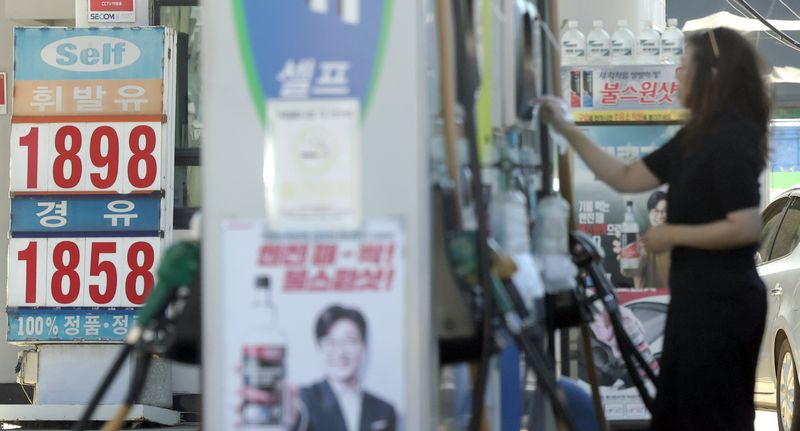
[Financial News] The government will cut gasoline and diesel prices by 100 won per liter at 226 gas stations on publicly financed expressways managed by the Korea Expressway Corporation during the four-day Chuseok holiday. Although the temporary measure is intended to ease the burden on travelers returning to their hometowns amid high oil prices, regular gas stations and the petroleum distribution industry are protesting, saying that additional discounts limited to certain gas stations could distort price competition.
According to the government and industry sources on the 21st, the prices of gasoline and diesel sold at 226 gas stations on publicly financed expressways managed by the Korea Expressway Corporation will be reduced by 100 won per liter from Sept. 24 to 27, compared with prices on Sept. 17. The government announced the plan at a joint meeting of the Emergency Economic Headquarters and economy-related ministers on the 18th, describing it as "a measure for the public sector to share the burden of high oil prices."
However, the Korea Oil Station Association argued that applying additional price cuts only to expressway gas stations could widen the price gap with regular gas stations and make normal price competition difficult. It said that lower prices at expressway gas stations during the Chuseok holiday, when long-distance travel is concentrated, could lead to customer losses and lower sales at gas stations on national roads and in urban areas.
The Korea Petroleum Distribution Association also issued a statement that day, calling for a review of the policy. The association said that approximately 9,000 regular gas stations nationwide are simultaneously facing rising international oil prices, the price-cap system, and costs such as rent, labor, and credit card fees. However, it has not yet been estimated how much the price cuts at expressway gas stations will actually lead to customer losses or reduced sales at regular gas stations. The related impact has not been quantified because the Chuseok holiday has not yet begun.
Domestic gas station prices have so far remained largely stable despite rising international oil prices, partly due to the government's price-cap system. According to Opinet, the average gasoline selling price at gas stations nationwide in the third week of September was 1,858.6 won per liter, while diesel stood at 1,843.9 won, down 0.5 won and 0.1 won, respectively, from the previous week. The government's 10th petroleum price cap, which took effect on the 19th, also remained at the previous levels: 1,784 won per liter for gasoline, 1,773 won for diesel, and 1,380 won for kerosene.
The issue going forward is likely to be which entity will bear the 100-won-per-liter reduction at expressway gas stations and how the amount will be settled. Although the government has specified the eligible gas stations, period, and size of the price cut, it has not presented the amount of funding required or the method for sharing and settling the costs.
Separately from the expressway gas station price cuts, the government has extended its fuel tax cuts by two months through the end of November. The reduction rates will remain at 15% for gasoline and 25% for diesel and LPG butane. This means that drivers who do not use expressway gas stations will also continue to receive the existing fuel tax benefits.
The Korea Oil Station Association stated, "If the government pursues a price-cut policy, it should prepare practical support measures and compensation for losses so that all gas stations nationwide can participate, rather than concentrating the benefits on specific gas stations."
[email protected] Kim Mi-hee Reporter