After Six Years of Conflict and Litigation, Jeju Eastern Sewage Treatment Plant Completed Nine Years After Groundbreaking
- Input
- 2026-09-21 16:05:39
- Updated
- 2026-09-21 16:05:39
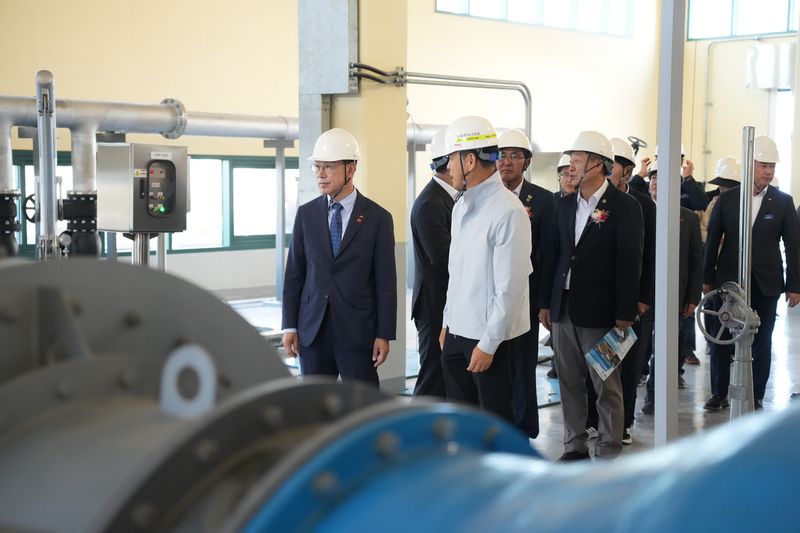
【Financial News Jeju = Jung Yong-bok】 The expansion of the Jeju Eastern Sewage Treatment Plant, which had been stalled for years due to resident opposition and legal battles, has been completed nine years after groundbreaking. The increase in daily treatment capacity from 12,000 m3 to 24,000 m3 is expected to ease the strain on sewage treatment in eastern Jeju, which had been nearing full capacity.
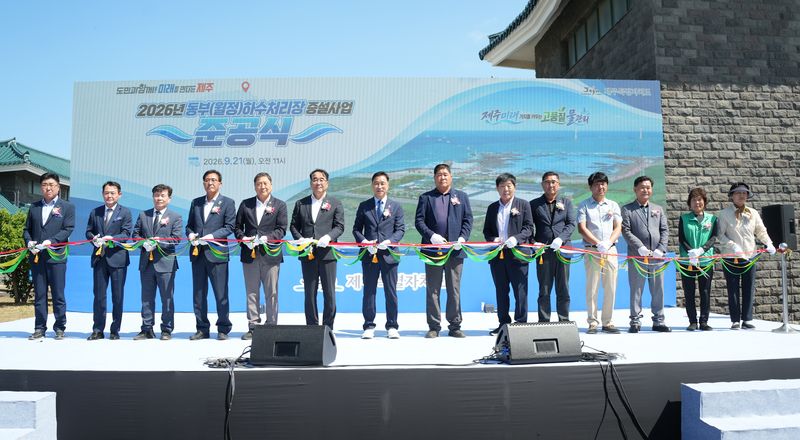
Jeju Special Self-Governing Province held a completion ceremony for the expansion project at the Jeju Eastern Sewage Treatment Plant in Woljeong-ri, Gujwa-eup, Jeju City, on the 21st and put the facility into full operation.
The project received a total of 49.983 billion won in funding, including 23.37 billion won from the central government and 26.613 billion won from the provincial government. A 15.1-kilometer network of collector pipelines that transports sewage from households and businesses to the treatment plant was also upgraded.
The Jeju Eastern Sewage Treatment Plant handles domestic sewage from eastern Jeju, including Jocheon-eup and Gujwa-eup. The need for expansion had been raised steadily as the volume of sewage increased with the growth in tourists and the resident population.
The expansion project began in 2015, and construction started in 2017. However, work was suspended for an extended period beginning in December of that year due to resident opposition and other factors.
The dispute involved more than the treatment facilities themselves. Haenyeo divers from Woljeong-ri and some residents raised concerns about the impact of discharged water on the marine environment, possible damage to cultural heritage sites such as the nearby Yongcheondonggul Cave, and the procedures used to pursue the project.
After conflicts over the resumption of construction continued, Jeju Special Self-Governing Province and the Woljeong-ri Village Association agreed in June 2023 to proceed with the project.
At the time, Jeju Special Self-Governing Province promised 24-hour monitoring of treated effluent, an extension of the marine outfall pipe, surveys of the Woljeong-ri coastal ecosystem, a ban on transferring sewage from the Samyang and Hwabuk areas, and no further expansion of the facility.
The legal battle, however, did not end. In January 2024, Jeju District Court ruled in favor of the residents in a lawsuit seeking confirmation that a notice changing the public sewage system installation plan was invalid, citing procedural defects in the small-scale environmental impact assessment.
In October of the same year, the Jeju Panel of the Gwangju High Court overturned the lower court's ruling, determining that Jeju Special Self-Governing Province's notice was lawful and dismissing the residents' claim.
Construction resumed, but it was halted again in December of that year after the Supreme Court of Korea accepted the residents' application for a suspension of execution.
In February 2025, the Supreme Court of Korea dismissed the residents' appeal in the main lawsuit. With the appellate ruling finalized, construction was able to resume.
Jeju Special Self-Governing Province began test operations in April this year and completed construction on the 8th. That was about nine years after the initial groundbreaking.
The expansion has created additional treatment capacity. Jeju Special Self-Governing Province said that all parameters fell below legal standards in three treated-effluent quality tests conducted during the test-operation period.
Biochemical oxygen demand (BOD) was 1.5 mg per liter, well below the legal limit of 10 mg per liter. Total phosphorus was 0.2 mg per liter, or about one-tenth of the limit of 2 mg per liter.
The completion ceremony does not mark the end of the issue. Because the impact of treated effluent and marine conditions was one of the central sources of the long-running conflict with residents, water quality and changes in the discharge area must be monitored continuously to ensure they remain stable after full operation begins.
A key part of follow-up management will also be determining how the commitments made in 2023 by Jeju Special Self-Governing Province and the Woljeong-ri Village Association—including effluent monitoring, coastal ecosystem surveys, and restrictions on further expansion—are implemented.
Expansion of Jeju's overall sewage treatment infrastructure is also underway. The Jeju Sewage Treatment Plant modernization project, which handles about 60% of the province's sewage, will increase daily treatment capacity by 90,000 m3, from 130,000 m3 to 220,000 m3.
Phase 1 water-treatment facilities were completed and put into operation in December last year, while the overall process is currently 70% complete. Construction is underway on Phase 2 pretreatment facilities and pretreatment facilities for sludge and septage.
Jeju Governor Wi Seong-gon said, "The foundation is now in place to reliably treat sewage generated in the eastern region." He added, "We will systematically upgrade and expand sewage treatment facilities and pipelines."
[email protected] Jung Yong-bok Reporter