After Lee Chan-jin, Governor of the Financial Supervisory Service, Flags Shortcomings, Financial Holding Companies Revisit 'Bank Chief Succession Procedures'; Complaints That "Restrictions on Personnel Authority Are Excessive"
- Input
- 2026-09-21 17:15:43
- Updated
- 2026-09-21 17:15:43
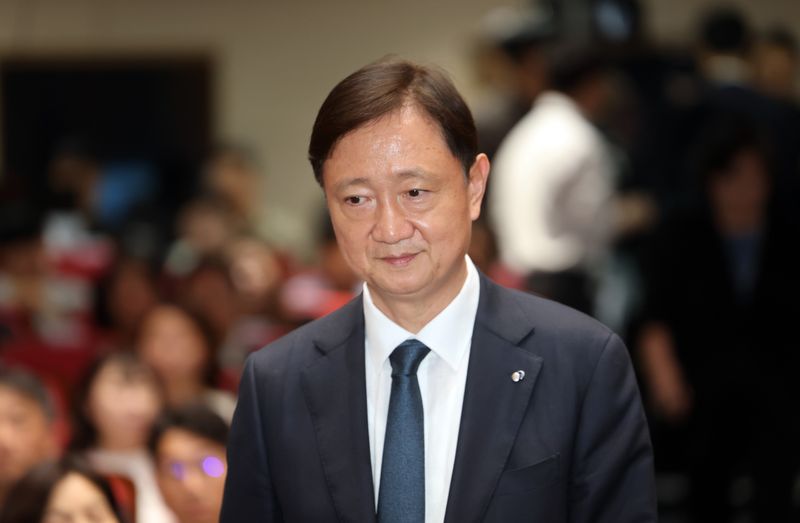
[Financial News] The financial authorities have called for improvements to the succession procedures for chief executive officers (CEOs) of subsidiaries of financial holding companies. In response, major financial groups are reviewing ways to strengthen the authority of bank nomination committees. However, industry observers say that simply granting bank nomination committees the right to recommend candidates will not substantially change the holding company-centered personnel structure. Financial holding companies have also voiced opposition, saying, "The personnel authority of subsidiaries should not be excessively restricted."
Financial Holding Companies Revisit Subsidiary CEO Appointment Procedures
According to financial industry sources on the 21st, KB Financial Group and Shinhan Financial Group are considering measures that would allow their bank nomination committees to directly recommend candidates for bank chief ahead of year-end appointments. The move follows a call by Lee Chan-jin on the 15th to strengthen the role of subsidiary nomination committees, stating, "The succession procedures for CEOs of subsidiaries of financial holding companies are inadequate."
Unlike BNK Financial Group (BNK), which moved swiftly to overhaul its system, KB Financial Group and Shinhan Financial Group plan to take specific measures after the breakfast meeting scheduled for the 23rd between the governor and the heads of major financial holding companies.
On the 16th, immediately after the governor's remarks, BNK approved a measure titled 'Review of the Adequacy and Revision of CEO Management Succession Plans.' The measure covers the succession procedures of the financial holding company and nine subsidiaries. Its key provisions grant the bank nomination committee the ongoing authority to recommend candidates for the candidate pool and allow the chair of the bank nomination committee to attend the final interviews conducted by the holding company's subsidiary CEO candidate recommendation committee and offer an opinion.
KB Financial Group and Shinhan Financial Group would also need to amend their internal corporate governance regulations to strengthen the authority of their bank nomination committees. This would require the boards of both the banks and their holding companies to separately discuss the relevant rules.
The question is whether granting recommendation rights alone can materially strengthen the authority of subsidiary boards. A financial industry official said, "What matters more than whether the bank nomination committee has the authority to recommend candidates is whether that authority has actually been operating in the direction intended by the authorities." The official added, "Simply codifying recommendation rights may not significantly change the existing personnel structure."
Many Challenges Remain, Including 'The Role of Holding Companies'
Some observers also point out that giving bank nomination committees the right to recommend candidates will not bring about major substantive change if the candidate-pool management structure remains unchanged. At major financial holding companies, the process of identifying new candidates for subsidiary CEO positions, receiving outside recommendations, and evaluating candidates' careers and capabilities over an extended period is led by the holding company rather than the subsidiaries. To change the system so that bank nomination committees can directly recommend specific candidates, banks would also need to establish their own systems for managing candidate pools.
The process for selecting the final candidate is another key issue. Even if a bank nomination committee recommends a candidate, the holding company would still retain substantive personnel authority if it continues to play a central role in narrowing the candidate pool and making the final recommendation.
Financial industry observers say that, to limit the influence of holding companies as the governor intends, the entire system must be overhauled. This includes determining whether candidates recommended by bank nomination committees are actually included in the candidate pool, what procedures apply if a holding company excludes them, and how much candidate-pool information should be shared with subsidiary nomination committees.
Resistance from financial holding companies is another obstacle. Financial holding companies maintain that they have already established systems allowing bank nomination committees to express their views to a certain extent during the selection of bank chiefs. At KB Financial Group, the holding company manages the candidate pool and selects a single candidate, after which the KB Kookmin Bank nomination committee verifies the candidate's qualifications. At Shinhan Financial Group, the bank nomination committee can present the qualifications required of a bank chief to the holding company.
A financial industry official said, "Because financial holding companies oversee the business strategies and capital allocation of multiple subsidiaries, they need to exercise some influence over appointments of CEOs at key subsidiaries." The official added, "Unlike the industrial sector, where companies exercise full personnel authority over their subsidiaries, regulating only the financial sector is not equitable."
[email protected] Seo Ji-yoon Reporter