'Office of National Security Personnel Intervention' Allegations: Yoon Jae-soon and Lim Jong-deuk's Indictments Dismissed at First Trial—"Outside the Special Prosecutor's Authority"
- Input
- 2026-09-21 15:34:04
- Updated
- 2026-09-21 15:34:04
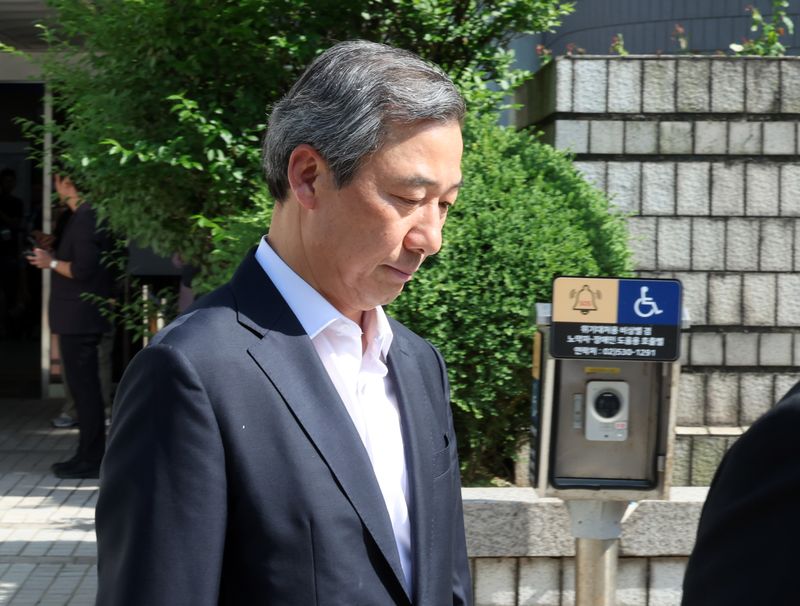
[Financial News] Yoon Jae-soon, former chief administrative secretary at the Presidential Office, and Lim Jong-deuk, a People Power Party lawmaker and former second deputy director of the Office of National Security (ONS), were indicted by a special prosecutor team for allegedly improperly intervening in personnel appointments at the ONS during the Yoon Suk Yeol administration. The court dismissed the indictments at first instance, ruling that the case was not among the investigative subjects specified under the Special Prosecutor Act and that the special prosecutor therefore lacked the authority to bring the charges.
The 23rd Criminal Division of Seoul Central District Court, presided over by Judge Oh Se-yong, held the sentencing hearing for Yoon and Lim on charges including abuse of authority and obstruction of the exercise of rights on the 21st. The court said, "All indictments against the defendants are dismissed."
Dismissal of an indictment is a ruling that ends criminal proceedings without determining the defendant's guilt or innocence on the merits, based on the absence of required conditions for the lawsuit or procedural defects.
The special prosecutor team had indicted the two without detention last December, saying it had discovered indications of personnel intervention while investigating allegations related to external affairs, including the North Korean drone incident. Yoon and Lim were accused of improperly influencing personnel officials at the Republic of Korea Army Headquarters and the Ministry of National Defense to have a specific field-grade officer assigned to the ONS.
At the final hearing in July, the special prosecutor team sought a five-year prison term for Yoon and three years for Lim. The defendants, however, have denied all charges and argued that the indictments should be dismissed because the case was unlawfully brought outside the special prosecutor's statutory investigative scope.
On the disputed scope of the special prosecutor's investigative and prosecutorial authority, the court sided with the defense. The court explained, "It is difficult to regard the alleged facts as a crime that shares the 'drone case' and its evidence, or as a crime committed simultaneously for a single purpose or in a means-and-result relationship."
The court particularly pointed out, "There is otherwise no material to regard this as a 'related case discovered in the course of investigating the drone case' as stipulated in Article 2, Paragraph 1, Item 11 of the Special Prosecutor Act. Therefore, it cannot be considered an investigative subject."
The court explained, "The alleged facts concerning the defendants are not included among the special prosecutor's investigative subjects, meaning that these indictments were brought without authority. As the indictment procedure is invalid because it violated statutory provisions, the indictments are dismissed."
The dismissal is interpreted as a ruling that emphasizes the principle of due process. The court said, "If a dismissal ruling becomes final for these reasons, new investigative procedures may be repeated and judicial proceedings could be delayed. However, the principle of due process cannot be abandoned for that reason, and it is difficult to regard the dismissal ruling as contrary to the interests protected by procedural law."
[email protected] Lee Chang-hoon Reporter