AI Power Grid Needs KRW 73 Trillion... KEPCO's Funding Limits Put a Greater Burden on the Private Sector [fn Market Watch]
- Input
- 2026-09-21 17:10:43
- Updated
- 2026-09-21 17:10:43
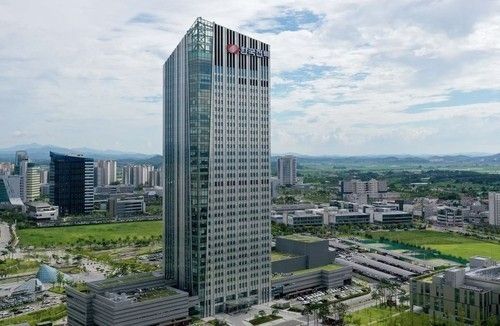
According to NICE Credit Rating on the 21st, the investment required for South Korea's power grid through 2038 is approximately KRW 73 trillion under the 11th Long-Term Transmission and Substation Facilities Plan. Since the plan was established last year, actual investment could exceed that amount when this year's additional AI and semiconductor investment plans are taken into account.
Electricity demand is also growing faster than expected. At a public forum on the 12th Basic Plan for Electricity Supply and Demand held last month, the baseline forecast for electricity consumption in 2040 was raised by 205.5 TWh from the previous estimate. Advanced industries, including semiconductors, are expected to account for an additional 141 TWh, while data centers are expected to add 58 TWh.
Shin Ho-yong, a senior researcher at NICE Credit Rating, said, "It is difficult for KEPCO alone to handle the rapidly growing electricity demand in the AI era. KEPCO's debt burden is already extremely high, and it is using a substantial portion of the EBITDA it generates to pay interest and fund investments that have already been planned." He further assessed that KEPCO would need to tap external funding to increase investment.
Securing funds by raising electricity rates will also be difficult, as the competitiveness of power-intensive industries such as semiconductors and AI data centers must be taken into account. If the regional industrial electricity pricing system being promoted by the government is implemented, the industry's electricity bill burden is estimated to decline by approximately KRW 2.8 trillion. This could instead add to KEPCO's burden.
Ultimately, government policy is moving toward sharing KEPCO's burden with the private sector. The Special Act on the Expansion of the National Core Power Grid, revised last month, allows private entities to build power grids directly and then transfer them to KEPCO. Measures are also being pursued to reduce KEPCO's power-purchasing costs through LMP.
Shin explained, "The role and burden of private energy companies are expected to expand as the government seeks to foster advanced industries while controlling KEPCO's financial burden. The introduction of LMP, reform of the Renewable Portfolio Standard (RPS), and revisions to the Special Act on the Expansion of the National Core Power Grid reflect a policy intention to share with the private sector the roles and investment burdens previously shouldered by KEPCO."
However, analysts say that KEPCO's highly leveraged structure will be difficult to resolve in the short term even if private-sector participation increases. Even if private entities build the power grid, KEPCO will continue to face long-term costs if it pays acquisition prices or usage fees after completion. NICE Credit Rating projects that KEPCO will need considerable time to reduce its debt through its own cash flow.
[email protected] Kim Hyun-jung Reporter