Lee Jae Myung Administration Unveils 'Housing Stability Plan,' to Supply 1.19 Million Homes by 2030
- Input
- 2026-09-21 16:00:00
- Updated
- 2026-09-21 16:00:00
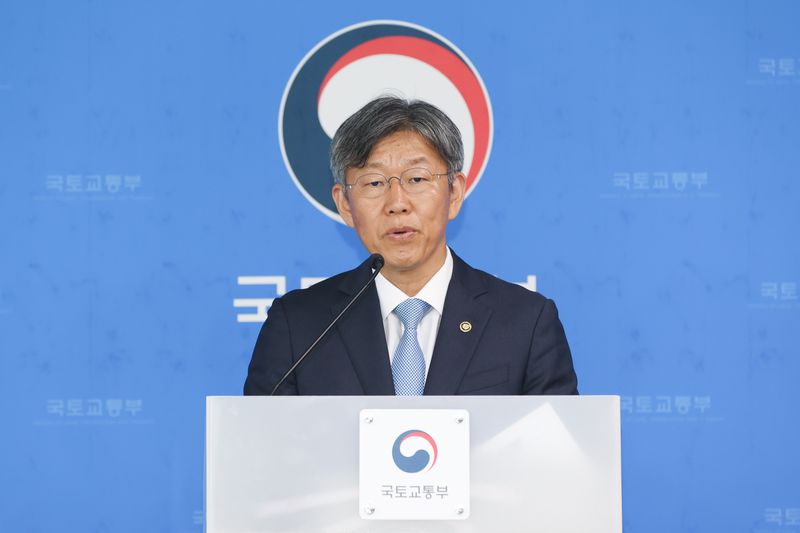

On the 21st, Kim Yi-tak, First Vice Minister of MOLIT, held a briefing at Government Complex Sejong and unveiled the 'Housing Stability Plan for Realizing Comprehensive and Closely Connected Housing Welfare.' While the Aug. 13 and Sept. 7 supply measures focused on expanding construction starts for new homes, this plan places greater emphasis on strengthening housing welfare through expanded public rentals and support tailored to each stage of life.
The plan calls for an annual average of 238,000 households, or a total of 1,188,000 households, to be supplied from 2026 through 2030. Of these, 917,000 households, or 77%, will be allocated to the Seoul metropolitan area, where housing demand is high. Kim explained, "By 2030, we will enter an era of 2.5 million long-term public rental housing units, and long-term public rentals will account for more than 10% of all housing."
■ 917,000 Households in the Seoul Metropolitan Area; 80% of Supply to Be Rental Housing
Supply by housing type includes 350,000 construction-based rental units, 313,000 purchase-based rental units, 230,000 jeonse rental units, 52,000 publicly supported private rental units, and 243,000 public-sale units. Public rental housing, combining construction-based, purchase-based, and jeonse rentals, accounts for 893,000 units. Including publicly supported private rentals, rental-oriented supply totals 945,000 units, or 79.5% of the total.
The scope of this plan differs from MOLIT's previously announced target of starting construction on 1.49 million new homes in the Seoul metropolitan area. That target included private-sector supply from redevelopment and reconstruction projects in the metropolitan area, while the Housing Stability Plan covers public housing nationwide. MOLIT estimates that 650,000 to 700,000 units are included in both plans.
The previous Yoon Suk Yeol administration proposed supplying a total of 1 million homes over its five-year term, including 500,000 public-sale homes under the 'New Home' program and 500,000 public rental units. Under the latest plan, total supply increases by approximately 190,000 units, but public-sale housing falls to 243,000 units while the share of rental housing rises.
Han Seong-su, Director General for Housing Welfare Policy at MOLIT, explained, "People may criticize the plan for being focused on rental housing even though they want homes for sale, but 210,000 of the 243,000 public-sale homes will be concentrated in the Seoul metropolitan area. That is more than double the annual average of 21,000 public-sale homes supplied over the previous five years."
A total of 149,474 units are scheduled for actual move-in from the fourth quarter of this year through the end of 2027. Public rental housing accounts for the largest share at 125,157 units, followed by 9,666 public-sale units, 9,163 publicly supported private rental units, and 5,488 people in Happy Dormitories. Move-in volumes scheduled for 2028 and beyond will be announced through comprehensive housing plans established each year.
■ New 'Universal Public Rental Housing' Open to Middle-Class Residents
The government will also introduce 'universal public rental housing,' which improves the locations and quality of public rentals. It plans to supply approximately 190,000 units, including 175,000 construction-based units and 18,000 purchase-based units, mainly in preferred locations such as areas near subway stations and city centers.
Universal public rental housing will be designed to accommodate a range of housing applicants without homes, including the middle class, by applying higher income and asset thresholds than the existing public rental programs focused mainly on vulnerable groups. Specific eligibility requirements, including income and asset standards, as well as the rental fee system, will be announced separately after gathering public feedback.
The government will expand the supply of newly built public rental housing in areas with living infrastructure, such as those near subway stations. For 31-square-meter units, balcony-expanded floor plans will be applied to increase the actual usable area by approximately 5 square meters. The use of floor structures designed to reduce inter-floor noise and built-in appliances will also be expanded.
The government will rebuild 13,000 permanent public rental units that have been completed for more than 30 years by 2030. For complexes where full reconstruction is difficult, it will pursue remodeling or facility improvements.
The monthly income threshold for youth housing rent assistance will be eased from 1.54 million won or less to 2.74 million won or less. The eligible age range will also be expanded to 18–34 by adding 18-year-olds to the program. The number of new beneficiaries is expected to increase from 93,000 this year to 240,000 next year.
Applications for public rental housing will be reorganized around an integrated waiting-list system. Recruitment announcements and eligibility verification, which Korea Land and Housing Corporation (LH) and local public corporations have each operated separately, will be linked through a single system. Applicants will also undergo eligibility verification only once instead of repeating the process with every application.
MOLIT expects the time from application to tenant selection to fall from 150 days to 40 days, while the time required to move in will be reduced from a maximum of 12 months to approximately four months.
[email protected] Choi Ga-young Reporter