[Exclusive] More than 10 billion won spent monitoring Fukushima contaminated water... 'Zero abnormal readings' in three years
- Input
- 2026-09-21 14:02:08
- Updated
- 2026-09-21 14:02:08
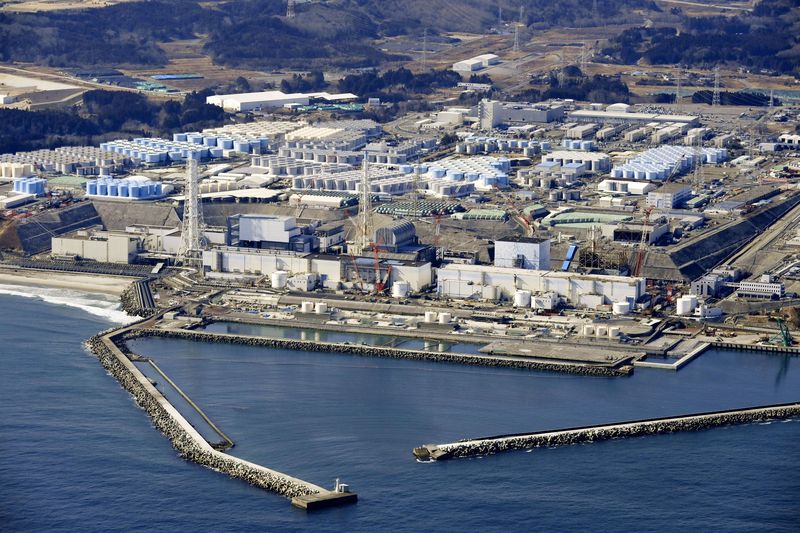
[Financial News] The government has continued monitoring since Japan began discharging contaminated water from the Fukushima nuclear plant, allocating more than 10 billion won in related budgets. However, no abnormal readings have been identified, according to findings. With related spending set to continue, experts say it is necessary to review whether the government's response was appropriate based on scientific verification.
10.7 billion won spent over three years... 'Zero abnormal readings or exceedances'
According to data submitted by the Nuclear Safety and Security Commission (NSSC) to Rep. Park Jung-ha of the People Power Party, a member of the National Assembly’s Science, ICT, Broadcasting, and Communications Committee, the NSSC and the Korea Institute of Nuclear Safety (KINS) independently identified zero abnormal readings or cases exceeding the standards during monitoring after the discharge of contaminated water from Fukushima began in August 2023.The government has regularly dispatched KINS experts to Japan to directly inspect conditions at the site since the discharge began. From August 2023 through September this year, a total of 155 personnel made 95 trips to Japan. The visits were intended to check the safety of the discharge facilities and related data at the Fukushima Daiichi Nuclear Power Plant and an on-site office.
The budget allocated to the contaminated-water response has surpassed 10 billion won. The NSSC's related budgets totaled 10.75 billion won over four years: 2.3 billion won in 2023, 3.074 billion won in 2024, 2.28 billion won in 2025, and 3.096 billion won this year. The funds are being used for radiological analysis of Korean waters, on-site inspections of live-fish transport trucks from Japan, and cross-analysis for international verification. Of this year's 3.096 billion won budget, 2.594 billion won had been spent by the end of last month.
The government has also budgeted for related measures next year. The government's 2027 proposal for responding to Fukushima contaminated water totals 3.728 billion won. It includes costs for collecting seawater samples and conducting radiological analyses in Korean waters, as well as trips to the Fukushima Daiichi Nuclear Power Plant and the International Atomic Energy Agency (IAEA) field office. Including next year's proposal, the total related budget since 2023 will rise to 14.478 billion won.
The total monitoring costs the government will have to bear until the discharge ends have not yet been calculated. The NSSC said, "It is difficult to make a prediction at the present time" regarding the estimated costs through the end of the discharge. The commission explained that the marine radioactivity survey and assessment program has been an ongoing project funded since 1994 and is not subject to total project cost management.

Response following concerns over contaminated water... What about future costs?
When Japan began discharging contaminated water from the Fukushima nuclear plant in 2023, a fierce political dispute erupted in South Korea over the government's response. The Democratic Party of Korea pressed the government, arguing that its response at the time was inadequate. It demanded a hearing and launched an in-house task force on Fukushima contaminated water. Some also argued that the government should consider legal measures under international law, including filing a case with the International Tribunal for the Law of the Sea. Regarding the government's inspection team, they insisted that practical verification through sample collection was necessary in addition to on-site inspections.With no abnormal readings identified during nearly three years of monitoring, the surveillance system is expected to incur substantial costs in the future, even though it is difficult to determine when it will end. Some have questioned whether the concerns raised in political circles were excessive and called for an assessment of the fiscal burden resulting from the prolonged response.
Rep. Park said, "What matters more than political claims that fuel public anxiety is scientific data and objective verification," adding, "Since not a single abnormal reading has been identified over three years, we must calmly assess whether it was appropriate to stoke excessive fear over the Fukushima contaminated-water issue."
[email protected] Yoon Hong-jip and Jung Kyung-soo Reporter