Indonesian Food and Drug Authority Launches Probe into Legality of South Korean "Corpse-Skin" Skin Booster
- Input
- 2026-09-21 13:53:34
- Updated
- 2026-09-21 13:53:34
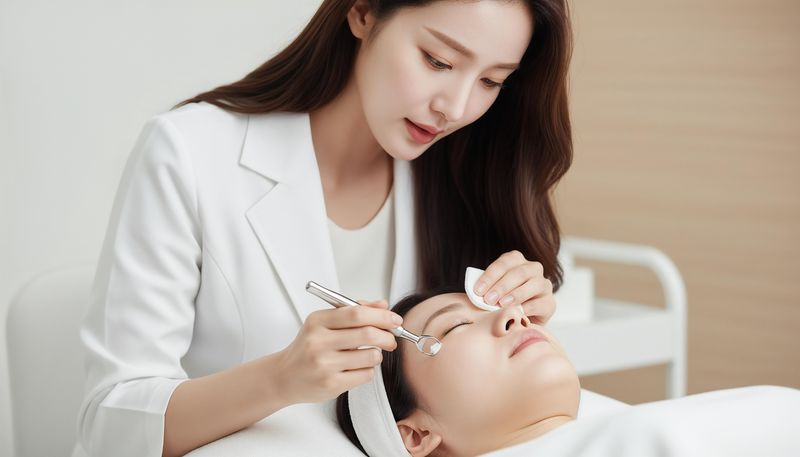
[JAKARTA, Indonesia—Correspondent Aulia Maulida Hamdani] The Indonesian Food and Drug Authority (BPOM) has launched an investigation into whether a human skin-derived skin booster, which is reportedly spreading in South Korea under the name "corpse-skin injection," is being distributed or used in Indonesia and whether it is legally permitted.
According to local media on the 21st, BPOM Chairman Taruna Ikrar said he recently launched an investigation into the product after receiving complaints through social media. He said, "The First and Fourth Divisions are currently conducting a related investigation," adding, "We will verify the product's safety and the legality of its distribution and use in Indonesia through on-site inspections."
According to BPOM, the product uses human acellular dermal matrix (hADM) as its raw material. It is processed by removing cells and components that may trigger immune reactions from donated human skin tissue, followed by purification and sterilization. Extracellular matrix components such as collagen and elastin are left behind.
In Indonesia, hADM cannot be used as an ingredient in ordinary cosmetics. Item 1187 of Annex V to BPOM Regulation No. 25 of 2025 prohibits the use in cosmetics of cells, tissues, or related products derived from humans. Accordingly, products containing hADM are not classified as ordinary cosmetics under the regulation.
Using the product in Indonesia for medical purposes as a drug or biological product requires a separate regulatory process. During product registration and evaluation, it must be reviewed by the National Drug and Biological Products Committee and relevant experts, and it must meet standards for safety, efficacy, and quality.
The Indonesian Association of Dermatology and Venereology (PERDOSKI) pointed out that the term "corpse-skin injection" does not accurately describe the actual manufacturing process, while confirming that the raw material is donated human skin tissue. It also stressed that because cosmetic injections into the face are a relatively new field, the clinical evidence and safety of the procedure need to be reviewed.
BPOM said it plans to take strong legal action if the investigation finds violations of relevant laws or illegal distribution. Taruna said, "If the regulations have been violated, we will impose the appropriate penalties."
Authorities and medical professionals urged consumers not to decide to undergo the procedure based solely on excessive promotion on social media. They advised consumers to check whether the product is approved, the clinical evidence supporting it, the source of its raw materials, and the risks of side effects and complications before making a decision.
[email protected] Aulia Maulida Hamdani, Correspondent Reporter