"Existing Disabled Worker Listed as a New Hire"... Company That Fraudulently Received Employment Incentives Loses Lawsuit
- Input
- 2026-09-21 13:47:24
- Updated
- 2026-09-21 13:47:24
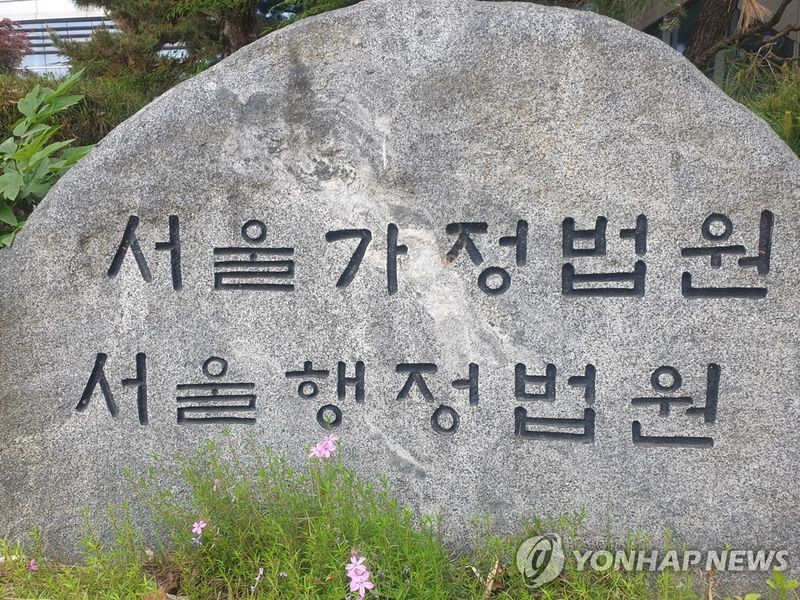
[Financial News] A company that falsely presented a disabled worker who had already been working for it as a new hire received several million won in new employment incentives for persons with disabilities. A ruling requiring the company to pay the full amount it improperly received, along with a sanction surcharge five times that amount, has been upheld.
According to legal sources on the 21st, the Seoul Administrative Court's Administrative Division 6, presided over by Judge Na Jin-yi, ruled against Gachichaeum, a printing and packaging company, in a lawsuit seeking to cancel the Korea Employment Agency for Persons with Disabilities' recovery and additional collection order concerning the new employment incentive for persons with disabilities.
The company reported that it had newly hired a worker with a disability, identified as B, in Goesan County, Chungcheongbuk-do, on August 1, 2022, and applied to KEAD for an incentive. Based on the application, KEAD paid 3.7 million won in March 2023 and 4.2 million won in November of the same year, for a total of 7.9 million won.
An investigation found that B had merely signed an employment contract with the incorporated Korea Association for Supporting the Welfare of Writers with Disabilities, while actually being an existing employee who had worked for the company since August 1, 2019. In September 2024, KEAD applied the former Public Funds Recovery Act and ordered the recovery of the entire 7.9 million won improperly received in the first and second payments, plus interest, as well as a sanction surcharge of 39.5 million won, equivalent to 500% of the improper benefit. The total amount recovered and imposed was 47.69 million won.
In the administrative lawsuit challenging the order, the company argued, "The application documents were arbitrarily altered because of deception by a KEAD employee, and B was a dispatched worker employed by the incorporated association, so the hiring was genuinely new." The company maintained that it had not intentionally sought to improperly receive the incentives.
The court rejected all of Company A's arguments. It pointed out that the incentive application had been submitted electronically using Company A's digital certificate and that a confirmation text message had been sent. The court also noted that there was no objective evidence that KEAD had submitted the application at its own discretion.
The court further determined that, despite B's contract with the incorporated association, B had handled machinery repairs and cleaning at the Goesan workplace continuously from the day after starting work. B also reported attendance and annual leave to the company representative and received actual direction and supervision from the company. The court additionally cited the fact that the incorporated association had a family-company structure involving the representative's family.
The court stated, "B was an existing worker and did not qualify as a newly hired employee. It is reasonable to find that the plaintiff intentionally sought to improperly receive the incentive by submitting false documents."
The court also rejected the argument that the sanction surcharge, equivalent to five times the amount received, was excessive. It ruled, "Obtaining public funds paid in the social welfare sector through improper means seriously undermines the trustworthiness and fairness of the social welfare system and worsens welfare finances, causing significant harm to many citizens. Therefore, there is a strong public-interest need for strict regulation."
The court added, "The sanction surcharge was introduced to strengthen sanctions because recovery alone is insufficient to prevent improper claims. Since the plaintiff intentionally made an improper claim for the incentive, it is not eligible for a reduction, and the order cannot be deemed to violate the principle of proportionality."
[email protected] Lee Chang-hoon Reporter