From War to the Next UN Chief, “Trump’s America” Is a Key Factor at This Year’s UN General Assembly
- Input
- 2026-09-21 11:03:16
- Updated
- 2026-09-21 11:03:16
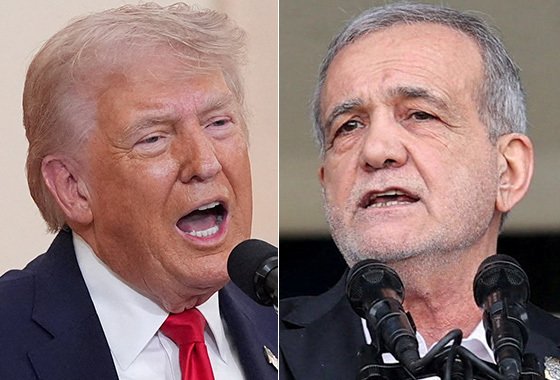
【【Financial News, New York—Correspondent Lee Byung-chul】 The United States is once again at the center of leader-level diplomacy at this year’s UN General Assembly. With the war between the United States, Israel and Iran, which has continued for more than six months, and the risk of a wider conflict in the Middle East emerging as the biggest issues, US President Donald Trump is also pressing the UN to reform its role, finances and organization. The election to choose a successor to Secretary-General António Guterres, whose term ends late this year, has added another layer to the agenda. The next secretary-general will be difficult to elect without the consent of the five permanent members of the United Nations Security Council (P5), including the United States. From resolving the wars to reforming the UN and selecting its next leader, the United States has emerged as a major factor in this year’s diplomatic arena at UN Headquarters in New York.
The high-level general debate of the 81st session of the UN General Assembly begins at United Nations Headquarters in New York on the 22nd local time. Around 130 world leaders are expected to attend, with President Trump scheduled to deliver a speech on the opening day. During the General Assembly, Trump is set to meet one after another with Ukrainian President Volodymyr Zelenskyy, as well as the leaders of the United Kingdom, Japan and Iraq. He will also meet with leaders of the Gulf Cooperation Council (GCC). The White House said Trump would emphasize the need to prevent Iran from acquiring nuclear weapons, among other issues, in his address.
Trump Heads to the UN Amid the Middle East War
The Middle East is the most pressing issue. As the war involving the United States, Israel and Iran drags on, attacks by the pro-Iranian Houthi rebels have recently intensified, expanding the front toward Saudi Arabia and the Red Sea. After Iran blocked a significant portion of the Strait of Hormuz, the Houthis also began threatening the Bab-el-Mandeb Strait. The military confrontation in the Middle East is now spilling over into global energy and logistics disruptions.
The movements of Trump and Iranian President Masoud Pezeshkian are also drawing attention. In an interview with Fox News on the 20th, Trump said he was open to the possibility of meeting Pezeshkian, who is visiting New York this week to attend the UN General Assembly, when asked whether he would be willing to meet him. With the United States and Iran having been at war for more than six months, the two leaders have left open the possibility of meeting face to face at the UN. President Pezeshkian is scheduled to address the General Assembly on Wednesday. Trump is also expected to meet with GCC leaders during the General Assembly to discuss the Iran issue, raising questions about whether summit diplomacy in New York could mark a new turning point in the prolonged Middle East war.
The United States’ role is also coming into focus over Ukraine. Trump and Zelenskyy are scheduled to hold talks in New York. With Russia holding veto power as a permanent member of the Security Council, UN-led efforts to resolve the war face clear limitations. The key question is how much progress leader-level diplomacy centered on the United States can ultimately achieve.
United States Presses for UN Reform
The United States is demanding changes not only to resolve wars but also within the UN itself. The Trump administration has pressured the organization to downsize and reform by cutting financial support for the UN and withdrawing from several UN bodies. Secretary-General António Guterres has also said that the United States’ failure to pay its assessed contributions is placing a serious burden on the UN’s finances. At the same time, the UN is pursuing large-scale cost reductions and organizational restructuring.
The Trump administration’s stated goal is to focus the UN on its “core mission” of international peace and security. Guterres, by contrast, has identified AI, climate change and inequality, along with war, as issues that the international community must address collectively. On AI in particular, he has argued that major developers must establish information sharing, transparency and joint safety safeguards.
For this reason, the General Assembly is expected to become an arena for debate not only over the wars in the Middle East and Ukraine, but also over how far the UN’s role should expand in the future.
The Next Secretary-General Also Faces the US “Veto” Hurdle
The election of the next secretary-general is directly tied to the UN’s future direction. Secretary-General António Guterres will step down on December 31 after completing his second term.
The Security Council has already held three rounds of informal straw polls. In the latest vote on the 18th, former Costa Rican Vice President Rebeca Grynspan led the field with nine “encourage” votes. Carolyn Rodrigues-Birkett, Guyana’s UN ambassador, followed with eight. However, Grynspan also received five negative votes. The countries that cast those negative votes have not yet been disclosed.
Compared with Guterres’ election in 2016, there is still no clear frontrunner. Since none of the current candidates has secured decisive support, the possibility of additional candidates emerging is also being discussed. Michelle Bachelet, the former president of Chile, actually withdrew from the race after receiving just one vote of support in the third round.
Ultimately, the final hurdle is the United States. The secretary-general is elected by the General Assembly, made up of 193 member states, after the Security Council recommends a single candidate. However, if even one of the five permanent members—the United States, China, Russia, the United Kingdom or France—uses its veto, the Security Council’s recommendation becomes difficult.
The Trump administration is taking an active role in this election in particular. According to The Washington Post, the United States has been contacting candidates directly and outlining UN reform, efficiency, and a return to the organization’s fundamental mission of peace and security as key criteria for the next secretary-general. Mike Waltz, the US ambassador to the UN, described the United States’ priorities at a congressional hearing in April as “reform, reform, reform.”
From finding solutions to the wars in the Middle East and Ukraine to resetting the UN’s size and role and choosing a new leader to guide the organization for the next five years, the United States is deeply embedded in the major issues surrounding this year’s UN General Assembly.
[email protected] Correspondent Lee Byung-chul Reporter