Public Prosecution Office and Serious Crime Investigation Agency Launches Just Days Away... 'Even the Justice Minister and Prosecutor General Posts Face a Leadership Vacuum'
- Input
- 2026-09-21 10:50:37
- Updated
- 2026-09-21 10:50:37
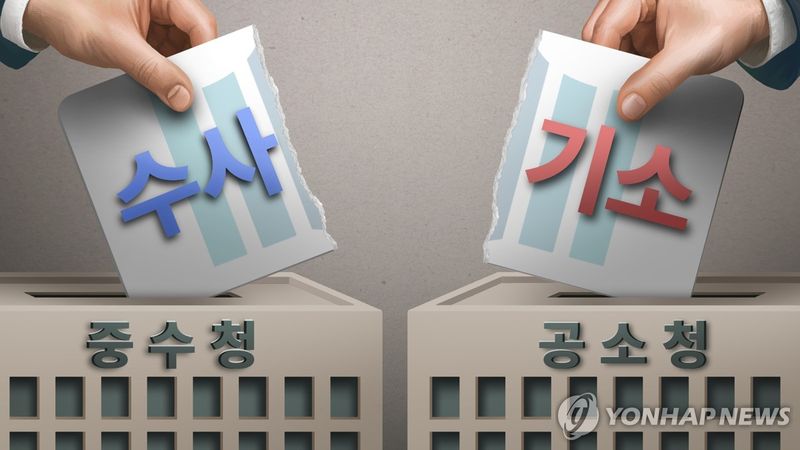
[Financial News] The abolition of the Supreme Prosecutors' Office of the Republic of Korea (SPO) and the launch of the Public Prosecution Office and Serious Crime Investigation Agency are just over 10 days away. Yet the country is facing an unprecedented situation in which all key leadership posts in the criminal justice system—including the Minister of Justice, the chief of the Public Prosecution Office and the chief of the Serious Crime Investigation Agency—are vacant. The selection of a justice minister has returned to square one following the withdrawal of Kim Seung-won, the nominee for Minister of Justice. The appointment process for the chief of the Public Prosecution Office has not even begun, while the first nominee to head the Serious Crime Investigation Agency is undergoing renewed vetting. The People Power Party called the situation "a complete vacuum at the top of the justice system" and demanded a full review of the criminal justice system overhaul.
According to political and legal circles on the 21st, the Public Prosecution Office and Serious Crime Investigation Agency will officially launch on October 2. However, the Minister of Justice post has been vacant for nearly a month since former Minister Jeong Seong-ho stepped down on the 26th of last month. After Kim, who had been nominated as his successor, voluntarily withdrew on the 19th, the government must restart the nomination, vetting and National Assembly confirmation hearing processes from the beginning. As a result, the Public Prosecution Office is increasingly likely to launch under a system in which Vice Minister of Justice Lee Jin-su serves as acting minister.
The position of Prosecutor General of South Korea, who heads the Public Prosecution Office, has also been vacant for more than a year. The new Prosecutor General of South Korea is to be appointed after the Ministry of Justice Committee for Recommending Candidates for Prosecutor General recommends at least three candidates, the Minister of Justice nominates one of them to the president, and the nominee undergoes a National Assembly confirmation hearing. However, the committee itself has yet to be formed. The vacancy at the Ministry of Justice is consequently causing a chain reaction that is delaying the appointment of the Prosecutor General of South Korea.
The Serious Crime Investigation Agency is in a similar situation. Lawyer Kim Ji-yong, whom President Lee Jae Myung nominated as the agency's first chief, is undergoing renewed vetting after some members of the ruling bloc objected to his background as a former senior prosecutor and his past opposition to abolishing prosecutors' investigative authority. A request for a National Assembly confirmation hearing has not yet been submitted.
The problem is not limited to vacant leadership posts. The proposed organizational structure of the Public Prosecution Office is being revised amid controversy over the number of prosecutors and the creation of a Judicial Control Division. Follow-up prosecutorial appointments, standards for transferring existing cases, and coordination of duties among the Public Prosecution Office, Serious Crime Investigation Agency and police also remain to be finalized.
The People Power Party has subjected these preparations to intense scrutiny following Kim's withdrawal from the nomination.
Choi Su-jin, a senior floor spokesperson for the People Power Party, said on the same day, "The Minister of Justice post is vacant, and even the existing post of Prosecutor General of South Korea has been vacant for more than a year. On top of that, the chiefs who are supposed to lead the Public Prosecution Office and Serious Crime Investigation Agency as they launch imminently are also absent, creating an unprecedented 'complete vacuum at the top of the justice system.'"
Choi said, "The launch of the Public Prosecution Office and Serious Crime Investigation Agency, which will completely reshape the framework of South Korea's criminal justice system, is less than a fortnight away. The Ministry of Justice, the ministry responsible for upholding the rule of law, has fallen into the worst possible chaos, with its control tower completely gone."
He particularly raised the possibility that the leadership vacuum could lead to confusion in actual investigations and prosecutions. Choi said, "As investigations are delayed and prosecutions become snarled, investigations into corruption involving those in power could be blocked, while the state's ability to punish crimes affecting people's everyday lives could decline, inevitably increasing harm to the public."
He urged the government and ruling party to "immediately resolve this unprecedented rule-of-law vacuum, in which the minister and Prosecutor General of South Korea, as well as the heads of the newly established agencies, are all absent," and "fully reconsider launching justice institutions without a plan."
[email protected] Kim Kyung-min Reporter