1.19 Million Publicly Supported Housing Units to Be Supplied by 2030, with 77% in the Capital Metropolitan Area
- Input
- 2026-09-21 16:00:00
- Updated
- 2026-09-21 16:00:00
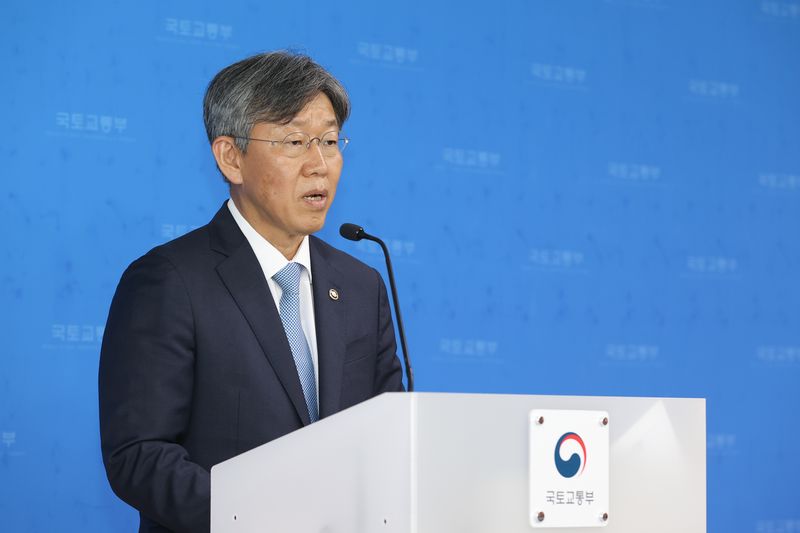
MOLIT announced the Jugeo Anjeong Plan on the 21st.
The government aims to supply an annual average of 238,000 units from 2026 through 2030, increasing the stock of long-term public rental housing from 1.931 million units in 2024 to more than 2.5 million. The share of long-term public rental housing among all homes will also rise from the current 8.4% to more than 10%.

By supply type, the plan includes 350,000 construction-based rental units, 313,000 purchase-based rental units, 230,000 deposit-based rental units, 52,000 publicly supported private rental units and 243,000 public-sale units. Of the total 1,188,000 units, 917,000 will be supplied in the Capital Metropolitan Area.
Annual supply will increase from 187,000 units this year to 218,000 in 2027, 225,000 in 2028, 240,000 in 2029 and 318,000 in 2030. From the fourth quarter of this year through the end of next year, approximately 150,000 units nationwide will be available for move-in, with about 100,000 concentrated in the Capital Metropolitan Area.
The government will also establish universal public rental housing with improved locations and quality. It plans to supply approximately 190,000 units, including 175,000 construction-based units and 18,000 purchase-based units, mainly in preferred areas such as locations near subway stations and city centers. These units are included in the overall plan to supply 1.19 million homes.
Universal public rental housing will have higher income and asset limits than existing public rental housing, allowing a wider range of genuine housing-need households without homes to move in. More than 50% of the supply will be given priority to young people aged 19 to 39, while the priority allocation rate may be adjusted to as high as 70% depending on local demand.
The basic rental period will be set at six years, with extensions available for up to 20 years. The government is considering allowing tenants to choose a security-deposit ratio ranging from 20% to 100% according to their financial circumstances. Specific income and asset criteria, as well as the rent structure, will be finalized after gathering public feedback.
■ Improving the Size and Locations of Public Rental Housing... Tailored Support for Young People, Newlyweds and Older Adults
Newly built public rental housing will be prioritized for areas with well-developed daily-life infrastructure, such as locations near subway stations. The upper limit on the share of medium-sized rental housing in public housing districts has been raised from less than 20% to 40% or less.
Homes with an exclusive area of 31 square meters will feature balcony-expanded layouts, increasing usable space by approximately 5 square meters. The government will also expand the use of floor structures that reduce inter-floor noise and built-in appliances.
The government will pursue the reconstruction of 13,000 permanent public rental housing units that are more than 30 years old by 2030. Complexes where reconstruction is difficult will undergo remodeling or facility improvements. It will provide temporary housing for existing residents and establish measures to guarantee their return after the work is completed.
The government will supply 243,000 public-sale units to help households without homes purchase one. Of these, 211,000 units will be in the Capital Metropolitan Area, including 80,000 units from the Third New Towns. Models that reduce the initial financial burden, such as shared-equity and profit-sharing models, will be applied to 15% of all public-sale units.
The government will supply 243,000 publicly supported housing units for young people. The income limit for youth rent support will be eased from a monthly income of 1.54 million won or less this year to 2.74 million won or less next year, and 18-year-olds will be included in the eligible age range. The upper age limit for people serving in the military will be extended by up to three years, while the support period for young people in the lower-income bracket will be doubled from 24 to 48 months. The number of new beneficiaries is expected to increase from 93,000 this year to 240,000 next year.
A total of 328,000 publicly supported housing units will be allocated to newlywed and child-rearing households. The priority allocation ratio for newlywed couples in integrated public rental housing will rise from 8% to 13%, and a special allocation for newborns will be introduced in publicly supported private rental housing. Even if marriage causes a household to exceed the income or asset limits, it will be allowed to renew its public rental contract once. Households that need larger homes because of childbirth or child-rearing will receive support to move to a different unit size.
The government will supply 54,000 publicly supported housing units for older households. It will expand the range of options to include elderly welfare housing for low-income households, Silver Stay facilities for the middle class and retirement villages.
The government will expand the eligibility range and benefit amounts for housing assistance aimed at low-income and housing-vulnerable households. In addition to rent and home-repair costs, it will consider supporting common-area management fees following legal revisions and consultations on public finances. It will help residents of tiny single-room units and goshiwon facilities move into public rental housing and use data from relevant agencies to identify households in crisis proactively.
The application process for public rental housing will also be integrated. Recruitment announcements and eligibility checks previously operated separately by LH and local public corporations will be connected through a single integrated waiting-list system, shortening the tenant selection period from 150 days to 40 days. Major institutional improvements, including the creation of universal public rental housing, the establishment of the integrated system and revisions to move-in criteria for young people and newlywed couples, will be pursued by the end of this year.
Kim Yi-tak, First Vice Minister of MOLIT, said, "We will supply more good homes and provide more targeted support to those who need it so that people can feel housing stability regardless of their income, age or place of residence."
[email protected] Choi Ga-young Reporter