Appier: "Connecting AI to Real-World Results Matters More Than Adoption"
- Input
- 2026-09-21 11:05:18
- Updated
- 2026-09-21 11:05:18
According to Appier on the 21st, McKinsey & Company's "The State of AI in 2026" survey found that among large companies with annual revenue of more than $1 billion, the share reporting that they were significantly expanding their use of AI agents rose from 27% last year to 40% this year. By contrast, 37% said AI use had contributed to improved corporate profitability, little changed from the previous year. This means that although companies are actively adopting AI, they are struggling to turn it into results such as increased revenue or reduced costs.
Appier believes that what matters now is not how extensively AI has been adopted, but how it is used in actual business operations and turned into measurable results.
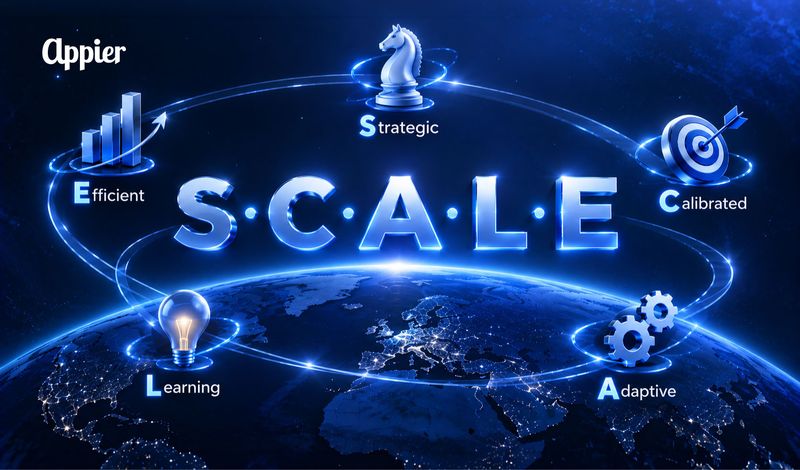
Appier grouped the conditions companies need into five areas: strategic goal setting (Strategic), assessing capabilities and limitations (Calibrated), adaptive operations (Adaptive), continuous learning (Learning), and efficient resource utilization (Efficient). The initiative was named "SCALE" using the first letters of the five terms.
The first is to clearly define where AI will be used. Appier explained that companies must establish specific goals, such as increasing revenue or reducing costs, rather than simply adopting AI, in order to properly evaluate its performance.
The second is to distinguish what AI can and cannot do. Rather than blindly trusting AI-generated results, companies should assess the possibility of errors and review the intermediate steps in critical operations. Appier explained that this type of oversight is especially important in corporate tasks where small errors can lead to significant losses.
It is also necessary to choose the right AI for each task. Rather than assigning every task to a single AI model, companies should select models suited to the complexity and purpose of each task. This also includes configuring multiple AI agents to take on different roles and work together.
Appier also highlighted AI's ability to apply experience gained from previous tasks to subsequent ones. By incorporating user feedback and the results of past work, AI can improve its decisions and outcomes as it performs the same tasks repeatedly. This capability is essential for using AI not merely as a one-time automation tool, but as a means of continuously carrying out business operations.
The final condition is the efficient use of costs and resources. As AI performs more complex tasks, costs can rise because it may need to call models repeatedly and carry out extensive computations. Appier said companies should choose the appropriate AI models and computing resources for each task to avoid unnecessary expenses.
In line with this approach, Appier is researching technologies that assess how confident AI can be in its own decisions and recognize when information is insufficient. The company plans to use these efforts to translate corporate AI use into actual improvements in return on investment (ROI).
Chih-Han Yu, CEO and co-founder of Appier, said, "Companies are now focusing on what results the AI they have adopted is delivering and how they can continue to scale those results," adding, "As Agentic AI takes on more decision-making and execution, what matters is not autonomy itself but how reliably and efficiently it can be operated."
[email protected] Yoon Hong-jip Reporter