"No typhoon damage this year"—experts warn of high water temperatures and hypoxia as ocean mixing weakens
- Input
- 2026-09-21 10:01:07
- Updated
- 2026-09-21 10:01:07
The Korea Institute of Ocean Science and Technology (KIOST) released a statement on the issue on the 21st, conveying concerns from experts in the field about the absence of typhoons.
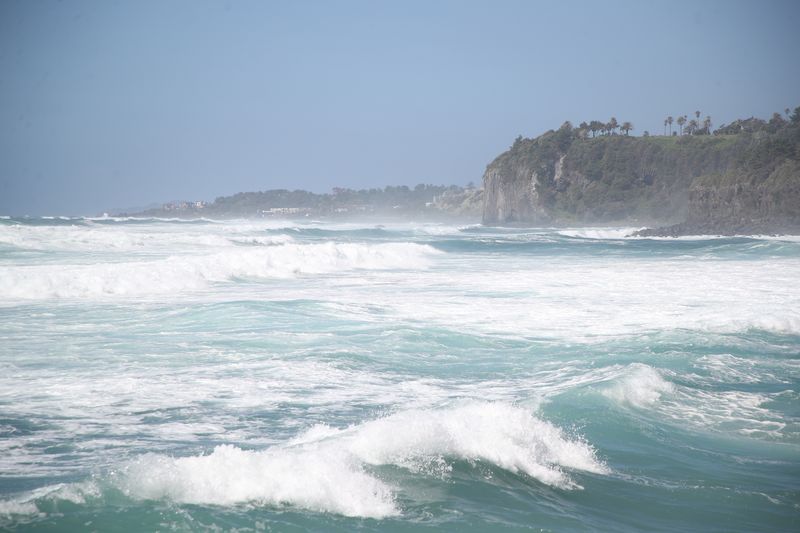
From 2024 through early this month, an average of 2.33 typhoons per year passed within 200 nautical miles of Korea's coastline. This was 28.6% fewer than the annual average of 3.27 typhoons under the Korean Peninsula's climatological normal. A climatological normal is the 30-year average from 1991 to 2020, established for comparing weather conditions at a given point in time.
The decrease was even more pronounced within 100 nautical miles of the coast. Over the past three years, the number of typhoons passing through this area was 55.2% lower than normal, while their residence time was 71.7% lower. Typhoon energy, measured by accumulated cyclone energy (ACE), was also 88.6% below normal.
Kim Sunghun, director of KIOST's Ocean Climate Prediction Center, said, "When the number of typhoons passing through and their residence times decrease, the degree to which the ocean's surface and deeper layers mix also declines. If the temperature and salinity stratification formed by summer surface heating, rainfall and river-water inflow is not sufficiently dissipated, high sea-surface temperatures and low-salinity water may persist for a relatively long time. If strong stratification continues, hypoxic conditions caused by a lack of oxygen in the ocean may persist for an extended period." He expressed concern that the absence of typhoons could cause the sea to stagnate.
Noh Su-yeon, a senior researcher in the institute's Ocean Circulation and Climate Research Department, also raised concerns about low-salinity water from China's Yangtze River as typhoons weaken. She explained, "In summer, low-salinity water from the Yangtze River expands eastward and northeastward under the influence of southerly monsoonal winds and ocean currents, reaching the coastal waters of Jeju Province and the southern coast. If it persists for an extended period, it can cause low-salinity damage to farmed organisms. When a typhoon passes, strong winds and waves mix surface and deeper waters, rapidly weakening the low-salinity layer. If the long-term trend of fewer mixing opportunities caused by typhoons continues, the risk of damage from low salinity may increase in the future."
Kim Gyeong-ok, head of the institute's Ocean Circulation and Climate Research Department, emphasized the importance of ocean monitoring. He said, "The sea is not necessarily stable just because fewer typhoons have arrived. If heat waves and marine heatwaves continue while typhoon impacts remain limited, heat accumulates in the upper ocean. If a warm-water layer is deep or a surface layer of low-salinity water blocks mixing, the sea surface cannot cool properly. Typhoons may instead continue receiving thermal energy and intensify rapidly." He suggested that ocean conditions during a typhoon-free period could lead to stronger typhoons.
The researchers stressed the importance of future ocean monitoring, saying, "Going forward, observations of typhoons over the open ocean should be more closely linked with observations of water temperature, salinity and dissolved oxygen in coastal waters around Korea. This will allow us to assess both the effects of declining typhoon activity on high water temperatures, low-salinity water and hypoxia, and the effects of accumulated ocean heat on the subsequent development of typhoons."
[email protected] Byeon Ok-hwan Reporter