214 Rapid Integrated Planning Sites, 168 Moa Housing Sites... 496 Urban-Renewal Projects Underway Across Seoul
- Input
- 2026-09-21 10:00:00
- Updated
- 2026-09-21 10:00:00
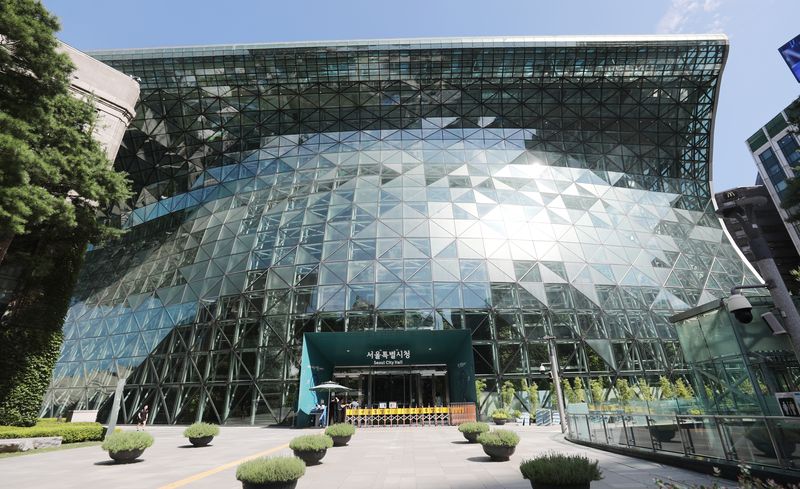
[Financial News] Urban-renewal projects, including redevelopment and reconstruction, are underway at 496 sites across Seoul, according to data released by the Seoul Metropolitan Government. Of these, 214 sites are using Rapid Integrated Planning, involving 307,000 households. Having secured the foundation for housing supply by focusing on designating urban-renewal districts, the Seoul Metropolitan Government plans to accelerate projects so they proceed through project implementation approval and management and disposal procedures to actual groundbreaking and occupancy.
The Seoul Metropolitan Government held the 2026 Seoul Housing Policy Performance-Sharing Conference at Seoul City Hall on the 21st and announced its housing policy achievements since 2021, along with future supply plans. Seoul Mayor Oh Se-hoon served as the presenter and answered 11 questions on three areas: urban-renewal projects, public housing and housing-support programs.
Oh identified the normalization of long-stalled redevelopment and reconstruction projects as the biggest achievement of the past five years. Seoul designated an average of 35 new urban-renewal districts annually over the past five years, more than double the annual average of 17 during the preceding decade. Urban-renewal projects are currently underway at 496 sites across Seoul.
Through Rapid Integrated Planning, introduced in 2021, projects involving a total of 307,000 households are underway in 214 districts. The achievement rate against the target set by the Seoul Metropolitan Government is 114%. The city said the time required to designate urban-renewal districts has also been shortened to about two years from the five years or more it typically took.
Moa Housing, which carries out small-scale renewal of aging low-rise residential areas, has entered the full-fledged project phase, with 168 sites involving 43,000 households reaching the association-establishment stage. Groundbreaking this year has reached 50% of the target, and the city will closely manage the entire project process with the goal of breaking ground on a total of 310,000 households by 2031.
Oh assessed that some of the measures proposed by the Seoul Metropolitan Government to revitalize urban-renewal projects were reflected in the government's Aug. 13 package. However, he argued that additional deregulation is needed to accelerate groundbreaking and move-ins.
The city independently lowered the required consent rate for establishing redevelopment associations from 75% to 70% and eased standards for contributions of parks and green spaces. It plans to ask the government for a temporary three-year easing of restrictions on transferring redevelopment-association membership, a reduction of the redevelopment rental-housing requirement to 30–50%, and a 1.2-fold easing of the statutory maximum floor-area ratio for private urban-renewal projects.
The city reaffirmed its opposition to transferring approval authority for urban-renewal projects involving 500 households or fewer to autonomous districts. It said decentralizing authority would not necessarily speed up projects and could undermine consistency in urban planning because different standards could be applied in each district.
According to the city, the time handled by the Seoul Metropolitan Government accounts for about 2.7% of the entire urban-renewal project period. The city's review period has also fallen from six months to one year in the past to one to three months recently. Meanwhile, 17 of Seoul's 25 autonomous districts have no personnel with experience reviewing urban-renewal projects.
Oh also ruled out using Yongsan Park and restricted development zones as residential land. He maintained his position that green areas that must be preserved for future generations should not be damaged.
He explained, however, that the Tancheon Water Reclamation Center was different because the project would make three-dimensional use of existing urban infrastructure. The city plans to create the Southeastern Youth Specialized Industrial Complex, combining youth housing, a park and research and development facilities, to supply a total of 13,000 households. It completed the master plan in 2024 and plans to complete a private-investment feasibility assessment by the end of this year.
The city also emphasized its achievements in public housing supply. The Seoul Metropolitan Government said it had supplied a total of 131,000 public-housing households over the past five years through public contributions from urban-renewal projects, direct supply by Seoul Housing & Urban Development Corporation (SH Corporation), and purchased rental housing since 2021. Seoul's current public rental-housing stock stands at 410,000 households, about 68% of which were supplied by SH Corporation.
In addition, the city plans to supply another 130,000 public-housing households by 2031. It will also expand public participation in areas where private developers have difficulty pursuing projects alone. Projects are currently underway at 37 public redevelopment and reconstruction sites, involving 43,000 households, and at 23 public-participation Moa Town sites, involving 15,000 households.
Mirinae House public housing program, a long-term jeonse housing program for newlyweds, supplied 7,108 households from July 2024 through August this year. The Seoul Metropolitan Government plans to add 17,500 households by 2030, bringing the cumulative total to 24,600 households. Regarding growing controversy over high deposits amid recent increases in home prices and jeonse and monthly rental prices, the city left open the possibility of adjustments.
About 35,000 Youth Safe Housing units have been supplied since the first project was completed. The city plans to meet its goal of supplying a cumulative 46,000 units by 2030 through financial support and improvements to project procedures.
Long-term jeonse housing, which marks its 20th anniversary this year, has supplied a total of 38,000 households to date. The average deposit is about 41% of the average jeonse price for apartments in Seoul, and the Seoul Metropolitan Government estimates that the cumulative housing-cost savings for resident households amount to about 10 trillion won.
About 35,000 homes for young people were supplied from 2021 through last year. The city plans to expand the cumulative supply to 74,000 households through Saessak One-Room, shared housing, Didimdol Youth Housing, co-living houses, youth-specialized complexes, Youth Safe Housing, Mirinae House public housing program and Baro Nae Jip.
Oh said, "I will keep the clock of housing supply, which has started moving again, from stopping, and continue supplying homes so that everyone from young people and newlyweds to ordinary people without homes and the middle class can hold out hope of owning a home in Seoul."
[email protected] Choi A-young Reporter