Miner's Pneumoconiosis Worsened After Mine Closure... Supreme Court of Korea: "Disaster Consolation Benefits Must Be Paid"
- Input
- 2026-09-21 09:07:35
- Updated
- 2026-09-21 09:07:35
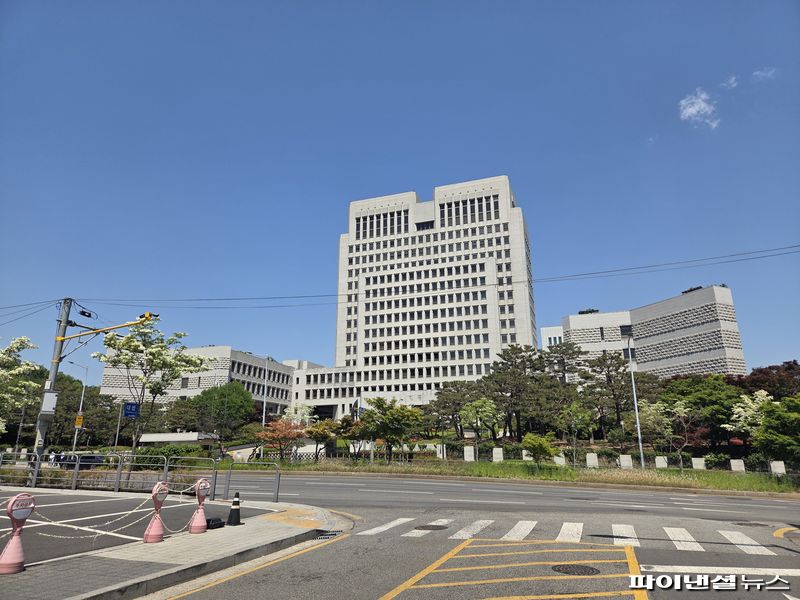
According to legal circles on the 21st, the First Division of the Supreme Court of Korea, with Justice Suh Kyeong-hwan presiding over the case, vacated an appellate court ruling against the plaintiffs and remanded the case to the Seoul High Court. The ruling came in the final appeal of a lawsuit filed by four people, including the spouse and children of mining worker A, who died on the 3rd, against Korea Mine Rehabilitation and Mineral Resources over the payment of disaster consolation benefits.
A worked as a coal cutter at a mine in Hwasun County, South Jeolla Province, from December 1992 to January 1995, and as a tunneling worker at another mine in Boeun County, North Chungcheong Province, from June 1996 to April 2009. He was diagnosed with Type 1 pneumoconiosis in October 1994 while working as a coal cutter and was assigned Disability Grade 13 in October 2003 while working as a tunneling worker. After the second mine closed in July 2009, his condition continued to worsen. He was assigned Disability Grade 11 in 2013 and Grade 7 in 2015, and died in June 2017. His family filed suit in March 2024, seeking disaster consolation benefits and damages for delay based on his final disability grade of 7.
The key issue was the scope of Article 41(4)(5)(b) of the Enforcement Decree of the former Coal Industry Act. The provision defines those eligible for disaster consolation benefits as "persons who suffered an occupational injury, were receiving or had applied for medical care benefits under the Industrial Accident Compensation Insurance Act as of the date of mine closure, and whose disability grade had not been finalized." The requirement to be receiving or have applied for medical care benefits was added in a 2000 amendment.
Both the trial court and the appellate court rejected the family's claim. They found no evidence that A was receiving or had applied for medical care benefits as of the date of mine closure. The appellate court also rejected the family's argument that receiving health examination and transportation expenses under the Pneumoconiosis Prevention Act was equivalent to receiving medical care benefits. It held that health examinations are intended for early detection and prevention, while medical care benefits are intended to treat an injury that has already occurred. The court said the provision had to be interpreted according to its wording.
The Supreme Court of Korea reached a different conclusion. It emphasized that pneumoconiosis cannot be cured, continues to progress even after a worker leaves a dust-exposed workplace, and progresses at an unpredictable rate. Because medical care benefits are primarily paid to treat complications caused by pneumoconiosis, the court said workers with pneumoconiosis can receive disability benefits regardless of whether they received medical care benefits.
The court further noted that applying the provision to pneumoconiosis as written would exclude workers whose complications did not appear until after the mine closed. It stated, "This result runs counter to the constitutional principle of equality when compared with workers whose complications manifested before the date of mine closure, and it is difficult to find grounds that would rationalize such treatment."
Whether complications develop before or after a mine closes is "merely a chance circumstance resulting from the unpredictable rate at which pneumoconiosis progresses," the court added. One reason cited for the 2000 amendment was to prevent so-called "malingerers" from delaying the finalization of their disability grades in pursuit of consolation benefits. The court found that rationale unrelated to patients with pneumoconiosis.
Finding that the lower court had misconstrued the legal principles governing the interpretation of the provision on pneumoconiosis, the court vacated the appellate ruling without addressing the remaining grounds for appeal. The decision is viewed as extending the reasoning of a July 2019 precedent to the current provision, which includes an additional eligibility requirement. That precedent held that a worker whose disability worsened after mine closure qualified as a "person whose disability grade had not been finalized" under the pre-amendment provision.
[email protected] Kim Dong-gyu Reporter