Trump Family Expands Investments in AI and Data Centers, Reigniting Conflict-of-Interest Controversy
- Input
- 2026-09-21 11:02:39
- Updated
- 2026-09-21 11:02:39
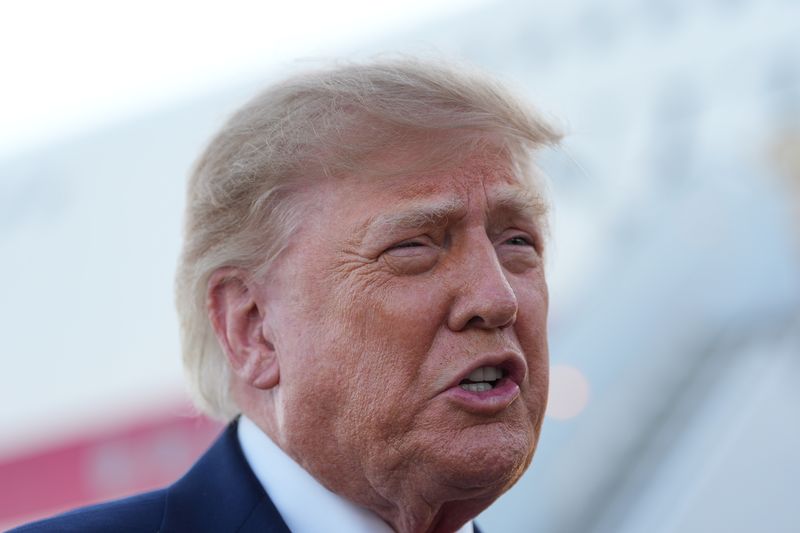
On the 20th, local time, The Washington Post (WP) reported, "An analysis of President Trump's financial disclosure filings and company announcements found that the Trump family's businesses and investments are closely intertwined with industries benefiting from the AI boom." WP noted, "This has raised concerns about a conflict of interest, as AI policy decisions by the Trump administration could affect the value of the president's personal assets."
Since returning to the White House, President Trump has maintained that AI development must be accelerated. He has cited the need to prevent China from gaining technological leadership. Against this backdrop, WP reported that numerous trades involving companies closely tied to the growth of the AI industry were identified in Trump's investment accounts.
According to WP, about 30,000 publicly disclosed stock trades since Trump returned to the White House last January included companies involved in AI semiconductors, servers and data-center power infrastructure. He has purchased shares of Dell Technologies, Micron Technology and GE Vernova, a power equipment company. He is also known to have bought shares of Broadcom, Texas Instruments, Credo Technology Group Holding and Super Micro Computer. Many of these companies operate in sectors experiencing increased demand as investment in AI data centers expands.
Davis Ingle, a White House spokesperson, argued, "All of President Trump's investments are managed by independent asset managers, so there is no conflict of interest." The investment accounts are managed through computer-based models that automatically track recognized indexes such as Schwab 1000. As a result, neither President Trump nor his family can direct or influence the timing of trades or the selection of investments.
Don Fox, who served as acting director of the Office of Government Ethics (OGE) during Barack Obama's administration, responded, "No president has ever managed his assets this way since regulations concerning conflicts of interest were introduced." The United States introduced provisions restricting public officials' financial conflicts of interest into federal criminal law in 1962. After the Watergate scandal, it strengthened its ethics oversight system in 1978 through the Government Ethics Act, including financial disclosure requirements for senior officials.
For example, Trump Media & Technology Group (TMTG), in which President Trump is a major shareholder, recently announced a merger with a nuclear fusion company. The company being acquired is pursuing the construction of power plants to meet rapidly rising electricity demand driven by the expansion of AI data centers.
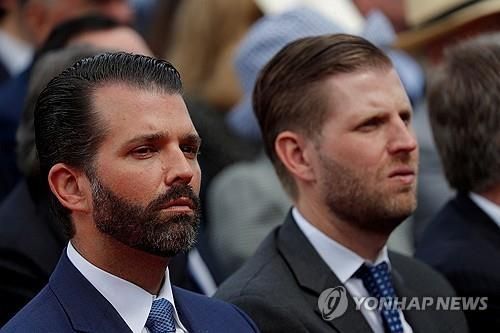
Donald Trump Jr., the president's eldest son, is a partner at Florida-based venture capital firm 1789 Capital. The firm recently raised a $1.2 billion fund (approximately KRW 1.67 trillion) and is reportedly targeting digital infrastructure businesses, including AI data centers, for investment.
Eric Trump, the president's second son, is also investing through American Ventures in defense and robotics companies that use AI. Donald Trump Jr. and Eric Trump previously participated in the establishment of American Data Centers, a company focused on building AI infrastructure.
Against this backdrop, President Trump recently dismissed as "a scam" the argument that AI development should be slowed because of its risks. He also outlined a plan to address problems in the AI industry through an "AI Force," separate from existing law enforcement.
[email protected] Hong Chae-wan Reporter