"No Weak-Ground Problems at Gadeok Island New Airport"... Daewoo Engineering & Construction-led Consortium Transparently Discloses PBD Findings and Prepares Improvements
- Input
- 2026-09-21 08:53:32
- Updated
- 2026-09-21 08:53:32
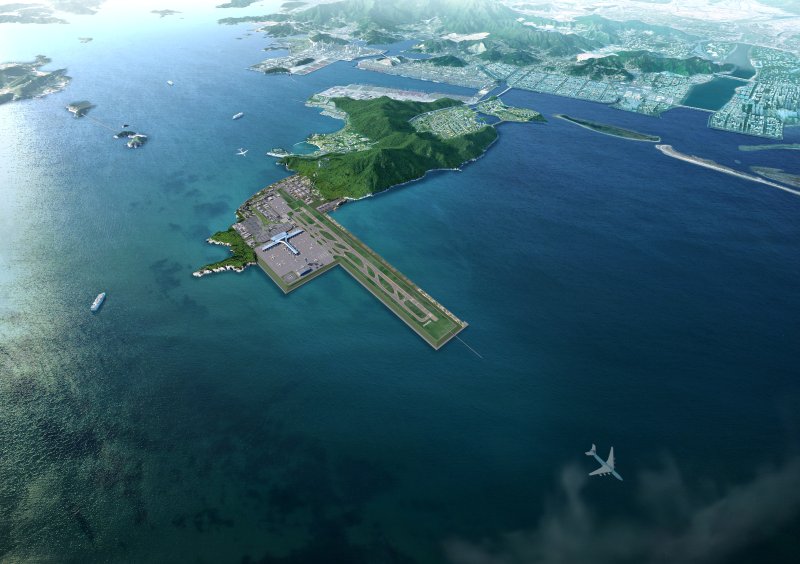
[Financial News] The Daewoo Engineering & Construction-led consortium said it had already developed specific improvements related to the constructability verification of the offshore PBD (Plastic Board Drain) method being applied to the construction of Gadeok Island New Airport and had reported them to the relevant organizations. Regarding claims that it was concealing technical problems with the PBD method, the consortium said, "That is not true at all." It explained that the project is undergoing a rigorous verification process.
According to industry sources on the 21st, the Daewoo-led consortium transparently disclosed some of the issues and challenges identified during the offshore PBD constructability verification process. It included specific technical improvement measures in the basic design report submitted to the Public Procurement Service (PPS) and the project owner on the 7th.
The Daewoo-led consortium plans to apply the offshore PBD (Plastic Board Drain) method for the first time in South Korea to stabilize the weak ground, one of the key challenges in constructing Gadeok Island New Airport. Critics have claimed that the consortium was concealing technical problems despite being aware of them.
The consortium said it had already prepared improvement measures and was carrying out a rigorous verification process to successfully improve the weak ground. According to the consortium, it took the lead in conducting offshore PBD constructability verification at five locations and across a total of 90 boreholes at the actual sites where the main construction will take place. As a result, the constructability of the "general PBD improvement sections (N<30)," which account for 89% of the total offshore PBD work, was successfully confirmed.
However, in the intermediate sandy soil layers of the "hard PBD improvement sections (N≥30)," which account for 11%, some cases of halted penetration and deformation were identified due to an increase in the unsupported length of the guide wall and rising penetration resistance.
The Daewoo-led consortium did not conceal these data or problems; instead, it detailed them in the basic design report. To address them, it also developed an alternative measure to improve PBD penetration capacity through intermediate sandy soil and incorporated it into the basic design.
A consortium representative emphasized, "Constructability verification is an essential data-gathering process to prevent trial and error during the main construction. Based on the improvement measures identified, we are currently making thorough preparations for a second constructability verification and plan to raise construction quality to the highest possible level through it."
The consortium also said it had conducted more detailed ground investigations than the previous Hyundai-led consortium. In fact, the Daewoo-led consortium carried out ground investigations at 97 offshore boreholes, securing more than five times as much data as the Hyundai-led consortium, which conducted 19 borehole investigations.
A senior consortium official stated, "The offshore PBD method is a highly sophisticated technology, and we are currently following a process of improving it through equipment upgrades and additional verification based on an accurate diagnosis. We intend to proceed with the successful construction of the new airport without disruption, backed by transparent technical verification and thorough supplementary measures."
[email protected] Jong-bae Lee Reporter