Mayor Kim Jang-ho: "We will make Gumi a model city in South Korea"
- Input
- 2026-09-21 11:00:00
- Updated
- 2026-09-21 11:00:00
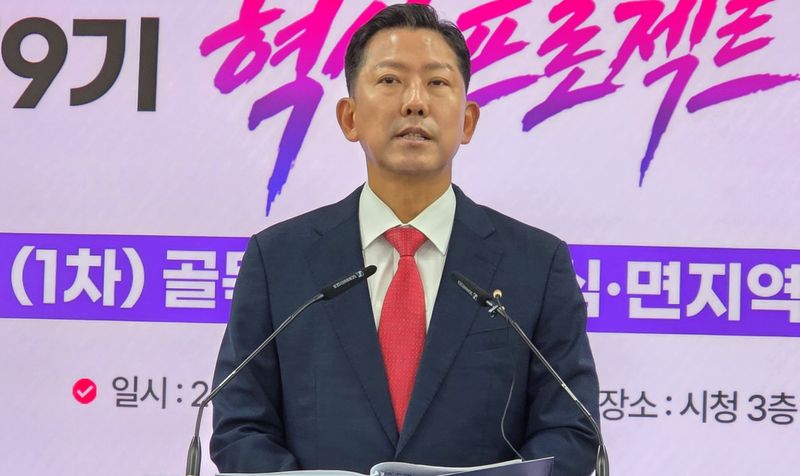
[Financial News, Gumi = Reporter Kim Jang-wook] "I will complete the ninth popularly elected administration through actions that change residents’ lives and make Gumi a model city in South Korea."
Gumi Mayor Kim Jang-ho has worked tirelessly since taking office on July 1 at the start of the ninth popularly elected administration. Having reopened the path to growth through mega-scale national projects under the eighth administration and more than 16 trillion won in attracted investment, Mayor Kim is now rapidly securing momentum for Gumi’s next 50 years.
Before even a month had passed since the administration began, investment attraction and plans worth 20 trillion won followed one after another. Investment projects, including the groundbreaking of Samsung SDS’s AI data center, also entered full swing.
After presenting economic innovation, settlement innovation, and spatial innovation as the administration’s three main pillars, Mayor Kim has now unveiled a systematic implementation roadmap covering the alley economy, the open plaza at Gumi Station, and the revitalization of rural myeon areas.
Mayor Kim emphasized, "Good jobs and large-scale investment are important, but true innovation means residents must feel that ‘our neighborhood has changed’ and that ‘it has become a better place to live.’ We will devote every effort to resolving, one by one, the inconveniences of daily life—from the alley economy and the old downtown to rural areas."
Through its Old Downtown Re:Fill Project, the city will transform vacant storefronts into startup spaces and support startup founders with storefront improvements, education and consulting, and expanded sales channels.
The city will also create a "technology startup space" around Gumi Station by leasing and remodeling private buildings. The facility will begin operating in 2028, with the old downtown to be developed into a hub for youth and technology startups.
The city will also launch a program to channel local consumption into sales for small businesses. Through the Gumi Sale Festa, it will return a portion of spending within the region in the form of vouchers.
The city will establish a bureau-level organization called the Alley Commercial District Support Team. Comprising two divisions and eight teams, the group will oversee the entire alley commercial district, including support for the alley economy and local growth, market revitalization, and market facility maintenance.
In myeon areas where population decline continues because of low birth rates, an aging population, and the outflow of young people, the city plans to create new vitality through education. It will link academic incentive payments, specialized programs tailored to each school, and settlement support for incoming households, centered on elementary schools in Mueul-myeon, Okseong-myeon, Dogae-myeon, Haepyeong-myeon, and Jangcheon-myeon. The goal is to attract students while encouraging families to settle in rural areas.
The city plans to provide elementary school students who are enrolled in schools in a myeon area and have their registered addresses there with academic incentive payments for up to six years, until graduation. The payments will amount to up to 25.6 million won in total, or at least 3.6 million won annually. The city will also support the stable settlement of households moving to myeon areas with their children, easing their initial housing burden and encouraging them to establish stable lives in rural areas.
[email protected] Kim Jang-wook Reporter