"The Exhibition-Game Disaster Was a Fake": Coach Mazurs, Once Vilified, Stages a Real Revolt [Nagoya Asian Games]
- Input
- 2026-09-21 08:30:00
- Updated
- 2026-09-21 08:30:00
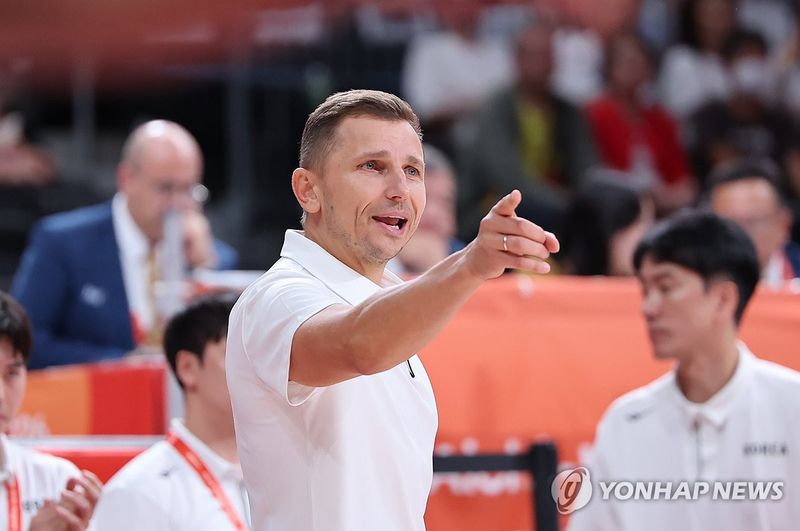
[Financial News] He silenced widespread criticism and skepticism with one result alone: a gold medal. Nikolajs Mazurs of Latvia, the first foreign head coach in the history of the South Korea men's national basketball team, ended the team's 12-year Asian Games gold-medal drought and proved the strength of his convictions.
Until the team headed to Nagoya, basketball circles viewed the Mazurs-led squad with a cold eye. The team had posted a dismal record of two wins and six losses in exhibition games just before the Asian Games. Apart from a victory over the Philippines, in which a largely second-string lineup took the court, the results were particularly poor. The weaknesses of Mazurs' tactics were fully exposed: the team relied on fixed patterns, collapsed in the decisive fourth quarter, and could not get its perimeter shots to fall.

But on the main stage, the national team displayed a completely different level of play. After sharpening its game rhythm in the opening group-stage match against Saudi Arabia, South Korea began to unleash an explosive offense. It scored more than 100 points in three consecutive games, against Indonesia with 102 points, Japan with 100, and Jordan in the quarterfinals with 114.
Before reaching the final, South Korea averaged an impressive 95 points per game. It also showcased completely unselfish basketball, averaging 27 assists per game—the highest among all participating teams. Its three-point shooting percentage, which had hit rock bottom, climbed to 38%.
Mazurs' system basketball, which requires all five players to work together like interlocking gears rather than relying on the individual skills of a single star, finally found its footing despite the criticism. The team also overcame setbacks through its organization, including the late arrival of overseas-based Choi Jun-yong (KCC) and the loss of key forward Jun Seok Yeo of Seattle University to injury. In the quarterfinal against Jordan, all 12 players on the roster scored, creating a remarkable scene.
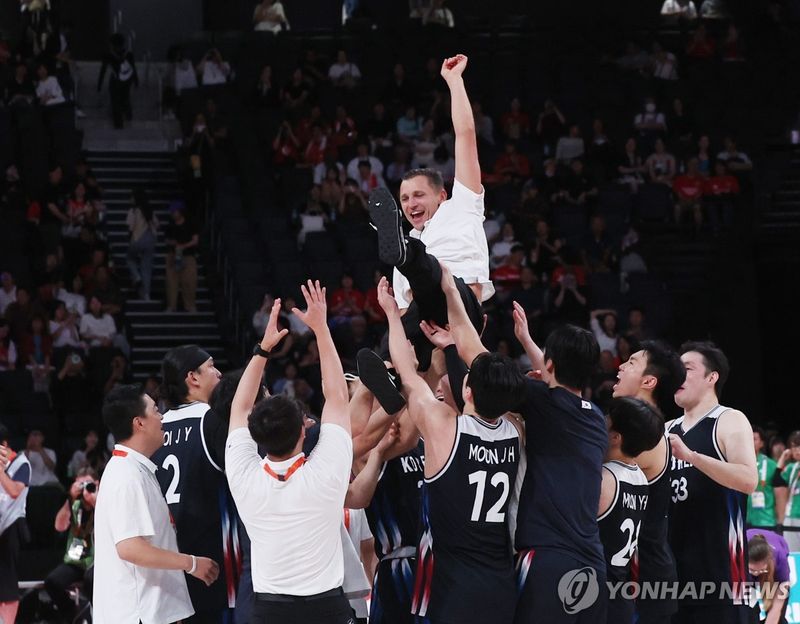
Ultimately, South Korea became a complete team under Mazurs' solid leadership and rose to the top of Asia by defeating even host nation Japan on its home court in the final. This was South Korea men's basketball team's fifth Asian Games gold medal overall and its first in 12 years, since the 2014 Incheon Games. Winning gold at an Asian Games held outside South Korea was a historic achievement, coming 44 years after the 1982 New Delhi Games.
The Mazurs-led team has turned question marks filled with concern into exclamation points of confidence, and its sights are now set higher. After conquering Asia and recharging its confidence, the national team will immediately shift to preparations for the Asian qualifiers for the 2027 FIBA Qatar World Cup upon returning home. It will take on new challenges: reaching the World Cup finals and securing a direct berth in the 2028 Los Angeles Olympics.
[email protected] Jeon Sang-il Reporter