United States Weighs Major Troop Cuts in Europe, Angered by Refusal to Allow Use of Bases for Operations Against Iran [Yoon Jae-joon's World View]
- Input
- 2026-09-21 04:30:00
- Updated
- 2026-09-21 04:30:00
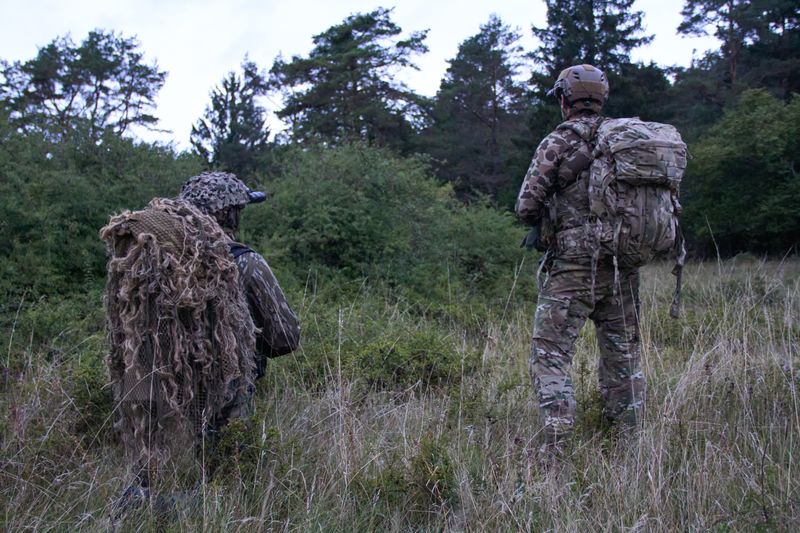
[Financial News] The United States government is reportedly seriously considering a major reduction in U.S. military forces stationed in Europe. As European allies refused to allow U.S. forces to use military bases in their countries during operations against Iran, the Trump administration is intensifying pressure on them while seeking to shift more of the burden for European security onto European countries.
Foreign media, including National Broadcasting Company (NBC), reported on the 18th (local time) that senior commanders at the United States Department of Defense (DoD) are expected to submit a detailed plan to U.S. Defense Secretary Pete Hegseth within days. The plan will focus on reducing and redeploying U.S. troops stationed in Europe. The move is being pursued as an extension of the North Atlantic Treaty Organization (NATO) force review announced by the DoD in June.
The direct trigger for the review is a conflict that emerged during the war with Iran. At a NATO defense ministers' meeting held in June in Brussels, Belgium, where NATO headquarters is located, Secretary Hegseth strongly criticized European allies for refusing to allow U.S. forces access to bases and airspace for attacks against Iran, calling it "shameful." He said, "By blocking the U.S. military's rightful access to bases, our allies put the lives of young Americans at risk," and warned, "NATO will rapidly and irreversibly transition to a structure in which European countries take responsibility for their own security."
The options currently under consideration include withdrawing one-third of the approximately 68,000 U.S. troops stationed throughout Europe. In that case, U.S. forces stationed in Germany, Italy and Spain would be directly affected. Some have even raised a dramatic scenario involving the wholesale withdrawal of up to 40,000 troops, fighter jets, warships and major weapons systems. At the same time, a plan to relocate forces from Western Europe to forward positions in Eastern Europe, near Russia, is also being considered. A final decision is expected around November 6.
A partial withdrawal is already underway. About half of the 2,000 U.S. troops stationed in Romania withdrew last year, and approximately 5,000 U.S. troops in Germany are also in the process of being withdrawn. In Germany, the withdrawal was announced shortly after Chancellor Friedrich Merz publicly criticized the U.S. war against Iran.
The conflict between the United States and Europe is not limited to security issues. In January, President Donald Trump stepped up pressure on NATO members by urging them not to depend on the United States for defense and to increase defense spending to 5% of gross domestic product (GDP). NATO members have agreed to raise spending to 3.5% by 2035, but most countries are struggling even to meet the existing 2% target.
Relations between the two sides have continued to deteriorate amid trade tensions, including the imposition of 15% retaliatory tariffs between the United States and the European Union (EU), as well as disputes over the purchase of Greenland. On the 18th, President Trump also announced that he had reached an agreement with Denmark and Greenland on "permanent control" over security and access to resources.
Experts warn that a reduction in U.S. troops could weaken Europe's nuclear deterrence and give Russia room for miscalculation. Ian Lesser, a researcher at the German Marshall Fund of the United States (GMF), said, "The impact will vary depending on the scale and timing of the withdrawal, but a decline in the United States' power-projection capability would also be a loss for the United States itself."
Concerns have also emerged within the U.S. Republican Party. Republican Senator Roger Wicker of Mississippi, a former U.S. Air Force officer, and former Republican Representative Mike Rogers, who is expected to run for the Senate in the midterm elections, warned in a joint statement, "The withdrawal of U.S. troops stationed in Germany could send the wrong signal to Russian President Vladimir Putin."
As the United States focuses its military resources on the conflict with Iran, anxiety is also growing among allies in the Asia-Pacific region, including Taiwan. Taiwan, which has relied on U.S. forces in the Pacific since the 1950s to prepare for a Chinese invasion, is finding it increasingly difficult to depend on the United States. After the U.S. military recently redeployed the last aircraft carrier remaining in the Pacific to the Middle East, questions have been raised about a power vacuum in the region and the credibility of the United States' security commitments to its allies. Despite signing a security agreement with Saudi Arabia, which is in conflict with the Houthis, an Iran-aligned armed group in Yemen, the United States has been reluctant to become actively involved.
Even as the United States pursues a reduction of its forces stationed in Europe, President Trump said on social media on the 18th that plans to build a U.S. military base in Poland had made significant progress. He added that the alliance with Poland would make historic progress through the construction of the new base. About 10,000 U.S. troops are currently deployed to Poland on a rotational basis.
U.S. media outlets analyzed that the establishment of a permanent U.S. military base in Poland would further strengthen the fortification of NATO's eastern flank, a development that would be closely watched not only by NATO members but also by Ukraine and Russia.
[email protected] Yoon Jae-joon Reporter