3-kg Wigs, Costumes That Took a Year... The Artisans Behind the Kabuki Stage
- Input
- 2026-09-27 14:09:43
- Updated
- 2026-09-27 14:09:43
[Financial News, Tokyo—Correspondent Seo Hye-jin] "Please raise this by just 1 mm."
When a Kabuki actor looks in the mirror while wearing a wig and makes a request, the artisan's hands begin moving again. Although the difference is difficult for the audience to notice, the artisan adjusts the wig's height and shape while considering whether to make the actor's face appear larger or smaller.
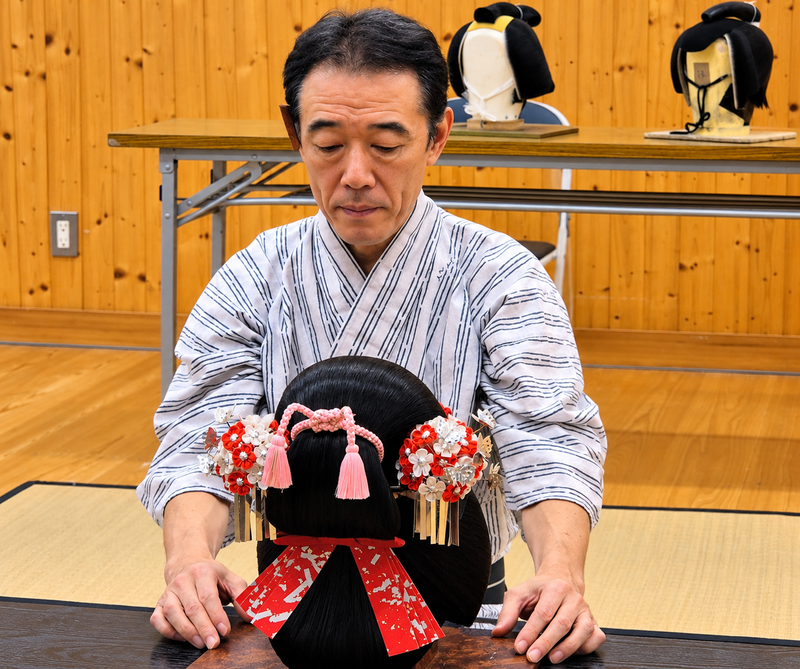
The wig artisans met at Kabukiza Theatre in Ginza, Tokyo, on the 17th demonstrated how they personally adjusted wigs that will actually be used on the London stage next January. The specialized artisans who make Kabuki wigs and complete hairstyles are called tokoyama.
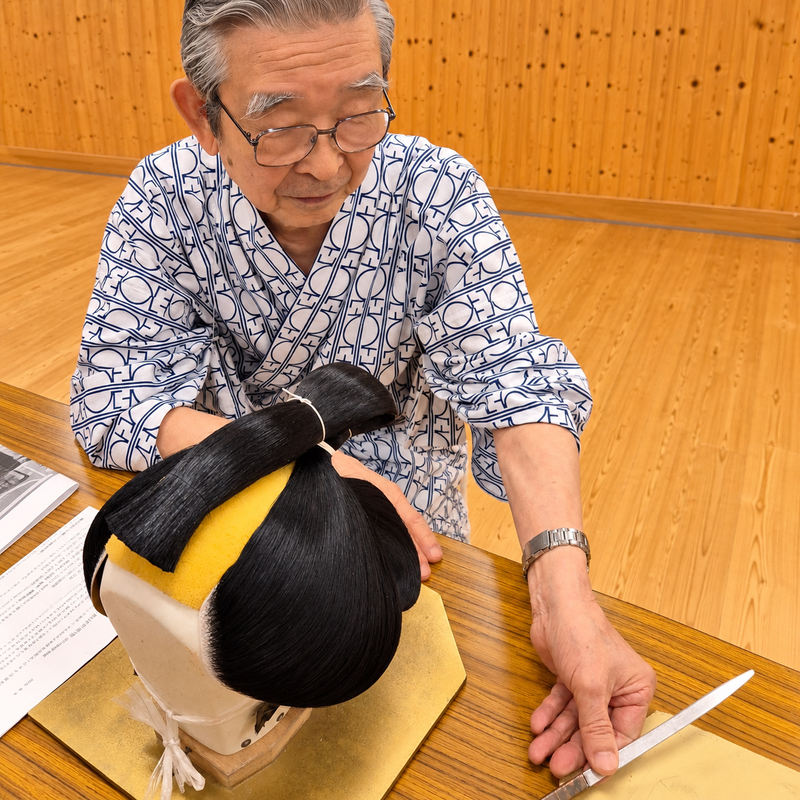
Kamoji Kingo of Tokyo Kamojitokoyama, who is responsible for wigs for tachiyaku roles, said, "There are so many types of hairstyles that even after 10 years, you still cannot do everything." Even the hairstyle of a samurai changes depending on whether the character is in childhood, youth, middle age or old age. Kabuki uses hundreds of different hairstyles.
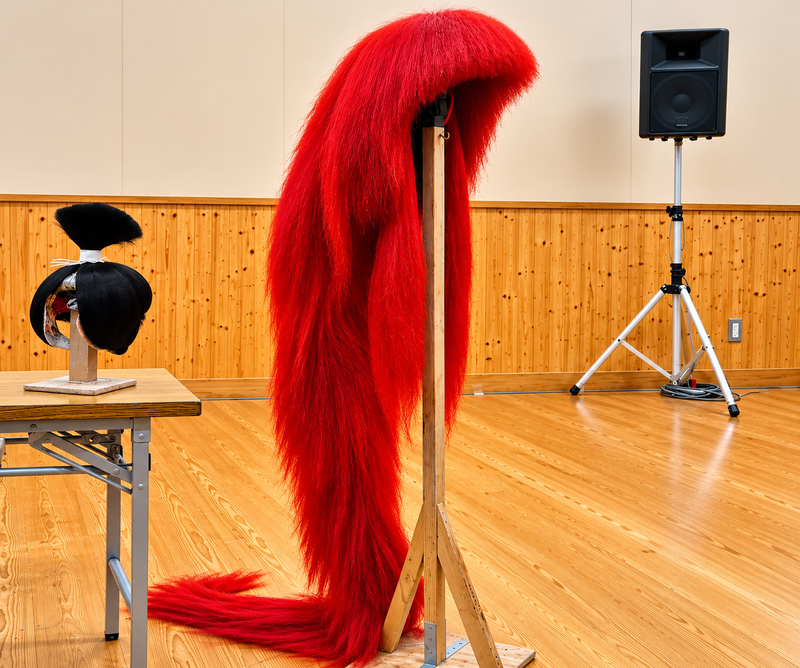
The materials also vary depending on the role. According to Kamoji, more than 80% of wigs for male roles are made from real human hair. Wigs that require abundant movement, such as those used for lion roles, are made with the long hair of yaks from Tibet. The heaviest wigs weigh about 3 kg.
Shimane Masao of Mitsumine Tokoyama was responsible for the wig for the female role of onnagata. The wig he demonstrated on the day is the one that will actually be used for the role of Hanako in Meoto Dojoji, which will be performed in London next year. Once hairpins and floral decorations were added, the glamorous onnagata hairstyle seen onstage was complete. Official press tour materials also state that this is the actual wig to be used for Hanako in the London performance.
The price is also substantial. When asked about the cost, Shimane replied, "About ¥500,000 in total, or approximately 4.3 million won."
Even a completed wig does not go straight onto the stage. It is adjusted again to suit the actor's face and role. Ichikawa Somegoro VIII said, "Depending on the role, I may ask them to raise the wig by just 1 mm, or to make my face look slightly larger or smaller." He added, "Even after the first performance begins, we keep talking with the artisans and continue shaping it."
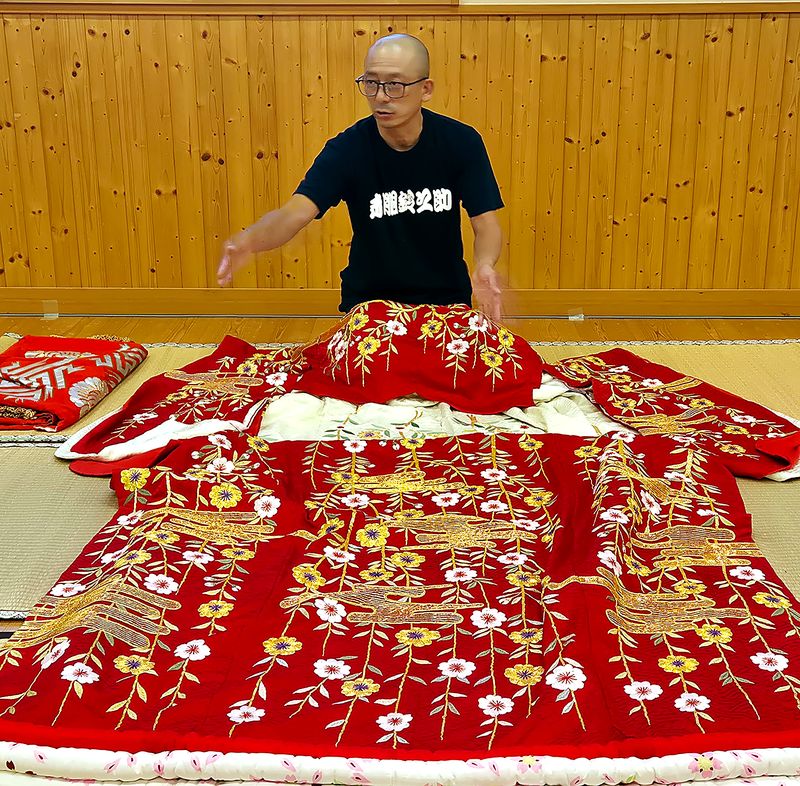
Costumes for next year's London production were also spread out beside the wigs. When Kurosaki Atsuhiro of Shochiku Costume lifted the red outer robe from the Meoto Dojoji costume, a teal garment appeared underneath. The two garments are connected with special thread and look like a single red outfit from the outside. As the thread is undone one section at a time during the dance, the red garment comes off and the teal costume is revealed in an instant.
Kabuki costume changes are not designed solely for speed. Kurosaki said that some scenes are meant to surprise the audience with a rapid change of clothes, but in Meoto Dojoji, "Rather than surprising the audience, I want to show a proper transformation from one beautiful image to another."
Onstage, wigs swing and costumes change in an instant. Behind those brief moments are the hands of artisans who master hundreds of hairstyles and adjust them down to a 1-mm difference. Next year's London production will feature not only two actors in their 20s, but also the techniques that have supported 400 years of Kabuki from behind the scenes.
[email protected] Seo Hye-jin Reporter