Kim Min-seok Weighs 'Big Picture' for Broader Ruling Camp Unity
- Input
- 2026-09-21 15:54:10
- Updated
- 2026-09-21 15:54:10
Constitutional Amendment Clock Is Ticking, but the Broader Ruling Camp Already Has Divergent Visions
The Democratic Party of Korea aims to prepare its own constitutional amendment proposal by the end of the year, consult with all political parties, reach a political consensus in March or April next year, and put it to a referendum in the first half of the year. Approval by at least two-thirds of all National Assembly members is required to pass a constitutional amendment, making an agreement with the People Power Party essential. At the same time, the party must also gather the views of the Rebuilding Korea Party (RKP), the Progressive Party, the Basic Income Party, and the Social Democratic Party.However, the parties' calculations diverge when it comes to the details of political reform. After Kim proposed lowering the threshold for forming a parliamentary negotiating group from the current 20 seats to 15, the 12-seat RKP demanded a threshold of 10 seats. The Basic Income Party has also raised a separate political reform proposal to restrict lawmakers from concurrently serving as State Council members, following lawmaker Yong Hye-in's withdrawal as a candidate for minister of the Ministry of Gender Equality and Family.
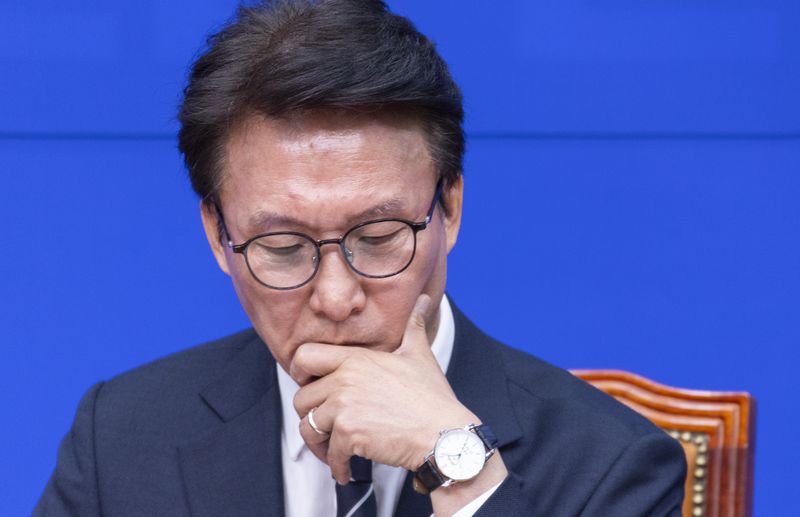
Although individual negotiations may be handled through separate working-level channels, Kim is ultimately responsible for developing a broad vision that brings the parties' differing demands together under one political direction. For now, he appears more focused on presenting an overall course than on personally managing individual issues. At the launch ceremony of the Constitutional Amendment Task Force on the 20th, he again emphasized President Lee's position on a constitutional amendment allowing consecutive presidential terms and proposed including the 5.18 Democratization Movement and other events in the preamble to the Constitution before leaving early.
Coordinating Party-Government Messaging Is Also a Challenge
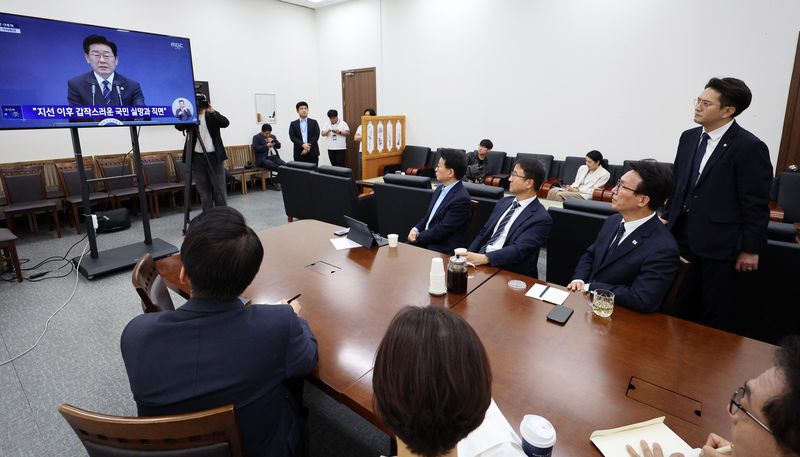
The coordination of messages and schedules between the party and the presidential administration is another issue. The Democratic Party of Korea had initially planned to hold an on-site Supreme Council meeting in Jeju on the 18th to review regional budgets, but the schedule was reportedly canceled after the president's press conference was arranged. A party official said, "We had originally planned to hold an on-site Supreme Council meeting in Jeju and review the Jeju budget, but everything was canceled after the president's press conference was scheduled."At the press conference, President Lee said, "We are all pro-Moon Jae-in, pro-Roh Moo-hyun, pro-Kim Dae-jung, and comrades of Lee Jae Myung," emphasizing unity within the broader ruling camp. However, he later deleted a social media post he had shared praising his administration's achievements after the author's past record of disparaging ruling camp figures and using derogatory names became known. President Lee subsequently urged restraint again, saying, "Abusive language, mockery, derogatory labels, and hatred do not help promote unity."
With the president personally emphasizing unity, it is the Democratic Party of Korea leadership's task to turn that message into a coalition structure in practical politics. Kim has also defined the Democratic Party of Korea as the "big brother of progressive political forces" and proposed broader ruling camp cooperation and political reform. The party now needs a concrete blueprint for reconciling the interests of the various parties.
Rather than immediately unveiling specific plans, Kim appears to be keeping his comments measured. The party had considered holding a tea meeting with reporters on the 20th to mark one month since his inauguration and outline his plans for the political situation, but postponed it in light of the timing—immediately after President Lee's press conference. According to a party official, Kim's first press briefing is expected to take place after the Chuseok holiday.
Several issues are intertwined, including constitutional reform, political reform, cooperation among broader ruling camp parties, and coordination of roles between the party and the presidential administration. The party must also gauge public sentiment ahead of Chuseok. With the press briefing postponed, Kim has gained time to observe public sentiment before and after the holiday and refine his political strategy and messaging. Attention is focused on what kind of "big picture" Kim will present after Chuseok.
[email protected] Song Ji-won Reporter