6.8 Trillion Won in Real Estate PF Deemed 'Normal' Faces Risk of Deterioration [fn Market Watch]
- Input
- 2026-09-20 15:01:00
- Updated
- 2026-09-20 15:01:00
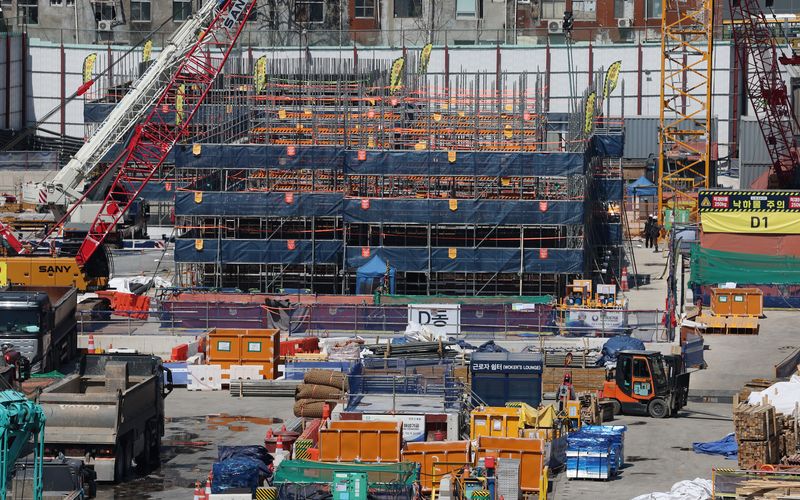
According to a report published on the 20th by Korea Investors Service (KIS), 44.1 trillion won of the approximately 50 trillion won in PF exposure analyzed was classified as normal or watchlist. After reassessing the risk of each project site, KIS found that 6.8 trillion won of this amount could be downgraded to 'fixed' under stress conditions. It also estimated that 1.5 trillion won among existing fixed PF exposures could be downgraded another level to 'doubtful recovery.'
KIS analyzed approximately 3,600 PF projects held by 51 securities firms and capital companies. The 50 trillion won in exposure under review represented 96% of the approximately 52 trillion won in total PF held by the securities and capital industries. In effect, the analysis covered most of the PF held by the two sectors.
KIS calculated a risk score for each project based on six risk factors, including the origination year and maturity, repayment priority, asset type and region, the builder's construction capabilities, and presales and sales performance. It reassessed the actual likelihood of recovering principal from each project, separately from the asset-quality ratings assigned by financial companies.
The stress test identified a total of 8.3 trillion won in PF exposure potentially subject to an asset-quality downgrade. If these risks materialize, fixed-or-below PF exposure could nearly double from the current 6 trillion won to 12.7 trillion won, the analysis found.
Yeo Yun-gi, a senior analyst at KIS, noted, "For PF exposures that have remained unrecovered for a long period, it is necessary to assess the current status of the project site and the actual likelihood of recovery more conservatively, rather than relying on the grounds for past asset-quality classifications, such as maturity extensions or normalization plans."
The gap between book-record soundness and actual risk was particularly pronounced in main PF. As of March this year, exposures classified as normal or watchlist accounted for about half of high-risk main PF. This means that a substantial number of projects have yet to be classified as distressed assets on paper, despite prolonged non-recovery, maturity extensions, and sluggish presales or sales.
If the potential losses materialize, financial companies could also face a heavier provisioning burden. KIS estimated the additional provisions required under its stress-test results at approximately 1.9 trillion won, consisting of 1.1 trillion won for securities firms and 800 billion won for capital companies.
However, KIS assessed that the likelihood of the problem developing into a systemic risk capable of destabilizing the entire sector was limited. Even when their PF exposure is large, major securities firms have the capital strength and earnings-generating capacity to absorb additional losses, the analysis said.
By contrast, some small and mid-sized securities firms and capital companies rated A or lower were found to have potential losses and additional provisioning burdens that were relatively large compared with their equity and earnings-generating capacity. The analysis indicated that the center of gravity of PF risk is shifting from a system-wide risk for the financial sector to individual credit risk at certain vulnerable financial companies.
Yeo, the senior analyst, emphasized, "The key tasks for the PF market going forward are the effective resolution of projects with long-unrecovered exposures and the timely recognition of potential losses. More important than simply extending maturities or transferring risk through asset sales is whether PF exposure is being genuinely reduced through project normalization, asset sales, and principal recovery."
[email protected] Kim Hyun-jung Reporter