Conducting AI Research While Completing Military Service... Large Companies’ Alternative Military Service Program to Reopen After 14 Years
- Input
- 2026-09-20 14:02:58
- Updated
- 2026-09-20 14:02:58
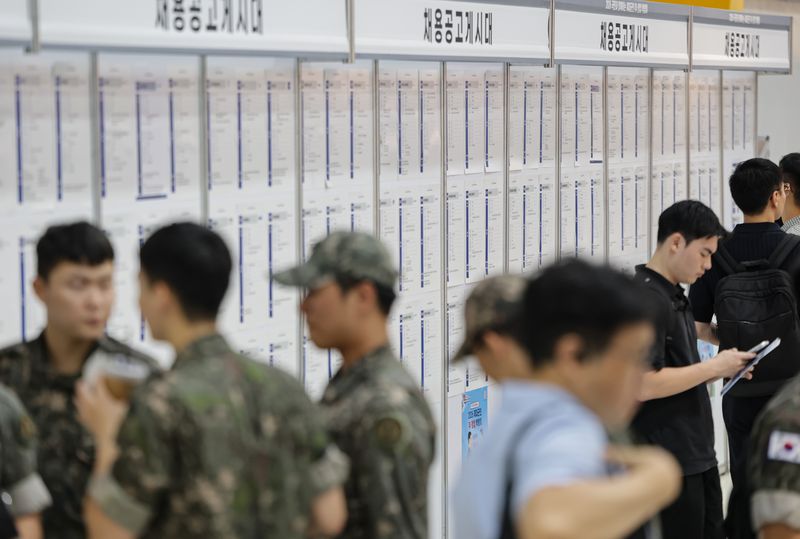
[Financial News] The allocation of specialized research personnel to large companies, which was suspended in 2013, will resume next year after 14 years. This will reopen a path for science and engineering talent in AI at research institutes of large companies, including Samsung Electronics and LG Electronics, to continue their research while fulfilling their military service.
According to the 2027 List of Recommended Military Service-Designated Establishments (Research Institutions), submitted to Hwang Jeong-a, a Democratic Party of Korea lawmaker on the Science, ICT, Broadcasting, and Communications Committee of the National Assembly of South Korea, the Ministry of Science and ICT recommended four large companies—LG Electronics, Samsung Electronics, Samsung Medison, and HD Hyundai Robotics—for designation as establishments eligible to host specialized research personnel.
Nine research institutes operated by these companies applied for a total of 81 personnel. The establishments ultimately designated and the final number of personnel allocated may differ, as the Military Manpower Administration’s selection and allocation procedures remain pending.
The specialized research personnel system is an alternative military service program that allows science and engineering personnel with master’s or doctoral degrees to work in research positions for three years instead of serving in the military. It is operated to prevent career interruptions among research personnel and support the research activities of science and engineering talent.
New allocations of specialized research personnel to large companies were halted in 2013. As a result, concerns have continued that researchers cannot pursue military service and research simultaneously using the research infrastructure of large companies.
The government moved to resume allocations to large-company research institutes to prevent AI talent from moving overseas and support the recruitment of personnel for the domestic AI industry. In a notice issued in June, the Military Manpower Administration decided to allocate 120 of the 240 specialized research personnel slots for master’s students in AI in 2027—half of the total—to research institutes of large companies.
However, concerns have also been raised that the allocation may not be filled in the first year of the program. The number of personnel requested by the large-company research institutes recommended by the Ministry of Science and ICT was 81, just 67.5% of the annual allocation of 120. That is 39 fewer than the number of available slots. At least one large company is also understood to have applied for specialized research personnel but failed to advance past the recommendation stage because it did not meet the requirements.
The criteria presented by the Military Manpower Administration for selecting large companies are an R&D investment ratio of at least 5% of sales, operations in fields that do not directly compete with small and medium-sized enterprises, and objectively verifiable R&D achievements. Companies must meet all three requirements to be eligible for recommendation.
The program is also temporary. The allocation of specialized research personnel in AI at large companies is scheduled to operate for three years, from 2027 through 2029. This has prompted calls to improve the operating period and selection criteria to ensure the program becomes firmly established.
Hwang said, "As specialized research personnel positions at large companies are being restored for the first time in 14 years, young researchers once again have a path to fulfill their military service at facilities equipped with the nation’s top-tier research infrastructure." She added, "However, because the requirements are so rigid that they could limit the program’s effectiveness, the alternative military service program should be opened up more boldly to secure talent and strategic technologies."
[email protected] Yoon Hong-jip Reporter