From UN General Assembly to U.S.-China Summit... Global Diplomacy's 'Superweek' Begins
- Input
- 2026-09-20 16:23:31
- Updated
- 2026-09-20 16:23:31
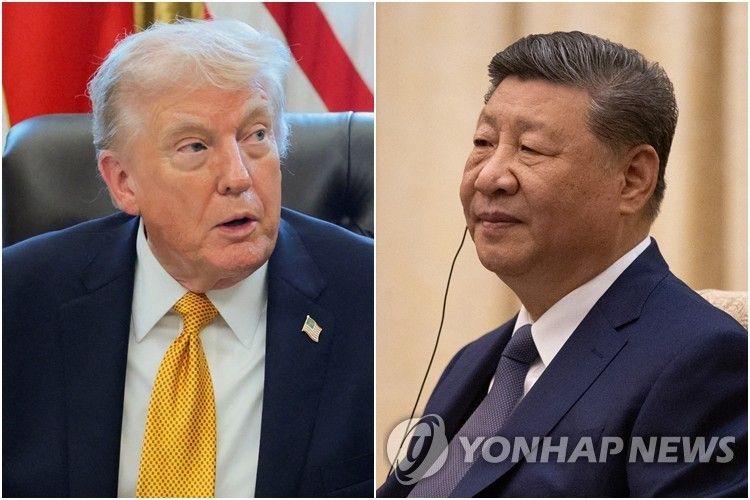
Will the UN General Assembly Offer a Path Out of the Iran War?
The 81st UN General Assembly, held in New York, United States, will begin its schedule on the 22nd local time. It is a venue where leaders from around the world, including President Trump, take the podium to state their positions on international issues.What is drawing the most attention is, without question, President Trump's speech on the first day. He is expected to reaffirm the foreign-policy principles of "America First" and "peace through strength" in his address.
The question drawing the greatest international attention is whether he will present an exit strategy for the Iran war. With the war now in its seventh month, observers are watching to see whether Trump will use the speech to offer a more concrete and practicable plan for ending it.
However, some analysts say he is more likely to focus on highlighting his achievements and legitimacy regarding the Iran war than on presenting a concrete solution in his UN General Assembly speech. Shin Beomcheol, a senior research fellow at The Sejong Institute and former vice minister of national defense, said, "Because President Trump tends to resolve problems through bilateral diplomacy rather than cooperation with the international community, he is unlikely to make the Iran issue a central topic in his UN speech." He added, "He is highly likely to emphasize his achievements by portraying the war as one in which he prevented Iran's nuclear development, brought peace to the Middle East and secured a U.S. victory. Rather than a specific exit strategy, he is expected to present a principled position."
Regarding recent developments in the Middle East, tensions have risen from the Strait of Hormuz to the Red Sea as Yemen's Iran-backed Houthi rebels have intensified their offensive. Concerns among Middle Eastern countries over U.S. defense commitments have also grown after reports that Saudi Arabia, which supports Yemen's government forces, asked the United States to carry out airstrikes on the Houthi rebels but was turned down. Analysts say this issue is more likely to be substantively discussed at a meeting between the United States and member states of the Gulf Cooperation Council (GCC) than in Trump's UN General Assembly speech.
Another point to watch is whether Trump will deliver a message on North Korea in his UN General Assembly speech. He has repeatedly expressed willingness to resume talks with North Korean leader Kim Jong Un, and cannot rule out the possibility that his speech will include specific incentives to make a summit happen.
In this regard, Shin said, "Even if President Trump does not present specifics, he may express his willingness to hold a summit with Chairman Kim." He added, "However, Trump's UN speech will likely focus on broadly addressing international issues while highlighting his own achievements, so it would be difficult to expect an overly specific proposal for North Korea."
Along these lines, attention is also focused on the message expected from Kim Son-gyong, North Korea's vice foreign minister, who is expected to take the podium on the 28th. The official is expected to repeat North Korea's longstanding position that "denuclearization cannot be discussed because it is a nuclear-weapon state." However, depending on the tone of Trump's speech, North Korea could also add a conciliatory message toward the United States, making the remarks worth watching.
Trade and AI to Be the 'Big Deal' at U.S.-China Summit
Against this backdrop, Xi's decision to skip the UN General Assembly is also worth watching. By forgoing an opportunity to check the United States and highlight China's leadership at a gathering of world leaders, he may be signaling a gesture of consideration ahead of his meeting with Trump on the 24th.Xi will instead travel to Washington, D.C., on the 23rd. Trump plans to personally greet him at a military airport near Washington, D.C. It is highly unusual for a U.S. president to meet a foreign leader—particularly China's leader—at an airport. Analysts say the strategy is to offer the highest level of protocol, taking China's emphasis on ceremonial etiquette into account, to secure the greatest possible cooperation from Xi at the summit.
At the U.S.-China summit on the 24th, a range of issues involving the two countries' vital interests will be on the table, from extending the "trade truce" to establishing AI safeguards.
The key issue, in particular, is extending the trade truce under which the two sides have suspended high tariffs on each other through November this year. With the midterm elections in early November approaching, Trump wants visible results, including large-scale sales of U.S. agricultural products and aircraft to China and expanded Chinese exports of rare earths and critical minerals.
Another point to watch is whether the United States and China will find common ground on safeguards as the need for AI controls has rapidly emerged. Calls are growing for the two countries to reach a basic agreement on AI safeguards and regulations before AI development enters an uncontrollable realm. However, both leaders view AI as a core-interest area on which they cannot afford to make concessions, so it remains uncertain whether an actual agreement can be reached.
The Iran, North Korea and Taiwan issues are also expected to be raised, but they are unlikely to be central topics. Regarding Iran, Shin said, "President Trump will ask China to cooperate, and China will respond in principle, but given the variable of the U.S. midterm elections, we will have to wait and see how much China will contribute in practice."
On North Korea, China may show limited goodwill. Shin analyzed, "China does not want the United States and North Korea to grow closer because it wants to keep North Korea within its sphere of influence." He added, "However, its willingness to cooperate on the North Korean issue could be a useful bargaining chip for Xi."
Taiwan is expected to be used as a pressure card depending on how the summit unfolds. Shin predicted, "Because President Trump places importance on Chinese investment, he will not bring up Taiwan first and put Xi in a difficult position." He added, "However, if China's investment commitments are insufficient or the meeting does not proceed smoothly, Trump could raise Taiwan as a pressure card."
[email protected] Hong Chae-wan Reporter