Housing Prices Fall Across Three Categories, 945 Auction Listings... Jeju Real Estate Market's 'Transaction Safety Net' Put to the Test
- Input
- 2026-09-20 13:11:58
- Updated
- 2026-09-20 13:11:58
【Financial News, Jeju=Jung Yong-bok】 As sale, jeonse and monthly rent prices fell simultaneously and both jeonse deposit guarantee incidents and auction listings increased in Jeju's real estate market, verifying 'the real information behind listings' has become more important. The government identified 10,412 online real estate advertisements nationwide as suspected illegal cases over the past year, while administrative measures stemming from brokerage inspections and crackdowns have continued in Jeju Province.
According to the Office for Government Policy Coordination and the Ministry of Land, Infrastructure and Transport (MOLIT) on the 20th, a review of online real estate advertisements from July last year through June this year identified 10,412 suspected illegal advertisements.
Continuous monitoring based on public reports identified 9,383 cases, while targeted monitoring of repeat violators, one-room districts near universities and residential lodging facilities found 1,029 cases. However, the government's published data did not include the number of cases identified in each city or province.
Jeju Province's own crackdowns have continued to uncover violations related to real estate brokerage. According to Jeju Island's tally of inspections and guidance for real estate brokers in 2025, 293 administrative penalties were imposed. These included seven registration cancellations, four business suspensions, 19 fines, and 263 warnings or corrective orders. Twenty-two serious violations were referred for criminal action.
Violations involving online listings and advertisements also resulted in actual administrative penalties. Jeju City inspected and provided guidance to 1,550 real estate brokerage offices in 2024. Of the 16 fines imposed, 15 involved violations in the listing or advertising of properties subject to brokerage.
The most common type of violation identified in online advertisements nationwide involved misstating key information that consumers use to decide whether to sign a contract.
Of the 9,383 cases identified through continuous monitoring, 5,201, or 55.4%, involved improper listings or advertisements that falsely stated the building's use, floor area or available options.
There were 3,753 violations, or 40%, involving the failure to disclose mandatory information such as the property's location, floor area and price. Advertisements posted directly by unqualified individuals, including brokerage assistants or property sales agents rather than licensed real estate agents, accounted for 429 cases, or 4.6%.

Cases of false or exaggerated advertising that could distort consumers' contract decisions were also identified. One property was advertised online as a single-family home, but the building register showed that it was an accommodation facility. In another case, an advertisement stated 'no loans,' but the property register showed that a mortgage lien worth 1.2 billion won had been registered.
Another listing was advertised as a one-room unit priced below market value without disclosing its exact location or whether it was a building in violation of building regulations due to unauthorized expansion.
The government plans to notify the relevant local governments of suspected illegal advertisements so that follow-up measures, including fines and referrals for investigation, can be taken. Under the Licensed Real Estate Agents Act, improper listings or advertisements are subject to fines of up to 5 million won, while violations involving mandatory disclosures can incur fines of up to 500,000 won.
In Jeju Province, the need to verify listing information has grown further amid recent trends in the real estate market. In the Korea Real Estate Board's (KREB) August national housing price survey, overall housing sale prices in Jeju Province fell 0.21% from the previous month. Nationwide prices rose 0.32%, while prices in the Seoul metropolitan area and Seoul rose 0.63% and 0.97%, respectively.
Jeju's jeonse prices fell 0.17%, while combined monthly rent prices declined 0.15%. Jeju Province was the only region nationwide where sale, jeonse and monthly rent prices all fell, and the changes in all three indicators were the lowest among the 17 provinces and major cities.
Jeju's cumulative housing sale prices from January through August this year also fell 1.26%. Seoul rose 6.68% during the same period, widening the gap between the two regions' cumulative changes to 7.94 percentage points.
The risk of failing to recover a rental deposit has been relatively high in Jeju's rental market. In July, Jeju Province's incident rate for jeonse deposit return guarantees was 4.6%, 5.1 times the national average of 0.9%. It was the highest among the 17 provinces and major cities nationwide.
From January through July this year, Jeju Province recorded 131 jeonse deposit guarantee incidents totaling 25.294 billion won. The incident rate remained high for three consecutive months, reaching 5.4% in May, 5.0% in June and 4.6% in July.
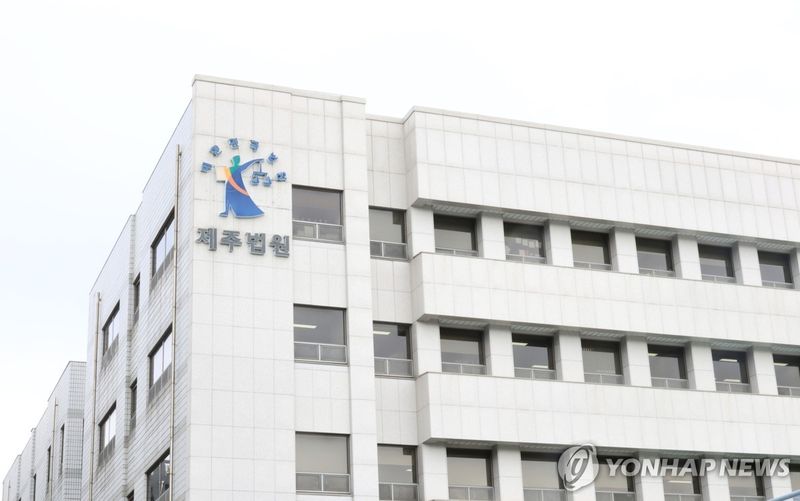
The number of properties in the court auction market also continued to rise. Jeju District Court handled 945 auction listings in August, following 902 in June and 927 in July. The figure remained above 900 for three consecutive months and was the highest level in roughly 18 years, since the 1,014 listings recorded in October 2008.
Of the 945 listings, 160 received successful bids, putting the auction success rate at 16.9%. This was 4.9 percentage points below the national average of 21.8%.
Falling housing prices, jeonse deposit guarantee incidents, rising auction listings and illegal advertisements are indicators with different causes and methods of compilation. They should not be grouped under a single cause and interpreted as representing the overall scale of risk in Jeju's real estate market.
However, in a market where price weakness, rental-market risks and rising auctions are occurring simultaneously, relying solely on descriptions in online advertisements when deciding whether to sign a contract can increase the risk of financial loss.
Before signing a contract, consumers should check the building register for the property's actual use, floor area and any violations, and review the property register themselves to verify ownership, mortgage liens and other rights and encumbrances. They should also confirm whether the person who posted the advertisement is a formally registered licensed real estate agent.
In particular, properties priced substantially differently from nearby market rates, as well as conditions affecting contract decisions such as 'no loans,' 'immediate move-in' and 'jeonse available,' should be checked against official records before signing a contract.
As Jeju's real estate market continues to weaken differently from the rest of the country, the key question going forward will be how many of the suspected illegal advertisements identified by the government involve Jeju and how many ultimately lead to actual fines or referrals for investigation.
[email protected] Jung Yong-bok Reporter