Crude Oil Imports Rise 9.8%, but High Oil Prices and Price Cap Pressure Weigh on Refiners; Four Major Players Focus on Protecting Profitability
- Input
- 2026-09-22 06:59:00
- Updated
- 2026-09-22 06:59:00

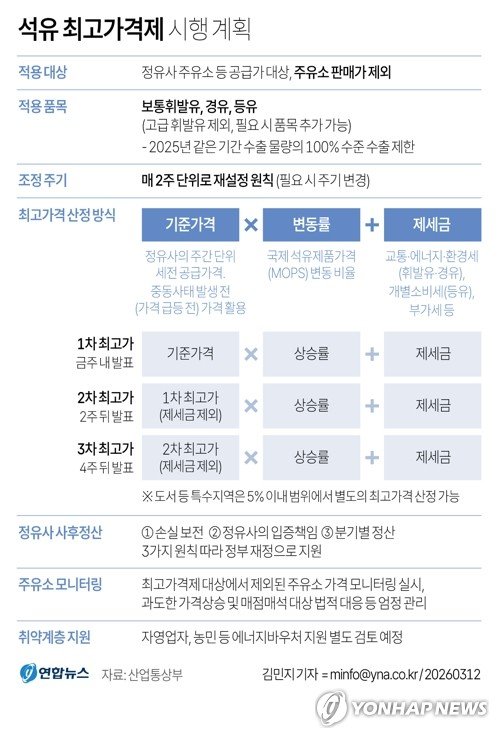
[Financial News] Despite supply uncertainty stemming from the Middle East, domestic crude oil imports have shown signs of recovery. As a result, refiners' management strategies for the second half of the year are focused on supply-and-demand management, process efficiency, high-value-added products and profitability protection through non-refining businesses. With international oil and petroleum product prices rising again, the freeze on domestic petroleum product price ceilings has made the extent to which refiners can absorb higher costs another key factor affecting earnings.
According to the Korea Petroleum Association on the 22nd, domestic crude oil imports totaled 93.18 million barrels in July, up 9.8% from the same month a year earlier. Compared with approximately 64.5 million barrels in April, when imports fell due to disruptions at the beginning of the Middle East war, the July figure represented an increase of about 44%. The association explained that the government's support for crude oil supply, the implementation of stockpile oil swaps (SWAPs, or exchanges), and refiners' procurement efforts helped stabilize supplies.
However, supply-and-demand stability does not necessarily translate into improved profitability. According to the Ministry of Trade and Industry, Dubai crude rose from $92.3 per barrel in the fourth week of August to $128 on the 16th of this month. International diesel prices also increased from $154 to $200.7 over the same period. The government froze the 10th price ceiling, effective from the 19th, at 1,784 won per liter for gasoline, 1,773 won for diesel and 1,380 won for kerosene.
Although concerns over crude oil supply and demand have eased, refiners are finding it difficult to reflect higher international prices in domestic supply prices. They are therefore seeking to protect profitability by improving production efficiency and product mixes and expanding non-refining businesses.
SK Innovation is expanding its strategy to build an integrated energy portfolio centered on electrification, moving beyond its traditional focus on refining and petrochemicals to include liquefied natural gas (LNG) power generation, batteries and small modular reactors (SMRs). Oil operations accounted for 64% of its consolidated revenue in the first half. SK Energy is pursuing production and operational efficiency and diversifying its crude oil supply sources. At the SK Innovation group level, the company is working to secure power-generation assets, provide solutions for large power consumers, and expand its global LNG value chain and energy storage system (ESS) businesses.
For S-Oil, the top priority is commissioning the Shaheen Project, which carries a total investment of 9.258 trillion won, and preparing for commercial operation early next year. Once the Shaheen Project begins operations, annual petrochemical production capacity will increase by 3.2 million tons, raising the petrochemical share of total production from 12% to 25%.
HD Hyundai Oilbank is importing crude from North and South America and other non-Middle Eastern sources alongside Middle Eastern crude. It recently completed HD Hyundai E&F, an LNG cogeneration plant in the Daesan Industrial Complex, securing a stable energy source. The company is also expanding its business portfolio by strengthening its lubricants business, including immersion-cooling fluids for artificial intelligence data centers (AIDCs). GS Caltex is placing greater emphasis on improving the profitability of its existing refining, lubricants and petrochemical assets than on large-scale new capacity additions. In the first half of the year, its revenue mix was 79.6% refining, 4.2% lubricants and 16.2% petrochemicals.
Industry observers believe that, regarding performance in the second half of the year, the key issue will be how efficiently refiners process and sell the crude they secure to generate profits, rather than crude procurement itself.
iM Securities forecast that refining margins could remain strong, as global supplies of refined products are tightening due to disruptions at refining facilities in Russia and the Middle East. An official from the Korea Petroleum Association said, "The refining industry will do its utmost to stabilize domestic prices and supply and demand until disruptions in global crude oil supply and demand are resolved, and will also contribute to stabilizing the global supply of petroleum products."
[email protected] Kim Mi-hee Reporter