U.S.-Denmark Greenland Security Agreement to Resolve Uncertainty and Contribute to Regional Stability
- Input
- 2026-09-20 14:14:37
- Updated
- 2026-09-20 14:14:37
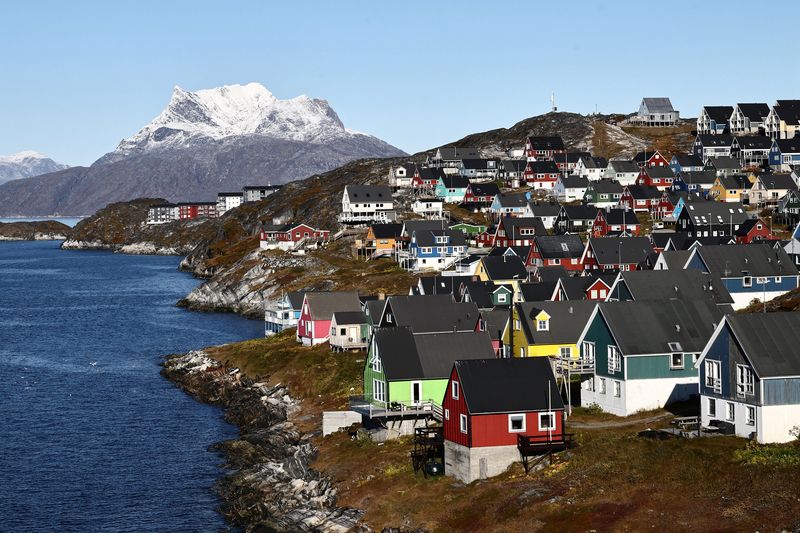
[Financial News] The United States and Denmark reached an unexpected agreement on Greenland's security on Sept. 18 local time, bringing a temporary end to the diplomatic conflict stemming from U.S. President Donald Trump's calls for the forced annexation of Greenland. The North Atlantic Treaty Organization (NATO) welcomed the agreement, saying it would contribute to stability in the Arctic region.
President Trump said the two countries had agreed to a deal allowing the United States to deploy more troops to Greenland and that work would begin immediately.
The Greenland government and the Danish government, which holds sovereignty over the island, confirmed that they would sign the agreement during the United Nations General Assembly this week.
Danish Prime Minister Mette Frederiksen and Greenland Prime Minister Jens-Frederik Nielsen said in a joint statement that the agreement "strengthens joint security in the Arctic and North Atlantic regions while recognizing the sovereignty and territorial integrity of the Kingdom of Denmark and the right of the people of Greenland to self-determination."
Prime Minister Frederiksen said in a statement, "I am pleased that we have concluded an agreement that guarantees and strengthens the security of Greenland, the Kingdom of Denmark, the United States, and the Western alliance." Jens-Frederik Nielsen, prime minister of Greenland's self-governing government, also said the agreement "will benefit everyone."
After returning to office last January, President Trump clashed with NATO by proposing that the United States purchase Greenland and arguing that the island should come under U.S. control for security against Russia and China, saying it was strategically necessary.
On Truth Social, he described it as "an agreement that would cost the United States nothing," claiming that the United States could take the measures necessary for Greenland's security and defense and "would be granted permanent control over security and all other necessary matters."
The agreement's details have not yet been officially released. However, according to a State Department official, the deal would give the United States permanent military authority, permanent access to military sites, and the authority to establish bases and transit Greenland's airspace. It would also grant Washington the exclusive right to build additional military facilities without separate approval from Denmark or Greenland.
The agreement would also ban non-NATO countries from building military bases and continue to completely block hostile states to NATO, including Russia and China, from investing in sensitive sectors in Greenland or deploying troops there, the official said.
Foreign media reported that the agreement would remain in force even if Greenland becomes independent.
President Trump has repeatedly cited the construction of the Golden Dome missile defense system to counter missile threats from Russia and China, as well as the acquisition of resources, when raising the possibility of purchasing or forcibly annexing Greenland. The island holds large deposits of rare earths essential to advanced industries such as mobile devices and electric vehicles.
Trump's repeated threats drew strong opposition from Greenland's residents, Denmark, and NATO member states, but the agreement produced a dramatic compromise. French President Emmanuel Macron said, "It is very positive that Denmark's sovereignty and international law have been respected."
Danish media are interpreting the agreement as a quiet diplomatic victory for their country. The daily Berlingske ran the headline, "Don't tell Trump that the Kingdom of Denmark has won," while a Politiken correspondent wrote, "Trump did not get Greenland, but he got the opportunity to declare victory on social media." Transferring sovereignty over the territory was Denmark's absolute red line, and Trump's announcement contained no mention of a transfer of territorial ownership.
Mark Jacobsen, an assistant professor at the Royal Danish Defence College, said the agreement resolved the issue of ceding territory to the United States that had persisted for nearly two years. Although it would prevent the United States from gaining complete control, "President Trump may be able to look like the winner," he said.
Since World War II, Denmark has allowed the United States to operate troops, bases, ports, and airfields in Greenland. About 150 U.S. troops are currently stationed at Pituffik Space Base. The U.S. and Danish air forces are participating in military exercises taking place in Greenland.
A cautious mood still prevails in Greenland. Naja Nathanielsen, a member of the Greenland Parliament, stressed, "This is the news we all hoped for, but ensuring the right to self-determination is more important than anything else." Aaja Chemnitz, a former member of parliament, also said, "Because it is difficult to trust Trump, I will remain skeptical until the final signing takes place."
Danish Foreign Minister Lars Løkke Rasmussen said on social media, "I expect an agreement that strengthens security in the Arctic and North Atlantic to replace the long period of uncertainty."
[email protected] Yoon Jae-jun Reporter