Action Star Lee Sung-hoon Returns with 'Ban Dal'—Director, Lead Actor and Martial Arts Director
- Input
- 2026-09-20 12:22:23
- Updated
- 2026-09-20 12:22:23
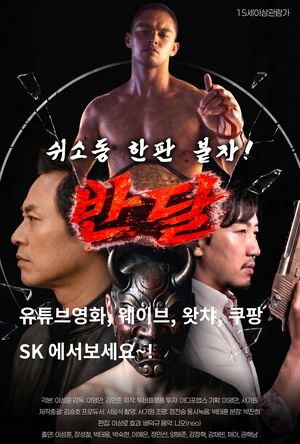
Lee Sung-hoon, who gained recognition as an action star in the 1990s, has returned before audiences through the film 'Ban Dal.' For this project, he personally took on the roles of director, lead actor and martial arts director, incorporating his cinematic journey and philosophy of martial arts into a single work.
Lee Sung-hoon drew attention in the past by delivering powerful action and charisma as the villain opposite Choi Min-soo in the film 'Terrorist.' He later starred in 'Booking Sonata,' a film adaptation of his own novel, 'Booking of Night.'
Set in 1996 at the new-generation nightclub Juliana, 'Booking Sonata' depicts the love, desires and wandering of young people. It is currently available on SK Group, KT Corporation, LG, Wavve, Watcha and TVING.
■ 'Ban Dal,' Featuring Traditional Martial Arts and a Portrait of Humanity
'Ban Dal' begins with the reality that East Asian traditional martial arts, which captivated audiences through the action of Bruce Lee, Jackie Chan and Donnie Yen, are losing ground amid the spread of Western-style mixed martial arts and combat sports.
However, the film's central question goes beyond the simple revival of traditional martial arts. By asking, "How is fighting different from martial arts?" it revisits the spirit of martial arts and the meaning of self-defense. At the same time, it portrays people in a society rife with materialism and opportunism through black comedy and action.
The film divides people into three types: Ban Dal, On Dal and Cho Dal. Ban Dal symbolizes someone who pursues selfish interests for personal gain. On Dal represents someone who loves others and preserves their integrity, even if they appear foolish. Cho Dal symbolizes someone who distinguishes right from wrong and seeks to correct wrongdoing. Through their clashes, the film asks viewers, "What kind of dal are you?"
The action scenes in 'Ban Dal' embody Lee Sung-hoon's view of martial arts. In the 'Choi Myeon-su' episode, the film teaches that when confronting a powerful opponent, one should accept the trembling rather than suppressing fear and should release tension. Cho Dal tells On Dal, "If you tremble, fall," emphasizing that true courage is the ability to move even in frightening situations.
In 'Kkwong-su,' the film presents the realistic view that while the purpose of martial arts lies in mental preparation and self-defense, surviving is what matters most in a fight.
A confrontation with the head of an MMA gym also highlights the difference between traditional martial arts and modern combat through the premise that changing the rules can change the winner.
In this way, 'Ban Dal' does more than showcase flashy action. It raises questions about martial arts and fighting, survival and the choices people make.
■ 'Choi Myeon-su' and 'Kkwong-su'—The Philosophy of Martial Arts Within the Action
Lee Sung-hoon has also expressed his perspective on people who look down on 'Booking Sonata' because it is an erotic film.
He said, "Life itself is action and eroticism, and disparaging eroticism, which makes up half of life, is a denial of life's reality," emphasizing that love and desire are also important elements of human life.
For Lee Sung-hoon, while 'Booking Sonata' dealt with the love, desires and consumer culture of the younger generation, 'Ban Dal' examines broader society and humanity through martial arts, survival and human choices.
'Ban Dal' has been available since the 1st on SK Group, Wavve, Watcha, Coupang Play and Cinefox. According to the production team, it drew attention on the 15th by ranking No. 2 on Cinefox, ahead of 'The King's Warden.'
Lee Sung-hoon, who has expanded his career from acting to directing and martial arts direction, expressed through 'Ban Dal' his life experiences, philosophy of martial arts and perspective on humanity.
Once known for leaving a strong impression on audiences as an action star, he has now returned before them as a creator who directs his own cinematic world.
The question posed by 'Ban Dal' ultimately comes down to this: Are you Ban Dal, pursuing material gain and survival; On Dal, protecting love and integrity; or Cho Dal, correcting what is wrong? The answer is not found in the film's characters but is something each viewer must discover in their own life.
[email protected] Han Gap-su Reporter