"For Korea's Financial AI, Customer Experience—Not Adoption—Is the Deciding Factor" [Interview]
- Input
- 2026-09-20 17:04:56
- Updated
- 2026-09-20 17:04:56
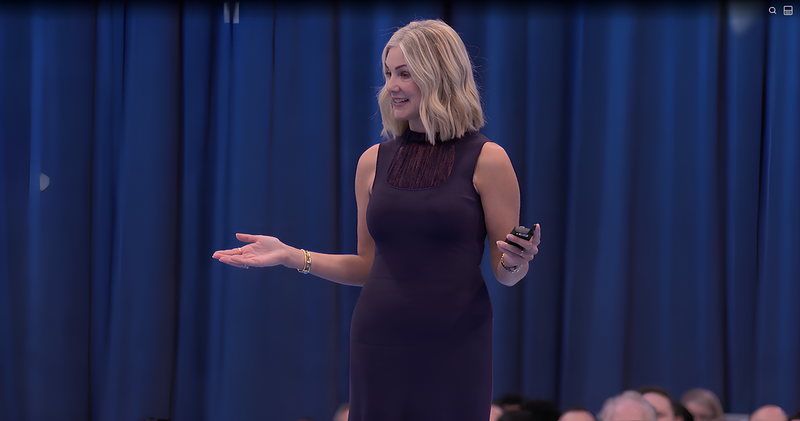
[Financial News] "The core challenge for Korean financial institutions is no longer whether to adopt AI, but how to use it to create a differentiated customer experience."
In an interview with Financial News on the 20th, Eran Agrios, Salesforce's executive vice president of Financial Services and Insurance, described South Korea as "a market that can quickly adopt AI agents." He said Korean financial institutions place greater emphasis on improving the customer experience and creating new value, while financial companies in the United States and Europe primarily use AI to improve operational efficiency and reduce staffing burdens.
Agrios attributed this trend to South Korea's high level of digital maturity and AI acceptance. He stated, "Mobile-centered financial services have already become part of everyday life in Korea, so consumer expectations are also high," adding, "According to a Salesforce survey, 65% of Korean respondents said they were willing to use AI as a personal finance coach or adviser, far above the global average of 49%."
Salesforce is focusing on connecting the customer data and actual business processes held by financial institutions to AI, rather than competing solely on AI performance, as it seeks to expand in the Korean financial market. It regards big tech companies targeting the financial AI market—including Microsoft (MS), Amazon Web Services (AWS), and Google—as ecosystem partners rather than competitors.
The key is to use Customer 360 to connect customer data scattered across multiple systems and enable AI agents to apply it to actual business operations. Agrios explained, "If other companies provide AI infrastructure and models, Salesforce provides a foundation for practical applications, such as organizing the information AI needs for customer meetings and recommending work priorities," adding, "Reasoning logs and audit trails also help financial institutions comply with regulations."
As AI moves into core financial functions such as lending and insurance, human responsibility and oversight become as important as AI autonomy, Agrios said.
Agrios emphasized, "People must make the final decisions on high-risk matters, such as loan underwriting and insurance underwriting. To prevent 'automation bias,' in which companies accept AI judgments without question, Salesforce presents the reasoning process and confidence level alongside its recommendations. It also sets different human-approval requirements based on the level of operational risk."
He also highlighted data security and regulatory compliance, issues of particular sensitivity to Korean financial companies. Salesforce operates its cloud infrastructure, Hyperforce, in South Korea as well. Agrios explained, "Key data, including customer data, business process records, and AI agent logs, is managed in a local cloud environment. We prevent customer data from being exposed to external AI models or used for training, and support connecting existing systems with AI through 'zero-copy' without large-scale data replication."
The impact of AI adoption is beginning to show in measurable terms in the financial sector. One Korean bank is using the Salesforce platform to consolidate customer data scattered across multiple systems into a single portal for customer consultations. Another insurer is using optical character recognition (OCR)-based AI to automatically extract key information from unstructured contracts, reducing repetitive administrative work. In the United States, PenFed Credit Union introduced three AI agents, cutting call handling time by 10% and after-call work time by 50%. It has also achieved annual cost savings of about $3 million (approximately 4.2 billion won) through automated call summaries alone.
Agrios emphasized, "Over the next three years, AI adoption will expand beyond task automation into proactive sales, risk management, and operational efficiency. In Korea, our goal is to implement AI solutions that deliver tangible results while focusing on trust and regulatory compliance."
[email protected] Choi Hye-rim and Joo Won-kyu Reporter