More than 1.86 Million Chinese Visitors Traveled to Jeju, Surpassing Last Year's Full-Year Figure in Eight Months
- Input
- 2026-09-20 11:41:17
- Updated
- 2026-09-20 11:41:17
[Financial News, Jeju—Reporter Jeong Yong-bok] More than 1.86 million Chinese tourists had visited Jeju by the end of August this year, already surpassing last year's full-year total of 1,588,107. With more than 270,000 additional visitors recorded in just eight months compared with the previous 12 months, Jeju's growing concentration of the Chinese tourism market is becoming even more apparent.
According to Jeju Special Self-Governing Province and the Jeju Tourism Organization on Sept. 20, about 1.86 million Chinese tourists visited Jeju from January through August this year.
A total of 1,588,107 Chinese tourists visited Jeju last year, accounting for 70.2% of the 2,242,187 foreign tourists who visited the island. This year, Jeju welcomed more than 17% more Chinese tourists in just eight months than it did during all of last year.
Arrivals by sea have also increased. By the end of August, about 383,000 Chinese tourists had entered Jeju by cruise. They accounted for 20.6% of all Chinese visitors, or roughly one in five.
As the recovery of the Chinese tourism market becomes more pronounced, Jeju Province is working to strengthen cruise cooperation with major Chinese cities and connect tourism exchanges with logistics, renewable energy and other economic and industrial sectors.
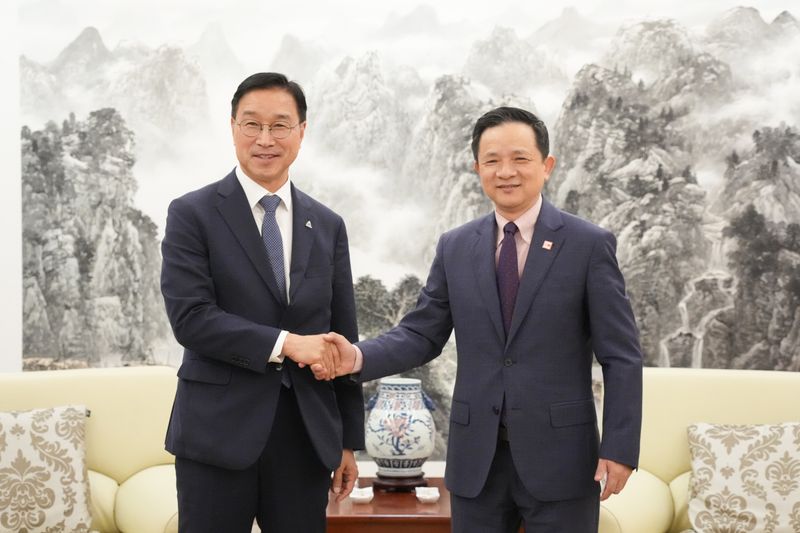
On the afternoon of Sept. 17, Jeju Governor Wi Seong-gon met with Chinese Ambassador to South Korea Dai Bing at the Embassy of the People's Republic of China in the Republic of Korea in Seoul to discuss cooperation between Jeju and China in the economic, tourism and renewable energy sectors.
One of the main agenda items was the international cargo route linking the Port of Jeju with the Port of Qingdao in China.
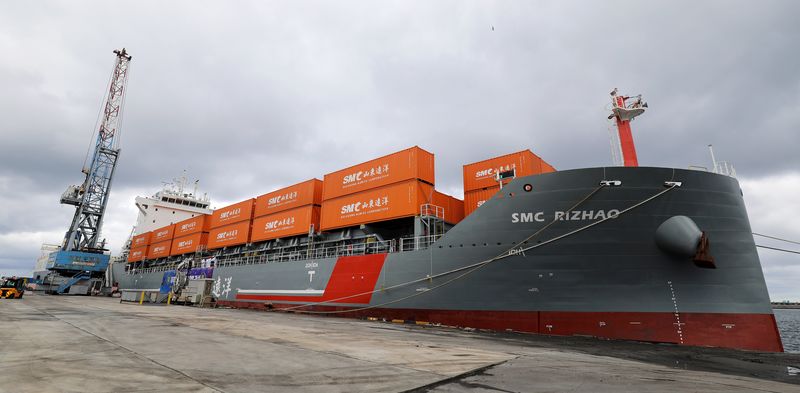
The scheduled Jeju-Qingdao cargo service made its inaugural voyage on Oct. 16 last year. Although it carried symbolic importance as an international scheduled container route directly linking Jeju and China, actual cargo volumes fell far short of initial projections, sparking controversy over the burden of loss compensation and the procedures for pursuing the project.
The existing agreement was designed to provide the Chinese shipping company with up to 7.3 billion won in annual loss compensation, or up to 21.9 billion won over three years. Concerns were raised that Jeju Province's financial burden could grow because of insufficient cargo volumes. The lack of a central investment review also became a procedural issue.
Governor Wi apologized as head of the provincial administration during questions on provincial affairs at the Jeju Provincial Council on Sept. 7 over the controversy surrounding loss compensation for the Qingdao route.
Jeju Province and the Chinese shipping company are currently renegotiating a new operating agreement. Jeju is seeking to reduce loss compensation to no more than 5 billion won annually and no more than 10 billion won over two years. The negotiations also call for Jeju's burden to decrease as cargo volumes increase.
Governor Wi asked Ambassador Dai for China's attention and support so that the negotiations could be concluded promptly and the route operated steadily.
Ambassador Dai also assessed the Jeju-Qingdao route as an important project for exchanges between the two countries and expressed his intention to convey Jeju's request to China to ensure sustainable operations.
However, the increase in Chinese tourists and the profitability of the Qingdao cargo route are separate issues. Stable cargo volumes must be secured to reduce the burden of loss compensation for the scheduled cargo service.
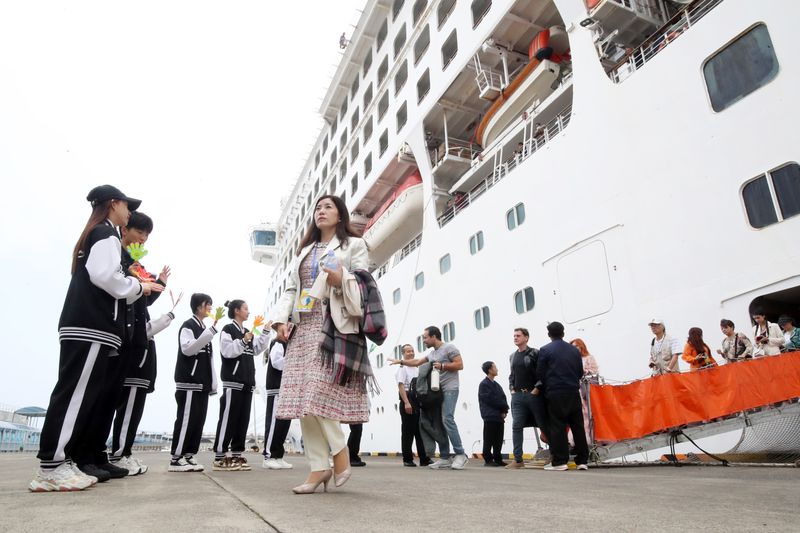
Jeju Province also plans to link the normalization of the route first to expanding logistics and use it as a foundation for exchanges in other areas, including tourism and culture. In the cruise sector, the sides discussed strengthening cooperation with major Chinese cities to develop Jeju into a cruise tourism hub in Northeast Asia.
Tourist safety was also discussed. Ambassador Dai noted that Jeju has a high profile in China and called for continued attention to ensure that Chinese tourists can travel safely on the island.
Governor Wi said, "We will prioritize the safety of residents and domestic and foreign tourists and work with relevant agencies, including the Consulate General of the People's Republic of China in Jeju, to improve the travel environment."
The two sides also explored opportunities for cooperation in renewable energy. Jeju Province is pursuing the expansion of renewable energy and offshore wind power with the goal of achieving carbon neutrality by 2035.
Governor Wi proposed expanding exchanges between Chinese companies with relevant technologies and experience and businesses and institutions in Jeju. Ambassador Dai also expressed his willingness to help connect the two sides if Jeju presents specific cooperation projects.
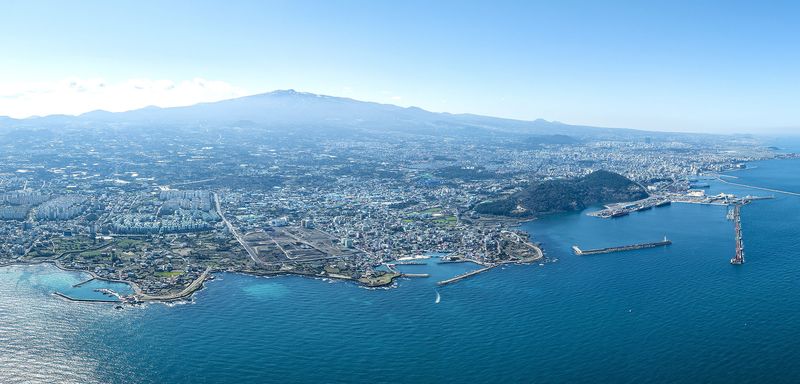
Exchanges between the two sides could expand further ahead of next year's 35th anniversary of diplomatic relations between South Korea and China. Jeju Province has invited Ambassador Dai to the 'Korea-China Future Development Jeju-China Exchange Week,' which will be held in Jeju on Nov. 4. The event will address cooperation in future industries, including artificial intelligence and renewable energy.
The rapid recovery of the Chinese tourism market presents an opportunity for Jeju's tourism industry, but it also leaves the island with the challenge of excessive reliance on a single market.
Chinese tourists accounted for 70.2% of all foreign tourists who visited Jeju last year. Visitors from Greater China, including Taiwan and Hong Kong, made up more than 83%. This is why Jeju Province is pursuing market diversification policies, such as expanding this year's international flight support to include ASEAN countries and long-haul routes.
While linking the increase in Chinese tourists to greater cruise activity and tourism spending, Jeju needs to assess actual cargo volumes and the financial burden on the Qingdao route separately. Whether Jeju can address both the expansion of exchanges with China and the reduction of its dependence on a particular market is emerging as a key issue for the island's future foreign tourism and external economic strategies.
[email protected] Jeong Yong-bok Reporter