Jeju Sports High School Plan Redesigned: Addressing the Overcrowded Sports Department, Site and Finances
- Input
- 2026-09-20 10:31:22
- Updated
- 2026-09-20 10:31:22
【Financial News | Jeju—Reporter Jeong Yong-bok】A review of whether to establish an independent Sports High School in Jeju is gaining momentum again.
According to the Jeju Special Self-Governing Provincial Office of Education on the 20th, the first meeting of the Expert Task Force for Reviewing the Establishment of a Jeju-style Sports High School will be held at 3 p.m. on the 21st in the education office’s situation room. The process is intended to reexamine the policy need, student demand, operating model, site, facilities and finances before an establishment plan is drawn up. The task force will include 13 members from the education office, Jeju Special Self-Governing Province, the two administrative cities, the sports association, Namnyeong High School, education experts and parents.
The most direct reason for the continued calls to establish a Sports High School in Jeju is that elite sports education is concentrated in the specialized sports department of a single school.
Jeju currently has no separate Sports High School, while private Namnyeong High School operates a sports department. According to figures released by the provincial education office in 2025, 116 students were enrolled in the department across 11 events: track and field, ssireum, golf, swimming, gymnastics, wrestling, bowling, taekwondo, judo, weightlifting and boxing. With one class per grade and a capacity of 40 students per grade, enrollment was close to the total capacity of 120.
The overcrowding issue was also identified in a research study. In its 2024 feasibility study on establishing or converting a sports middle and high school, the Jeju Special Self-Governing Provincial Office of Education compared five models: establishing sports middle and high schools, establishing a school linked to Jeju Sports Complex, transferring Namnyeong High School’s sports department to a public school, converting an existing public school, and restructuring Namnyeong High School’s current system.
The researchers recommended transferring Namnyeong High School’s sports department to a public school as the most suitable model. They proposed a schoolwide enrollment of approximately 150 students, with two classes per grade. They also called for at least one specialized coach for each sport, additional physical education teachers and a sports-specialized vice principal.
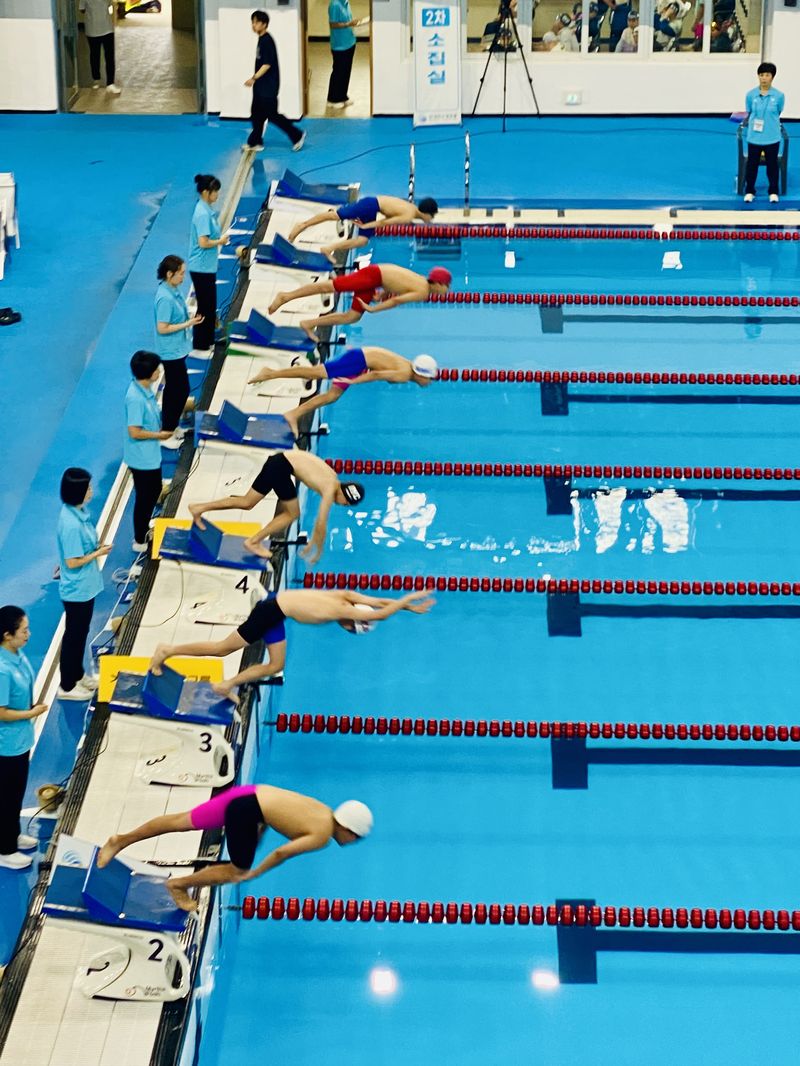
This is why the need for a Sports High School cannot be judged solely by the number of students. Elite sports require coaches and training facilities for each event, as well as an operating system distinct from that of a regular high school to manage competitions, rehabilitation and student life.
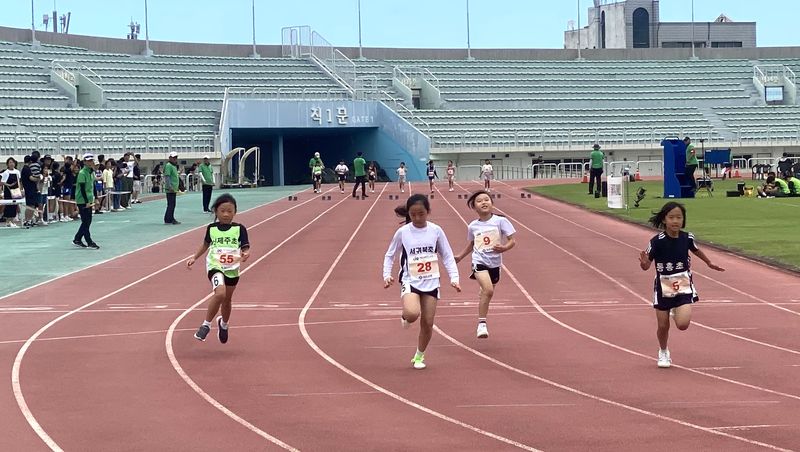
Jeju has also maintained a steady pool of athletes at the elementary and middle school levels. At the 55th National Youth Sports Festival held in Busan this year, Jeju’s student-athlete delegation won 60 medals: 11 gold, 15 silver and 34 bronze. The provincial education office also operates separate career and admissions programs for student-athletes and students aspiring to pursue sports-related fields.
However, these achievements do not automatically establish the feasibility of creating a Sports High School. The first questions are how much actual demand exists among prospective students amid a declining school-age population and whether enough student-athletes can be secured to keep the school operating stably.
The substantial cost of facilities and operations is another variable. Building all the facilities needed for events such as track and field, swimming, gymnastics and combat sports on the school grounds could increase the financial burden. This is why the provincial education office included links to public sports facilities, candidate sites, and boarding and commuting conditions in the task force’s review.
The character of a Jeju-style Sports High School is also a key issue. In its direction for school sports this year, the provincial education office identified “fostering student-athletes who pursue academics and transparent school sports teams” as a central task. Even if a Sports High School is established, it should be a system that supports student-athletes’ right to learn, general academic subjects and career education, rather than focusing solely on competition results.
A domestic study on balancing academics and athletics among Sports High School students found that school-level academic support helped broaden student-athletes’ understanding of academics and their career choices. At the same time, teacher workloads and financial conditions were cited as obstacles to sustained operation.
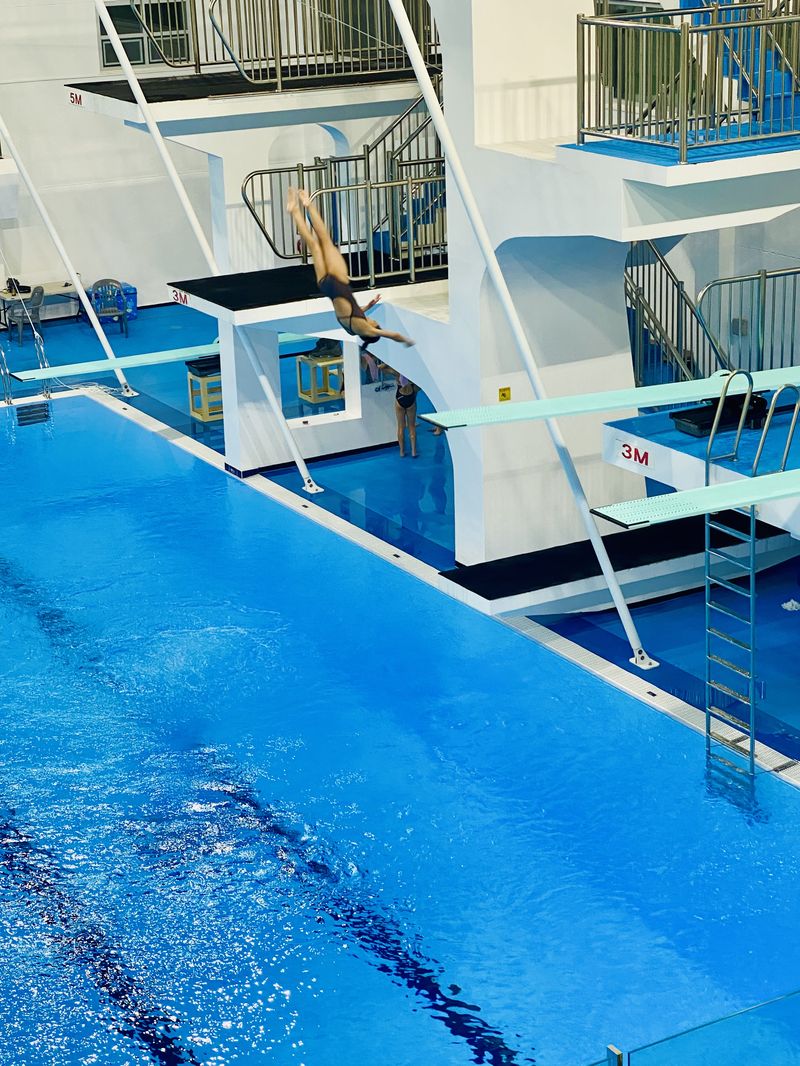
The composition of events unique to Jeju is another subject of review. The 2024 study proposed adding marine and mountain sports to the 11 events currently offered by Namnyeong High School’s sports department, taking Jeju’s location into account. However, expanding the number of events would also increase the burden of hiring coaches, building facilities and covering operating costs, making it necessary to assess actual athlete demand and competition infrastructure together.
There is also a cautious view of operating a sports middle school alongside the high school. The researchers concluded in 2024 that while an affiliated sports middle school could help secure student-athletes, it should be avoided because it could lock students into a career path at a young age and weaken the development of student-athletes at other schools.
The location has also become an important variable again. Last year, the Wimi area of Namwon-eup, Seogwipo City, was considered a leading candidate, and using nearby public sports facilities to reduce investment costs was also discussed. However, the provincial education office made clear that the task force is not a process for preselecting a specific area. It plans to comprehensively reassess candidate sites, accessibility, training facilities, boarding and commuting conditions.
From October through November, the task force plans to visit two or three Sports High Schools in other provinces to examine their school sizes, event operations, training facilities, boarding arrangements, student life and examples of cooperation with local government sports facilities.
Ultimately, the success of a Jeju-style Sports High School will depend less on whether a new school is established than on what kind of school is created. The key criteria will be whether it can ease overcrowding in the existing sports department while maintaining an appropriate size suited to student demand, and whether it can integrate specialized training, academic and career education, boarding and public sports facilities into a single system.
The provincial education office said it will gather sufficient input from the education and sports sectors, local governments, parents and the broader community before setting its direction.
[email protected] Jeong Yong-bok Reporter