High Interest Rates Strike Back, Hitting the Weakest First—Delinquency Rate Among Low-Credit Self-Employed Borrowers Nears 45%
- Input
- 2026-09-20 09:53:19
- Updated
- 2026-09-20 09:53:19
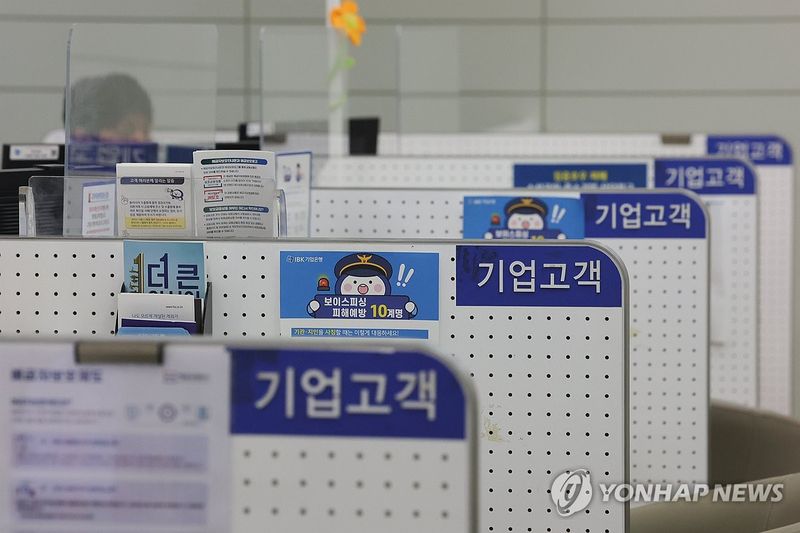
According to financial-sector sources on the 20th, an analysis of delinquency rates on loans to individual business owners at KB Kookmin Bank, Shinhan Bank, Bank of Hope, Woori Bank and Nonghyup Bank, using the Financial Supervisory Service's standard 10-grade system, showed that the average delinquency rate for Grade 3 borrowers stood at just 0.05% at the end of last month. That was lower than the 0.07% recorded at the end of 2021.
The situation worsened sharply as credit ratings declined. The Grade 7 delinquency rate rose nearly fourfold, from 1.68% at the end of 2021 to 6.58% at the end of last month. Over the same period, the Grade 9 rate soared from 4.56% to 23.58%, a 5.2-fold increase.
The delinquency rate for the lowest tier, Grade 10, reached 44.64% at the end of last month. In other words, nearly half of the amount borrowed was delinquent. The rate was also up 6.44 percentage points from 38.20% at the end of last year. At some banks, the delinquency rate among Grade 10 self-employed borrowers exceeded 70%.
Cracks are also appearing among borrowers with mid-level credit ratings. The Grade 5 delinquency rate rose from 0.06% at the end of 2021 to 0.46% at the end of last month. Although it remains below 1% in absolute terms, the rate has increased more than sevenfold compared with five years ago.
As interest rates have continued to rise, the interest burden on vulnerable borrowers could grow further. The yield on one-year bank bonds, used as an indicator for interest rates on personal credit loans and corporate loans, rose to 4.008% annually on the 17th. It crossed above 4% for the first time in two years and 10 months since November 2023. The yield climbed further to 4.033% on the 18th.
The delinquency rate among low-credit self-employed borrowers has recently begun rising sharply again. The Grade 7 rate climbed from 5.25% at the end of June this year to 5.99% at the end of July and 6.58% at the end of last month, a 1.33-percentage-point increase in two months. The Grade 9 rate also jumped from 18.69% at the end of July to 23.58% at the end of last month, rising 4.89 percentage points in a single month.
The problem is that the deterioration among low-credit borrowers may not end with them. If rising delinquency rates increase banks' burden of managing asset soundness, banks may tighten screening for new loans, raising funding barriers even for other borrowers, including those seeking secured loans.
Self-employed borrowers are particularly vulnerable even within the same credit grade. At the end of last month, the Grade 7 delinquency rate for all corporate loans, including loans to individual business owners, was 3.20%—about half the 6.58% rate for Grade 7 individual business owners.
This kind of 'interest-rate polarization' also emerged as an issue at the Bank of Korea (BOK)'s Monetary Policy Board. When the base rate was decided last month, Board member Hwang Geon-il, who issued a dissenting opinion in favor of keeping rates unchanged, noted that delinquency rates were rising, particularly among small and medium-sized enterprises, while market rates had already reflected expectations of an interest-rate hike. He said vulnerable sectors and deepening polarization should be considered together.
[email protected] Kim Hyun-jung Reporter