US Media Focus on 'The Cherry Orchard' Transplanted into a Korean Chaebol Family: 'Perfect Ensemble' vs. 'Damage to the Original's Spirit' [Park Ji-hyun's Art World]
- Input
- 2026-09-20 03:01:25
- Updated
- 2026-09-20 03:01:25
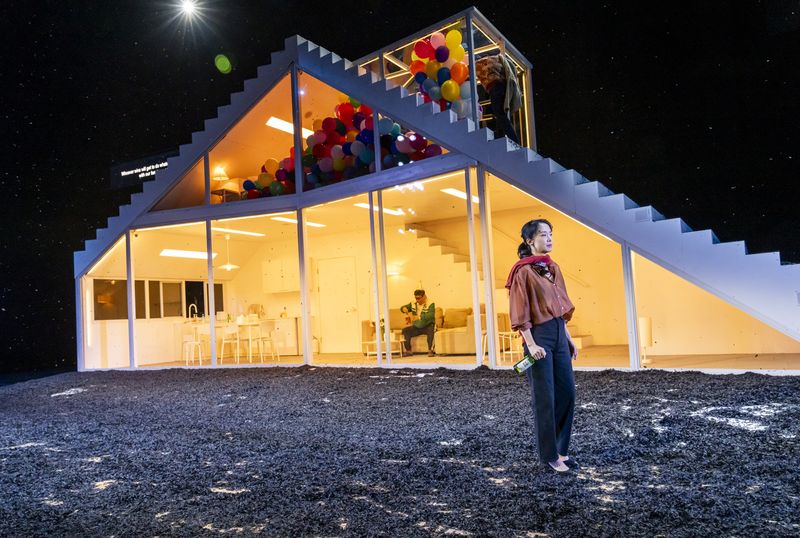
[Financial News] Attempts to adapt acclaimed foreign works to Korean contexts and present them on the global stage always walk a fine line between fresh shock and damage to the original. This production of Anton Chekhov's classic 'The Cherry Orchard,' reimagined as a story about a modern Korean chaebol family and staged in New York, has become the center of that heated debate. The cast's commanding performances and the stage design drew widespread praise, but leading local outlets sharply disagreed over the directorial choice to give the original a distinctly Korean twist.
■ From 19th-century Russian aristocrats to a 21st-century Korean chaebol family: Why Korea?
Running through the 26th (local time) at the Park Avenue Armory theater in Manhattan, New York, the production was adapted by Australian director Simon Stone. It is an unconventional staging performed entirely in Korean, with English subtitles. Stone replaced the estate of the 19th-century Russian aristocratic family facing ruin in the original with the Song family, a leading Korean chaebol family whose multigenerational business is also at risk of being lost.
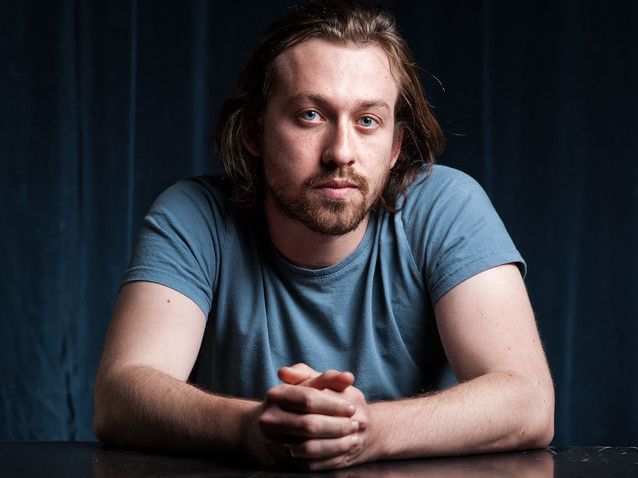
In an interview with The New York Times, he explained the background to the adaptation, saying, "I found the sense of the rapid rise of a new class and upheaval in late-19th-century Russia in South Korea's dynamic social changes and generational conflicts in the 21st century." The production was completed after a workshop in Seoul this January, during which Stone and the cast held in-depth discussions without a script about the characters' backstories and Korean society.
■ WSJ: "A marvelous ensemble" vs. NYT: "The chaebol setting reduces dramatic immersion"
The two major American outlets offered sharply contrasting assessments. The Wall Street Journal called it "a marvelous production that heralded a breathtaking start to the fall theater season," praising Stone's direction and the cast's performances as flawless. It singled out Jeon Do-yeon's portrayal of Song Do-young, the family matriarch corresponding to Ranevskaya/Lyuba in the original, saying she "moved beyond the conventional emotionally overwrought character to offer an original interpretation as a withdrawn and quiet woman whose soul seemed to be elsewhere." Park Hae-soo, who played Hwang Doo-sik, the businessman who rose through the social ranks and corresponds to Lopakhin in the original, also received praise for "exuding intense and playful energy, creating an excellent contrast with Jeon Do-yeon's restrained performance."
By contrast, NYT critic Helen Shaw argued that the adapted chaebol setting actually interfered with the drama's immersive power. Shaw pointed out, "Because the family's wealth has been inflated to the level of a mega-chaebol, the characters' downfall fails to resonate," adding, "Instead of the warm compassion distinctive to Chekhov's original, which embraces all the characters, a cold and harsh atmosphere reminiscent of Bong Joon-ho's film \"Parasite\" dominates." She also regretted that intriguing elements, such as dialogue comparing the cherry trees to Koreans who suffered under Japanese colonial rule, were not explored in depth and merely passed by.
■ Unanimous praise for "an overpowering stage design that keeps audiences riveted"
Even amid the divided opinions on the direction, Saul Kim's stage set received unanimous praise. The two-story white glass mansion at the center of the stage was designed to resemble a toy mountain or pyramid. It allowed the characters to look down on their declining estate, a feature critics said maximized the production's theatrical depth and sophistication.
At a time when K-content is emerging as a mainstream force on the global stage, it is significant that this classic, reinterpreted through Korean sensibilities, has provoked such passionate debate among New York's demanding critics. More than simply earning widespread acclaim, the production has sparked an intense discussion about the boundary between preserving an original work's essence and transforming it. That may be the most intriguing artistic achievement 'The Cherry Orchard' has attained in the heart of New York.
[email protected] Park Ji-hyun Reporter