"Winning Over Oshikatsu Fans"... Samsung's Spatial Signage Draws Attention for Its Distinctive 3D Depth
- Input
- 2026-09-21 08:00:00
- Updated
- 2026-09-21 08:00:00
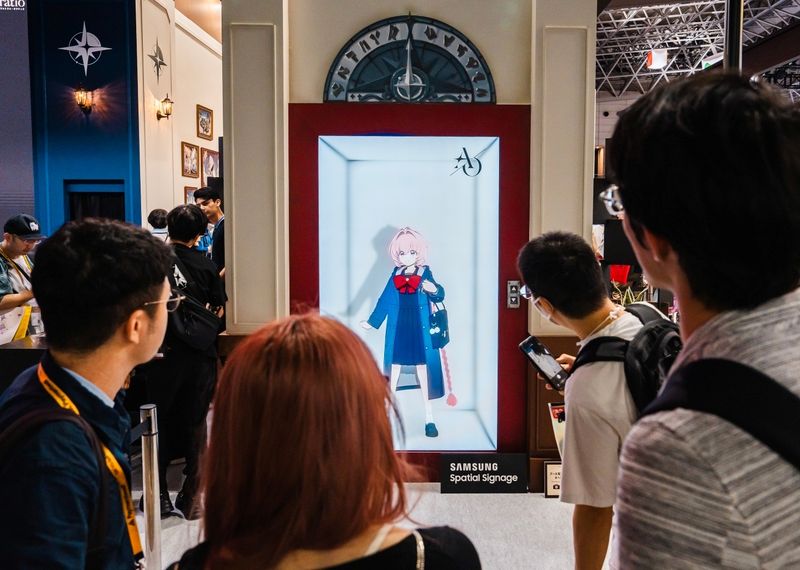
[Financial News] Samsung Electronics' glasses-free 3D display, Spatial Signage, has received favorable reviews in Japan after vividly rendering fan-favorite characters at a local game show. Interest is also growing in technology that allows fans to experience their favorite characters and other intellectual property in three dimensions, in line with oshikatsu—the Japanese culture of passionately supporting and spending on favorite characters and other interests.
Against this backdrop, analysts say Samsung Electronics' Spatial Signage is driving the evolution of Japan's retail industry by connecting character fandom culture with next-generation display technology at TGS 2026, held at Makuhari Messe in Chiba Prefecture.
■ 3D Characters Breaking Through the Screen
According to industry sources on the 20th, the Spatial Signage installed at the entrance of NCsoft's booth at the Tokyo Game Show was an 85-inch model. Its vertically oriented screen, approximately 190 cm tall—about the height of an adult—created scenes in which characters appeared to emerge right in front of visitors.When the elevator doors on the screen open, characters from NCsoft's new subculture RPG Astrae Oratio approach visitors as if a separate space exists inside the display.
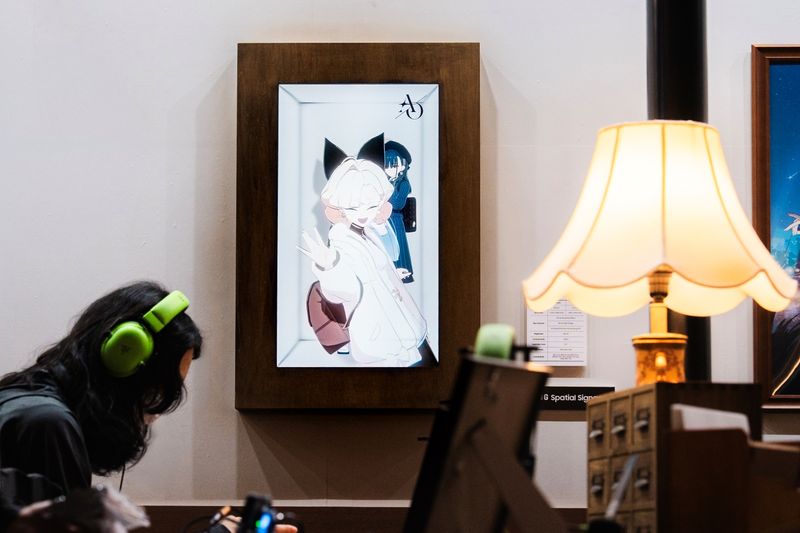
On the 32-inch Spatial Signage displays positioned along the visitor route, the game's characters appear one by one and greet visitors. As they move through the booth, visitors can appreciate the characters' expressions and movements in three dimensions, naturally becoming immersed in the game's world.
Spatial Signage is a next-generation display innovation that uses Samsung's proprietary 3D Plate technology to create the impression of an additional space inside the screen, even without dedicated 3D glasses.
An NCsoft representative explained, "We wanted visitors to naturally encounter the characters from the moment they entered the booth, rather than simply showing them the new title's world. The depth provided by Spatial Signage helped expand the graphics and visual presentation of a mobile game into a much richer offline experience."
Reports indicate that the proportion of visitors who stopped and lingered in front of the booth after passing by the Spatial Signage increased noticeably. The display's natural, deep three-dimensional effect turned the waiting line itself into a space for enjoying the content and naturally established it as a popular photo spot.
■ A Display That Also Overcomes Space Constraints
3D displays are powerful attention-grabbing devices in high-traffic retail stores, but their large, box-like structures have made it difficult to secure installation space.In Japan, the adoption of large 3D displays has been particularly constrained in major Tokyo commercial districts such as Shibuya, Shinjuku and Akihabara because of cramped store layouts and high rents.
However, Spatial Signage's slim form factor is seen as overcoming these space constraints. The 85-inch model, with its slim 52-mm profile and light 49-kg weight, can be flexibly installed as a wall-mounted display or on a stand, depending on the purpose of the space and the interior design. The 32-inch model features a 49.4-mm-thin design and an ultra-light 8.5-kg structure, making it easy to install on store shelves or along narrow customer pathways.
This allows walls and waiting areas in character specialty stores and pop-up stores to become three-dimensional experiential spaces without large structures. For fans, the technology offers a more vivid way to encounter their favorite characters while also extending customers' time in stores, making it an effective character retail media solution.
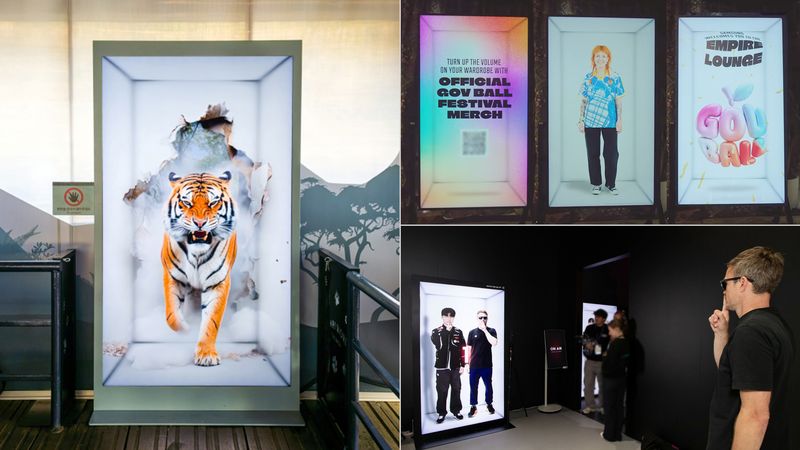
Spatial Signage is also being used extensively across the broader entertainment sector beyond games and exhibitions. Analysts say its role is expanding from a "billboard to look at" into "spatial media for experiencing and sharing."
Lee Young-min, a signage sales professional at Samsung Electronics Japan, said, "As Japan is the world's most developed market for character IP and fandom culture, Spatial Signage—which delivers deep immersion without space constraints—will become essential media for local retail and entertainment. We will expand its applications beyond game shows to the broader signage business in Japan, including pop-up stores and character specialty shops."
[email protected] Kim Hak-jae Reporter