"Worse than prison food": Japan in an uproar over 297-yen convenience store bento boxes [Japan Inside]
- Input
- 2026-09-20 08:10:00
- Updated
- 2026-09-20 08:10:00
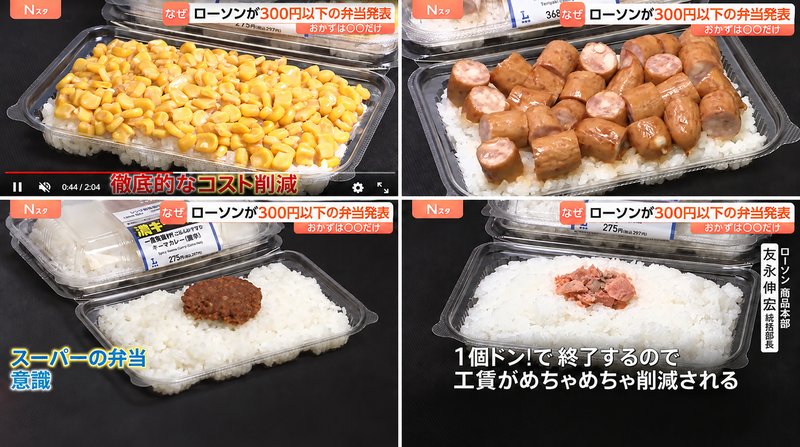
[Financial News Tokyo = Correspondent Seo Hye-jin] Only corn is piled high on top of white rice. There is no meat, eggs, or vegetables. The price is 297 yen (approximately 2,600 won). This is a new product unveiled by the Japanese convenience store chain Lawson on the 16th and set to be released on the 29th.
Another bento box features a little over a spoonful of finely crumbled salmon placed in the center of a spread of white rice. It is 'bodako,' a salty salmon popular in Akita Prefecture. There is also a product with white rice covered in teriyaki sausage. Both products will be released first on the coming 22nd.
The name itself is blatant. It is the 'Itten-toppasugi' (One-Point Concentration) bento box. By reducing the side dish to just one type, the price has been lowered by up to half compared to existing bento boxes of the same size. The salmon, corn, and keema curry bento boxes are 297 yen, and the sausage bento box is 397 yen (approximately 3,500 won).
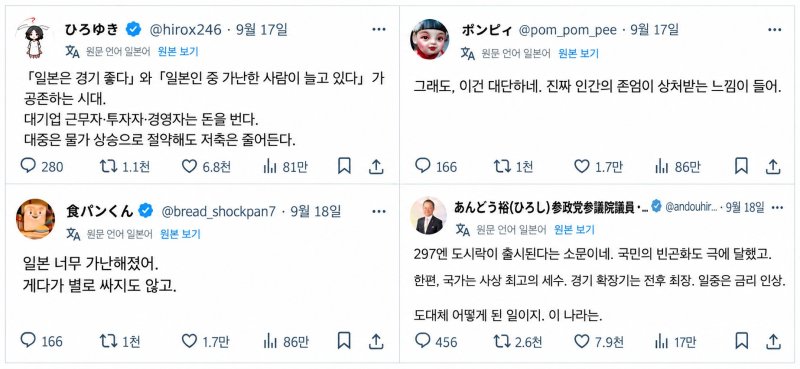
As the new product was unveiled, a debate erupted on Japanese social media surrounding "the Japan of today" rather than its taste and price.Japan has become too poor. Besides, it isn't even that cheap.The government has collected record-breaking tax revenue and the economy is booming, yet the lunch of ordinary people has become a 297-yen bento box.It seems they have given up not only human dignity but also nutrition.The last post, featuring a lunchbox topped with a spoonful of salmon, surpassed 6 million views. There were also sharp reactions, such as, "I would eat a tastier meal if I went to prison for doing something bad."
On the other hand, reactions followed such as, "Honestly, I like this," "It is better to give a large portion of one thing you like rather than haphazardly plating various side dishes," and "If I am having lunch alone, this is enough."
A single bento box costing only 297 yen faced off with diametrically opposed evaluations: one calling it a "good value product" and the other a "symbol of impoverished Japan."
Pack just one side dish and get 'half price'
The secret to the 297 yen price lies in "packing less." While standard lunch boxes are packed in batches of rice and various side dishes about ten times at the factory, this lunch box is finished with just a single item like corn or sausage. By reducing the number of side dishes, not only were material costs lowered, but the time and labor costs for cooking and packaging were also reduced. The container was also simplified.
Lawson planned this product to compete with the low-priced bento boxes found in supermarkets. As prices rise, the average purchase amount per customer at Japanese convenience stores exceeded 740 yen (approximately 6,500 won) last year. Adding just one drink to a bento box brings the total close to 1,000 yen (approximately 8,800 won). If the perception that "convenience stores are convenient but expensive" becomes entrenched, consumers will have no choice but to turn to supermarkets.
However, Lawson is not only releasing cheap products. Starting on the 21st, they will also sequentially sell premium products in the 700-yen range, such as seafood yakisoba, cold Chinese noodles topped generously with meat, and Japanese chestnut Mont Blanc.
The strategy is to capture consumers who save money on their daily lunches but open their wallets for products they like. This is known in Japan as "Merry-hari consumption," which translates to selective consumption.
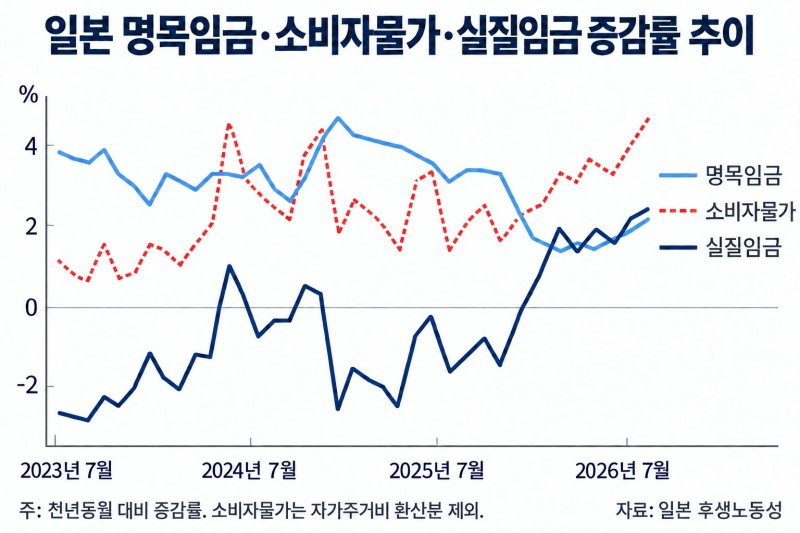
Looking solely at recent wage indicators in Japan, it appears that household finances have improved. Last July, real wages adjusted for price changes rose 2.4% year-on-year, marking the seventh consecutive month of increase. Base wages also increased by 4.1%.
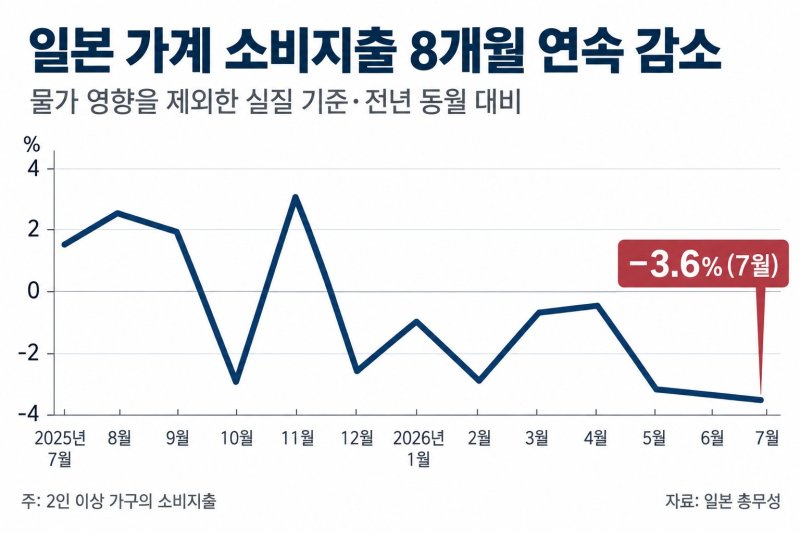
However, consumers are reluctant to open their wallets. In the same month, real consumption expenditure for households with two or more people fell by 3.6%, marking the eighth consecutive month of decline. Real income for working households also decreased by 3.8%. Given that the rise in real wages was largely driven by increased summer bonuses, it is difficult to say that overall living conditions have improved.
In particular, spending on groceries decreased by 1.3% in real terms. Spending on prepared foods, such as lunch boxes and side dishes, fell by 3.2%. The Ministry of Internal Affairs and Communications explained that this was due to consumers buying cheaper products or reducing their purchases altogether. This is also the reason why Lawson introduced the 297-yen lunch box.
The burden of inflation remains significant. Last month, overall consumer prices rose 1.9% year-on-year, falling below the Bank of Japan's (BOJ) target of 2%. However, this was the result of government subsidies for gasoline, electricity, and gas lowering the inflation rate by 0.62 percentage points. It is analyzed that without these subsidies, the inflation rate would have exceeded 2%.
Last month, corporate prices rose by 7.6%, and import prices jumped by more than 20%. It is highly likely that the increased cost burden on companies will be reflected in consumer prices with a time lag. Major Japanese food companies are raising prices on 4,923 items this month, the highest number so far this year. Prices for another 3,033 items will rise next month as well.
While raw material, logistics, and packaging costs are soaring, consumers find it difficult to afford higher prices. Companies have no choice but to reduce the quantity or composition of their products instead of raising prices. This is the background behind the disappearance of side dishes from the 297-yen lunchbox.
Even with a raise, I save money on lunch first.
It appears unlikely that the burden of food costs on Japanese consumers will significantly decrease in the future. Although the Bank of Japan raised its policy interest rate from 1% to 1.25% on the 18th, the value of the yen actually fell to the 158 yen range against the dollar at one point. If the yen's weakness continues, the prices of food and raw materials imported by Japan will inevitably rise.
Major Japanese food companies are raising prices on 4,923 items this month, the highest number so far this year. Prices for another 3,033 items will rise next month as well.
Companies find it difficult to arbitrarily raise prices even when raw material, logistics, and packaging costs increase. This is because consumers are looking for cheaper products or reducing their purchases altogether.
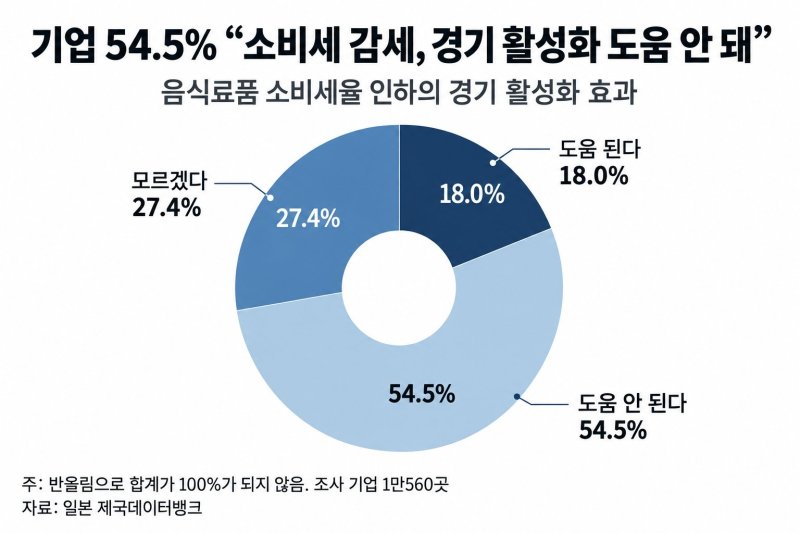
The Japanese government plans to ease the burden on households by lowering the food consumption tax rate from the current 8% to 1% for two years starting next April. However, there is still more than half a year until the tax cut goes into effect, and rising cost pressures are already being reflected in food prices. With consumer spending declining for eight consecutive months despite rising real wages, consumers are starting by saving on lunch costs.
It cannot be concluded that Japan has become poor based solely on Lawson's 297-yen bento box. It is a practical product that lowers the price by reducing the number of side dishes to one, and it also suits the tastes of consumers who want to pick and eat only the foods they like.
However, it is worth noting that many Japanese people who encountered this bento box thought of 'poverty' and 'decline' before the taste. The controversy surrounding the 297-yen bento box fully reflects the hardships faced by ordinary Japanese people due to prolonged high inflation.
[email protected] Seo Hye-jin Reporter