Kim Yo Jong Pushes Back, Saying, "While Remaining Silent on South Korea's Nuclear Submarines"; International Atomic Energy Agency (IAEA) Resolution Rejecting North Korea's Nuclear-Weapon-State Status Passes with 103 Votes
- Input
- 2026-09-19 09:11:46
- Updated
- 2026-09-19 09:11:46

At the IAEA's 70th General Conference in Vienna, Austria, on the 17th (local time), members adopted a resolution on the "Implementation of the NPT Safeguards Agreement between the IAEA and North Korea." The resolution stated that North Korea cannot hold nuclear-weapon-state status under the Treaty on the Non-Proliferation of Nuclear Weapons (NPT). It passed with 103 votes in favor, 6 against and 14 abstentions. Russia and China voted against it.
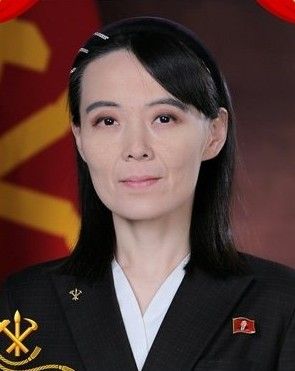
Kim Yo Jong, director of the Workers' Party of Korea's General Affairs Department and a key channel for North Korea's external communications, referred in a statement on the 19th to North Korea's withdrawal from the IAEA in June 1994. She claimed, "The nuclear activities of the Democratic People's Republic of Korea are not subject to the agency's jurisdiction, and the agency has neither the authority nor the qualification to interfere in them."
She also condemned the agency, saying, "The International Atomic Energy Agency has been unable to utter a single word of criticism about the blatant nuclear proliferation by the United States, a depositary state of the Treaty on the Non-Proliferation of Nuclear Weapons, or South Korea's troubling plan, as a non-nuclear state, to acquire nuclear-powered submarines, while maintaining silence throughout." She added, "This is yet another representative case that lays bare the agency's extreme duplicity and bias."
A Foreign Ministry spokesperson also issued a statement through the Korean Central News Agency (KCNA) that day, dismissing the IAEA General Conference resolution as a 'fabricated announcement by hostile forces.'
The spokesperson stated, "Our nuclear-weapon-state status does not require recognition by the United States, the West or the IAEA. It is secured by our actual nuclear deterrent and has been irreversibly and permanently entrenched under the state's supreme law."
[email protected] Kim Kyung-soo Reporter