Multibillion-Won Masterpieces Vanish, Leaving the Art Market a 'Photo-Op Hotspot'... K-Art Market at a Crossroads [Park Ji-hyun's Art World]
- Input
- 2026-09-19 01:55:51
- Updated
- 2026-09-19 01:55:51
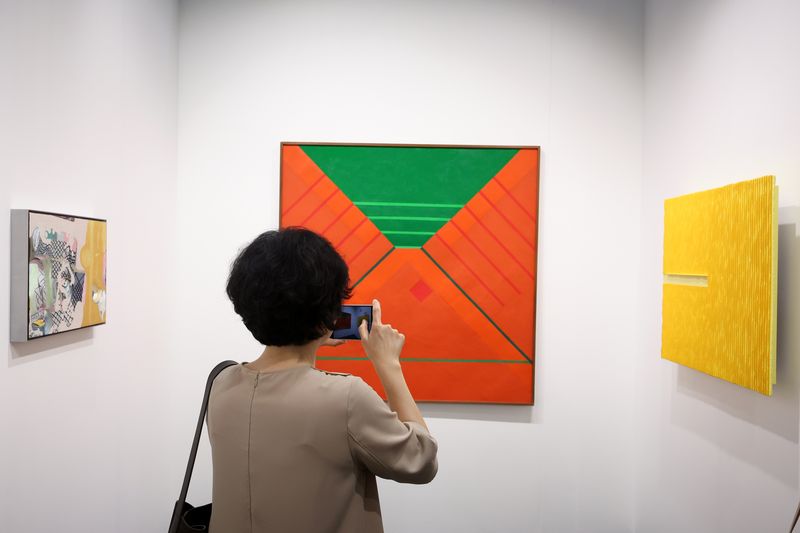
[Financial News] "Amid economic uncertainty, the true test of the market (Test of the market) has arrived."
According to people in the art world on the 19th, global art media outlet Artnet recently assessed the state of the global art market in September and posed this pointed question. The harsh test that drew attention from overseas media was none other than Seoul. With global galleries turning their attention to the city, the bills left by the fifth editions of Frieze Seoul 2026 and KIAF 2026 are complex. Behind the glittering rhetoric, the market's unvarnished reality was cold. High-end masterpieces worth tens of billions of won disappeared from view, while rational, value-conscious buying replaced the blind rush to be first through the doors. Seen through the lens of foreign media, South Korea's art market has enjoyed the sweet fruits of popularization while still remaining trapped behind the barrier to the global top 1% and facing the enormous dilemma of separating the fairs' physical venues next year.
■ Mega-Galleries Play It Safe... Top Price Plunges from 6.2 Billion Won to 2.2 Billion Won
Last year, mega-gallery Hauser & Wirth popped champagne after selling a work by Mark Bradford for about 6.2 billion won. This year, however, the top-price title went to Yoo Youngkuk's 1971 painting, presented by Kukje Gallery and priced at 2.2 billion to 2.5 billion won. The 4.8-billion-won George Condo masterpiece ambitiously brought in by Hauser & Wirth ultimately failed to find a buyer.
Grace Min-kyung Park, an art adviser based primarily in Seoul, told Artnet in an interview that "uncertainty deals a greater blow to the art market than an economic recession itself." Major overseas galleries, including Gagosian, which had agonized over joining Frieze until the last minute, also put relatively low- and mid-priced works that were easier to handle, such as small works by Damien Hirst, front and center instead of ultra-expensive pieces. This has led to analysis that global capital played it safe after taking a conservative view of the Korean market's purchasing power, despite the favorable effect of a stronger won resulting from lower exchange rates.
■ Art Fairs Become 'Photo-Op Attractions'... The Trap of Popularization
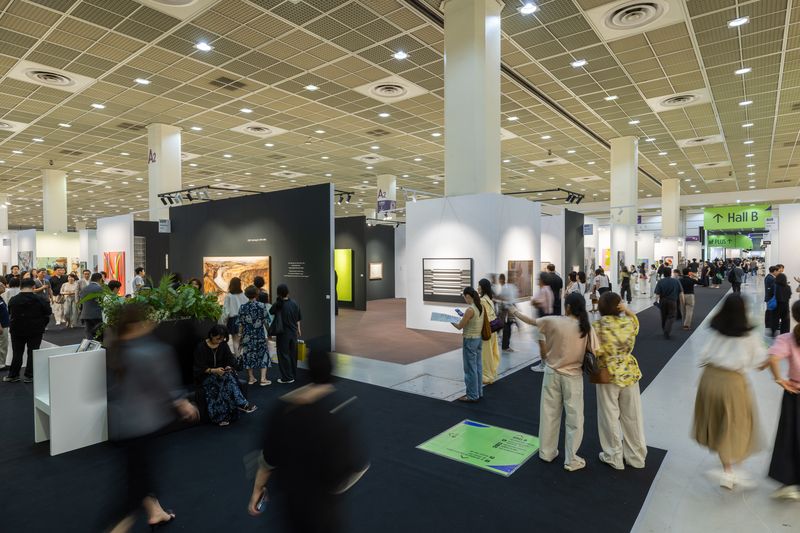
Although purchasing power was revised downward, the number of people simply coming to look surged dramatically. Frieze Seoul lowered geographical and economic barriers early on through its online Viewing Room system, while COEX's spatial efficiency—allowing visitors to move between Frieze and KIAF by escalator with a single combined ticket—maximized public attendance.
Some in the art world, however, have raised concerns about the blind spots of this explosive popularization. One art critic pointed out, "The trend of visiting fairs as if making pilgrimages to famous social-media hotspots, then leaving behind standardized photo-op shots and fragmentary reviews, is intensifying." The event maintained its outward appearance as more than 40 domestic galleries filled the vacancies left by overseas galleries. Yet some voices offered the painful self-criticism that it could "end up as a cultural spectacle consumed superficially, like a large pop-up store or theme park, rather than a place for serious collecting."
■ The 'DDP Dilemma' and the Remaining Challenge of the 1%
The biggest crisis arrives next year. Because of the redevelopment of COEX, Frieze will move to Dongdaemun Design Plaza (DDP), while KIAF will remain at COEX. The synergy created by connecting the two fairs with a single escalator will be severed by the physical distance between Gangnam and Gangbuk.
Frieze says that spatial constraints at DDP will require it to sharply reduce its current 130 or so booths to approximately 55 next year. Only around 10 spots are expected to be available for Korean galleries that went all out to secure a place at Frieze this year. KIAF, too, faces a desperate struggle for survival as it seeks to shed the stigma of riding on Frieze's coattails and prove that it can draw visitors on its own.
South Korea's economic share of the global art market remains only around 1%. Beyond self-congratulatory claims that it has become a hub for Asia, the country urgently needs to build a long-term ecosystem—not merely generate a short-lived buzz through one-off events—in order to break through the 1% barrier.
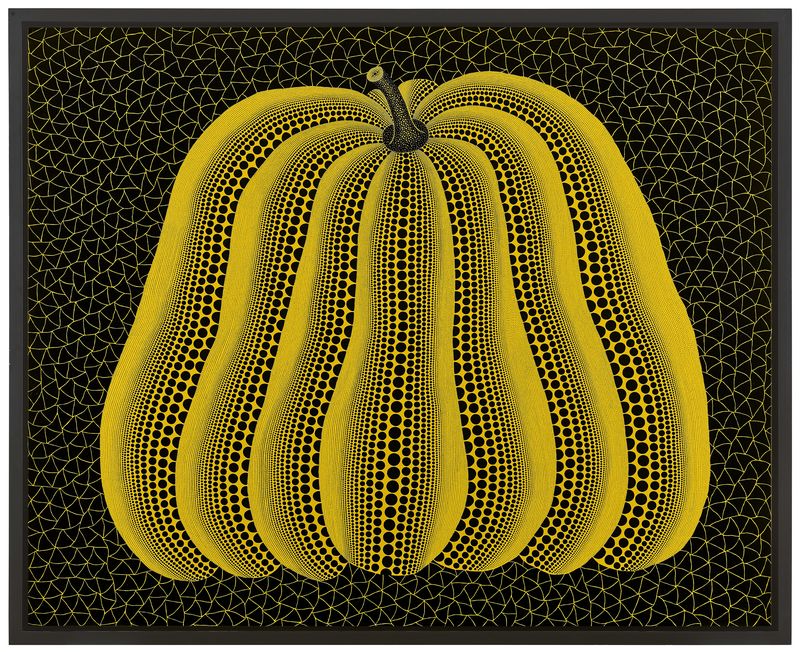
Meanwhile, the Korean art world's attention has turned to Sotheby's and Christie's fall auctions, which will be held one after another in Hong Kong from the 28th to the 30th of this month. The two leading global auction houses have both placed major works by the recently deceased master Yayoi Kusama front and center. Sotheby's is offering 'Infinity Nets' and the 1989 work 'Pumpkin,' while Christie's is presenting the 2011 work 'A-Pumpkin (YHP),' with top estimates in the billions of won, to gauge the real purchasing power of the Asian market. In particular, if Kusama's works rebound in price at these Hong Kong auctions, they could directly warm investment sentiment in the domestic auction market, where the recent fall in exchange rates has created greater buying power, as well as among collectors. Martin Cid Magazine described the auctions as "an occasion that tests the depth and scope the market can absorb, going beyond a simple commercial event." With the cold reality exposed after the bubble has deflated, it is time to watch closely for the butterfly effect of this major capital test in Hong Kong and see what warmth it might bring back to the Asian market.
[email protected] Park Ji-hyun Reporter