Yen Plunges Despite Rate Hike... Will Japan's 3,469 Trillion Won in Funds Leave the U.S.? [Japan Inside]
- Input
- 2026-09-19 07:00:00
- Updated
- 2026-09-19 07:00:00
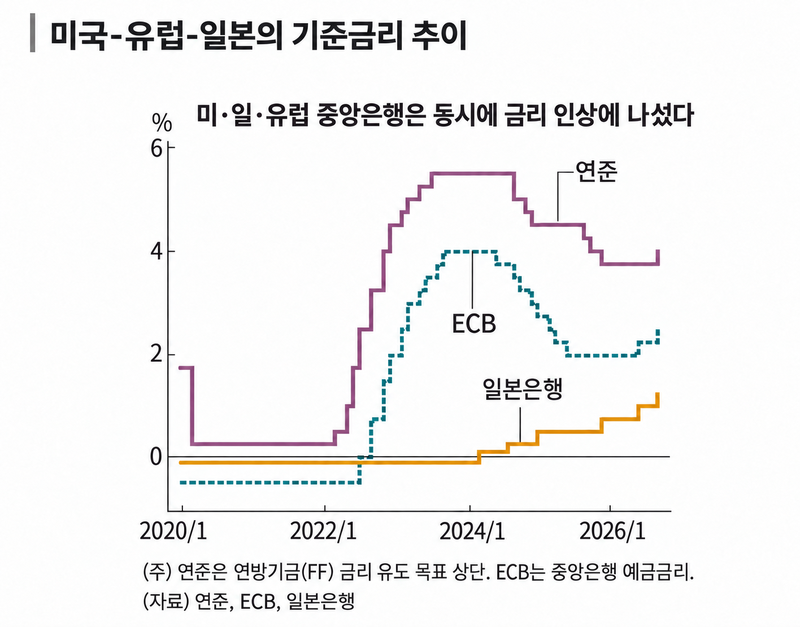
【Financial News, Tokyo—Correspondent Hye-jin Seo】The Bank of Japan (BOJ) raised its policy rate from 1% to 1.25% on an annual basis on the 18th, an increase of 0.25 percentage points. It was the first additional hike in three months since June and the highest rate in 31 years, since 1995.
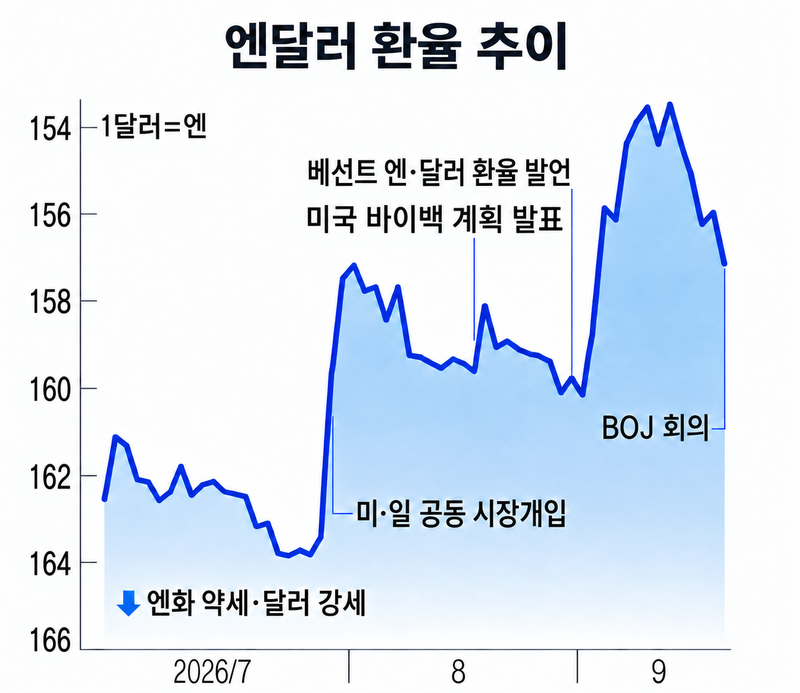
However, the yen fell to ¥158 per dollar. The hike had already been priced into the market, while two of the nine policy board members voted against it and the BOJ provided no indication of when or how quickly it would raise rates next. As a result, the move was widely interpreted as a "dovish rate hike."
This single rate increase was not enough to lift the yen, but a series of additional hikes could reduce the relative appeal of U.S. assets over the medium to long term. For now, yen weakness continues to support the yen carry trade. Over a longer horizon, however, the foundation of ultralow interest rates that pushed Japanese funds overseas is beginning to crumble.
Rate Hike Fails to Rescue Yen, Creating a New Headache for Bessent
The result came as a surprise to U.S. Treasury Secretary Scott Bessent, who had urged Japan to clearly outline its rate-hike path to ease yen weakness and had even led efforts for joint U.S.-Japan market intervention.
U.S. financial publication Barron's described the yen's sharp fall despite the BOJ's rate hike as "Bessent's new headache." The yen weakened further, contrary to expectations that higher Japanese rates would narrow the U.S.-Japan interest-rate gap and strengthen the yen.
Frantisek Taborsky, ING Group's FX and fixed-income strategist, forecast that if international oil prices remain high and the Federal Reserve (Fed) raises rates again as early as October, the dollar-yen exchange rate could return to ¥160 per dollar within weeks.
If the yen approaches ¥160 again, the possibility of further market intervention by U.S. and Japanese foreign-exchange authorities will also increase. As of the end of July, Japan held about $1.1 trillion in U.S. Treasury securities, making it the world's largest holder, equivalent to approximately 1,526.58 trillion won. If Japan sells U.S. Treasuries to obtain the dollars needed to buy yen, bond prices would fall and yields would rise.
That is why Bessent said Japan should consider borrowing dollars from the Fed rather than selling U.S. Treasuries. Japan would not necessarily sell Treasuries whenever it intervenes in the market, however. It could first use dollar deposits or short-term assets, making Treasury sales just one of the potential risks.
Yen Carry Trade Incentives Remain for Now
As long as yen weakness and a wide U.S.-Japan interest-rate gap persist, incentives for the yen carry trade will remain. In this trade, investors borrow yen at low interest rates, convert it into dollars, and invest in higher-yielding overseas stocks and bonds.
Barron's reported, citing data from the Bank for International Settlements (BIS), that the related funds are estimated at $1.3 trillion to $1.7 trillion, or approximately 1,804.14 trillion won to 2,359.26 trillion won, with a substantial portion believed to have flowed into the U.S. stock market.
The yen's weakness despite this rate hike indicates that the incentives for the carry trade have not disappeared for now. If yen weakness and the interest-rate gap persist, they could provide short-term liquidity to global financial markets, including those in the United States.
The risk emerges when the yen suddenly strengthens. If the BOJ raises rates faster than expected or the yen surges following foreign-exchange market intervention, investors would have to sell overseas stocks and bonds to repay the yen they borrowed. Such simultaneous unwinding could further fuel yen appreciation and increase volatility in global financial markets.
The U.S. Looks Less Attractive Over the Long Term
Separate from the yen carry trade, the long-term funds of Japanese pension funds, insurers, and banks also have a significant impact on the U.S. market.
According to The Wall Street Journal, Japanese investors hold approximately $2.5 trillion in financial assets such as U.S. stocks and bonds, equivalent to about 3,469.5 trillion won. That represents half of Japan's total overseas portfolio assets, which amount to approximately $5 trillion, or about 6,939 trillion won.
Japan maintained zero or negative interest rates for an extended period. Institutional investors, which found it difficult to generate sufficient returns from Japanese government bonds, expanded their investment destinations to U.S. Treasuries and overseas stocks.
Japan's public pension, the Government Pension Investment Fund (GPIF), is a prime example. GPIF previously invested about 60% of its total assets in Japanese government bonds, but its domestic bond allocation has now fallen to about 25%. According to The Wall Street Journal, GPIF holds approximately $240 billion in U.S. Treasuries, equivalent to about 333.072 trillion won, while NVIDIA, Apple, and Microsoft are among its major overseas equity investments.
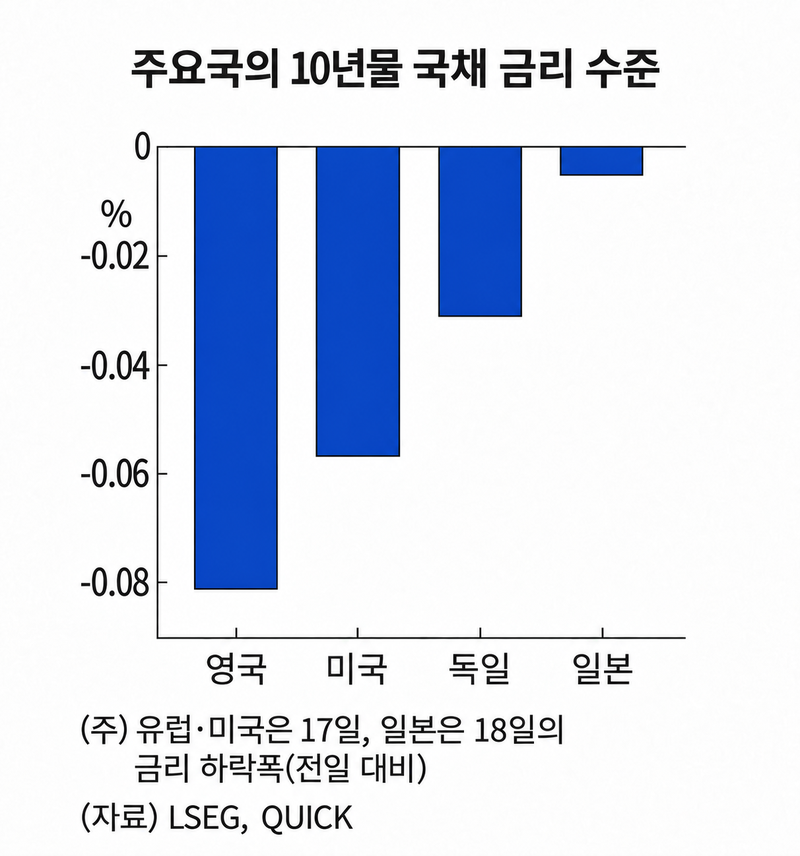
However, as Japanese interest rates rise, the foundation of this flow of funds is changing. The yield on 10-year U.S. Treasuries has recently risen to 5%, while the yield on 10-year Japanese government bonds has climbed to around 3%. Although U.S. rates remain higher, investors can now expect better returns in Japan than in the past, which could reduce the relative advantage of U.S. assets.
The Wall Street Journal analyzed that the United States could become a "less attractive market" for Japanese investors. Rory Green, head of Asia and emerging-markets research at TS Lombard, said, "The supertanker that is the yen is turning around."
New Investment Is Likely to Slow Before Funds Are Repatriated
That does not mean Japan's $2.5 trillion in U.S. assets will move immediately. The yen carry trade can be unwound quickly when exchange rates change sharply, but the asset allocation of pension funds and insurers is adjusted over a much longer period.
Norihiro Yamaguchi, senior Japan economist at Oxford Economics, told The Wall Street Journal, "At this point, we do not expect large-scale funds to flow back from U.S. Treasuries to Japan."
That is because U.S. interest rates remain higher than those in Japan, while the expected returns from U.S. technology stocks are also attractive. It is unclear how high the BOJ will ultimately raise rates. Rather than selling large amounts of U.S. assets immediately, Japanese investors may first slow the pace of new investment, analysts say.
Ultimately, the yen's direction is expected to determine fund flows in the short term, while the BOJ's terminal rate and the U.S.-Japan interest-rate differential will matter over the medium to long term. If yen weakness continues, incentives for the yen carry trade may remain. However, as additional BOJ rate hikes accumulate, Japanese institutional investors could slow their purchases of U.S. assets.
The BOJ's 1.25% rate hike is not a signal that Japanese money is beginning to leave the U.S. market. However, the assumption that Japanese funds, which have steadily purchased U.S. stocks and bonds, will continue flowing in at the same pace has begun to change.
[email protected] Hye-jin Seo Reporter