Maximum Prices Frozen Despite Oil Price Surge... Refiners Vow to Cooperate as Policy Implementers
- Input
- 2026-09-18 18:00:00
- Updated
- 2026-09-18 18:00:00
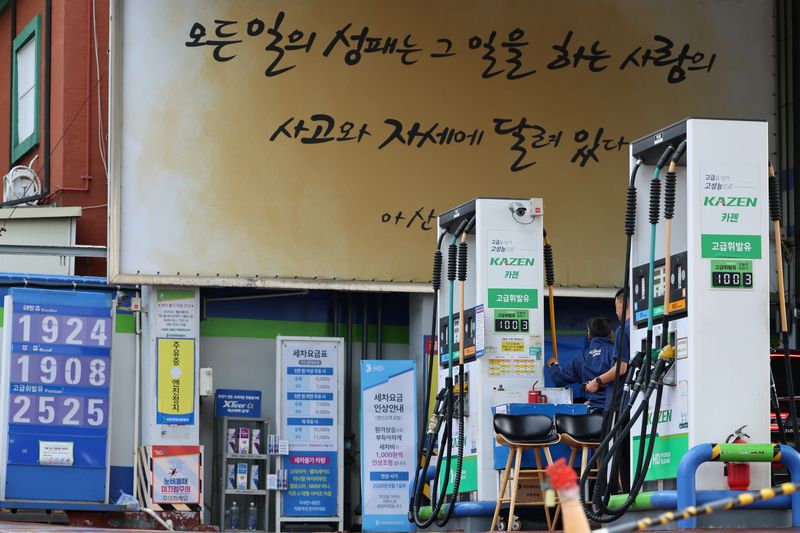
[Financial News] Despite another surge in international oil prices, the government has frozen the maximum prices for petroleum products at their current levels. For four weeks beginning on the 19th, the price ceilings for products supplied by refiners will remain at 1,784 won per liter for gasoline, 1,773 won for diesel and 1,380 won for kerosene. With international crude oil and product prices rising, refiners may face limits on passing higher costs through to their prices. The industry says it will cooperate as the entity responsible for implementing the government’s policy.
The Ministry of Trade and Industry said on the 18th that the 10th petroleum price cap had been set at the same levels as the ninth: 1,784 won per liter for gasoline, 1,773 won for diesel and 1,380 won for kerosene. The 10th price cap will take effect at midnight on the 19th and remain in place for four weeks.
The cap applies to the prices at which refiners supply petroleum products, not to consumer prices at gas stations.
International oil prices are rising rapidly again. According to the Ministry of Industry, Dubai crude rose 38.7%, from an average of $92.3 per barrel in the fourth week of August to $128.0 on the 16th of this month. Over the same period, international gasoline prices climbed from $112 to $145, while diesel prices rose from $154 to $201.
The government decided to maintain the cap after considering inflation and exchange rates alongside the rise in international oil prices. Consumer price inflation fell from 3.2% in June to 2.8% in July before rising again to 3.1% in August. By contrast, the won-dollar exchange rate fell by about 10%, from 1,505 won in the fourth week of March—when the second price cap designation raised the ceiling by 210 won per liter—to 1,358 won in the third week of September.
Domestic crude oil supplies are stabilizing. According to the Korea Petroleum Association and Korea National Oil Corporation (KNOC), crude oil imports, which had fallen to about 64.5 million barrels in April, recovered to 93.18 million barrels in July, up 9.8% from the same month a year earlier. Retail sales at gas stations also declined from the second week of March through August, after the price cap system was introduced, falling 2.1% for gasoline and 8.4% for diesel from the same period a year earlier.
However, some observers warn that maintaining the ceiling on refiners’ supply prices while international crude oil and product prices are rising could make it difficult to reflect higher costs in domestic supply prices, increasing the industry’s burden. The government therefore plans to operate the price cap system flexibly while monitoring developments in the Middle East, international oil prices and domestic petroleum consumption. An industry official said, "This is a government policy, and since the industry is the actual implementing party, we will cooperate fully."
[email protected] Kim Mi-hee Reporter