75 Trillion Won in Market Capitalization Evaporated in Three Months... What Should We Do About This National Champion?
- Input
- 2026-09-20 15:13:48
- Updated
- 2026-09-20 15:13:48
According to the Korea Exchange (KRX) on the 20th, the KRX Automobile Index fell 7.61% from the 1st to the 18th. Amid the fluctuating KOSPI, weakness in the automotive sector is becoming more pronounced. Among finished vehicle manufacturers, Hyundai Motor Company has dropped 9.54% and Kia Corporation 6.95% this month. On the 18th, their closing prices were 365,000 won and 121,900 won, respectively.
In particular, Hyundai Motor Company's stock price has been cut in half compared with its peak last June. The decline from the intraday high of 783,000 won on June 1 to the closing price on the 18th reached 53.38%. After falling to 495,000 won at the end of June and 388,000 won at the end of July, the stock rebounded to the 400,000-won range at the end of August, but fell below the 400,000-won mark again this month. As a result, the market capitalization, which stood at 153.5683 trillion won on June 1, decreased by 51.33% to 74.7366 trillion won on the 18th. The decrease in market capitalization this month alone amounts to 7.8832 trillion won.
Among auto parts and tire stocks, there was a surge of stocks that experienced larger declines than finished vehicle manufacturers. Hyundai Mobis fell 16.43% this month, and Nexen Tire Corporation dropped 14.33%. Hyundai WIA and AH30+ declined by 9.50% and 9.01%, respectively. SL Corporation also fell by 6.02%. This indicates a simultaneous downturn affecting not only auto parts suppliers, which are impacted by finished vehicle sales and production, but also tire manufacturers.
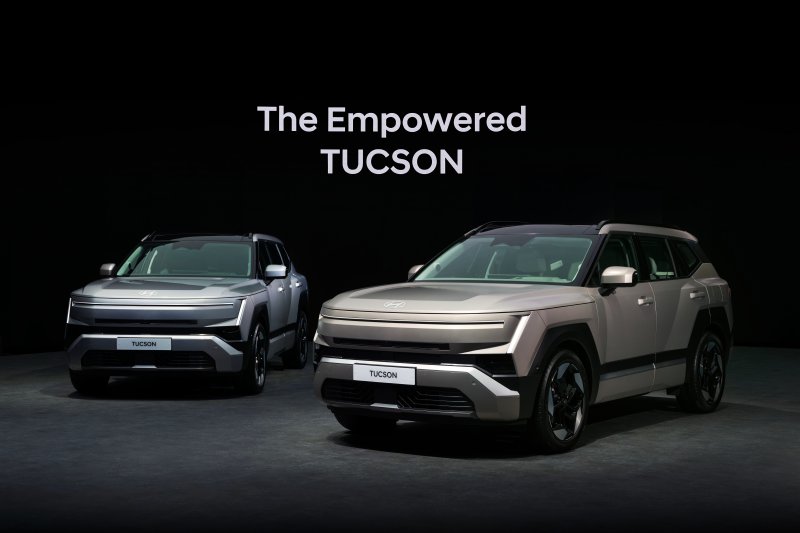
External conditions surrounding automobile stocks are challenging. As the won-dollar exchange rate rapidly fell to the mid-1,300-won range this month, concerns regarding the profitability of automakers with a high proportion of exports have intensified. A strong won reduces the won-denominated value of dollar-denominated revenue. Furthermore, earnings uncertainty has grown due to a combination of factors, including interest rate hikes in major countries, cost burdens from tariffs on automobiles in the United States, and production disruptions caused by strikes.
The possibility of intensified competition with Chinese automakers is also a concern. This is because if the United States lowers market entry barriers, Chinese companies, leveraging their price competitiveness, could intensify their offensive in the United States market. Currently, the United States has effectively blocked the entry of Chinese automakers by imposing tariffs of over 100% on Chinese-made vehicles. However, ahead of the recent U.S.-China summit, the possibility of market opening has increased as the U.S. government has expressed a favorable stance regarding the local production of Chinese automobiles.
The securities industry has also been lowering its target prices for Hyundai Motor Company's stock. Since the beginning of this month, three securities firms—MERITZ SECURITIES CO., LTD., Samsung Securities Co., Ltd., and LS Securities Co., Ltd.—have lowered their target prices for Hyundai Motor Company, and the one-month average target price, which once neared 900,000 won, has now fallen to 667,222 won. Esther Yim, a researcher at Samsung Securities Co., Ltd., analyzed, "As the won has strengthened for the first time in three years, mobility companies were not prepared for the appreciation of the won," adding, "In an era of high interest rates (the U.S. 10-year Treasury yield at 4.8%), the automotive industry has low investment appeal, with demand growth rates of 1–2% and operating profit margins of 4%."
[email protected] Ju Won-gyu Reporter