Medical Students' Lawsuit Seeking Cancellation of Quota Increase Dismissed for Third Time: "No Practical Benefit"
- Input
- 2026-09-18 18:10:43
- Updated
- 2026-09-18 18:10:43
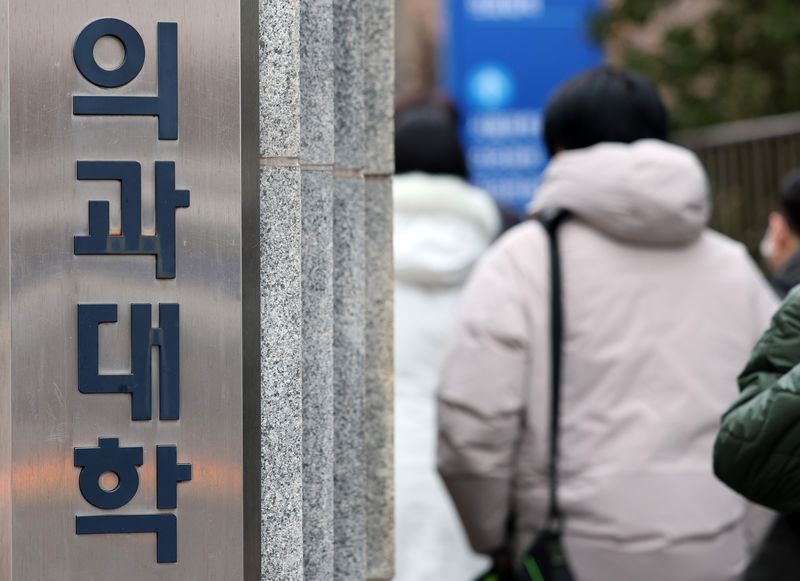
[Financial News] A lawsuit filed by medical students seeking to cancel the measure increasing medical school admissions quotas, which was pursued under the former Yoon Suk Yeol administration, was dismissed by the court.
The Seoul Administrative Court's Administrative Division 3, headed by Presiding Judge Ho Seong-ho, dismissed all claims on the 18th in a lawsuit filed by 4,058 students from medical schools and graduate schools of medicine against the Minister of Health and Welfare and the Minister of Education, seeking to cancel the increase in admissions quotas and related measures.
The court did not specifically explain the grounds for the dismissal during the hearing. Each side was ordered to bear its own legal costs.
However, the court did not rule on the legality of the former administration's quota-increase measure itself. A dismissal on procedural grounds ends a lawsuit or claim without reaching the merits when it is inadmissible or fails to meet the required conditions.
In February 2024, the Yoon Suk Yeol administration pursued a plan to increase medical school admissions quotas nationwide by 2,000 places. The quotas were set to rise by more than 50%, from 3,058 to 5,058.
On March 20 of the same year, the Ministry of Education notified universities of the quota allocations for each medical school nationwide. Starting in April of that year, 13,057 students from 40 medical schools and graduate schools of medicine nationwide filed lawsuits seeking to cancel the quota-increase measure. The students were divided into groups of roughly 4,000, resulting in a total of three administrative lawsuits.
The other two cases, excluding the one dismissed that day, had already been dismissed at the first-trial level in June. The medical students appealed, but withdrew their appeals last month, leaving the rulings final.
According to the ruling, the court at the time held that the Ministry of Health and Welfare's announcement of the quota increase "merely publicized an administrative agency's internal decision-making externally and cannot be viewed as affecting the rights or obligations of the public."
In the previous dismissal, the court also determined that there was no practical benefit in canceling the Ministry of Education's decisions allocating quotas to individual universities. The 2025 admissions process had already been completed, and the decision took into account that the quota for the 2026 academic year had returned to the previous level of 3,058 as the situation escalated amid the medical students' and resident doctors' strike. The court found that even if the allocation decision made in March 2024 were canceled, it would be difficult to restore the admissions process, which had already ended, to its previous state.
The Supreme Court of Korea had also previously declined to accept a case seeking a stay of execution to temporarily suspend the effect of the medical school quota increase. Although it found that the medical students had standing to seek a stay, it ruled that the impact on the public welfare would be greater. A lawsuit on the merits filed by medical school professors was dismissed because the professors lacked standing to seek cancellation of the Ministry of Education's decisions allocating quotas to individual universities.
[email protected] Lee Chang-hoon Reporter