Kim Chi-wan, Director of Jeju National University's Tamna Culture Research Institute: "Jeju's 'Qumda' as a Solution for Global Coexistence" [fn Interview]
- Input
- 2026-09-18 15:08:29
- Updated
- 2026-09-18 15:08:29
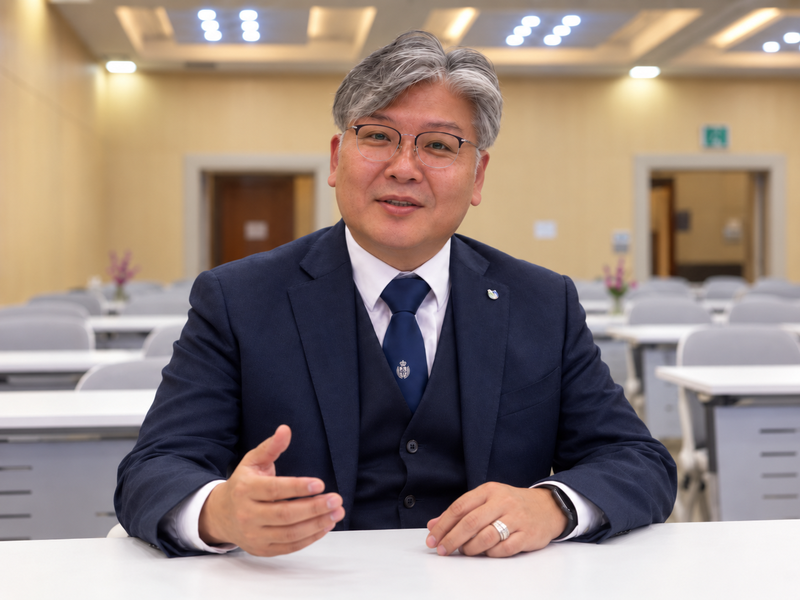
[Financial News, Jeju — Reporter Jung Yong-bok] "It will begin in Jeju, but it will not remain there. Islands are not spaces of isolation but spaces of connection. They can become places where new ways of thinking begin, rather than places defined by scarcity."
When asked on the 18th at the Ara Convention Hall of JNU where Humanities Korea 3.0 (HK3.0) Qumda Humanities was headed, Kim Chi-wan, director of the Tamna Culture Research Institute at JNU, repeatedly returned to the answer: coexistence.
The vision is to develop the experience created in Jeju into a humanities field capable of addressing global problems in which refugees and migration, language and ecology, and humans and nature come into conflict, rather than leaving it as knowledge that explains Jeju alone.
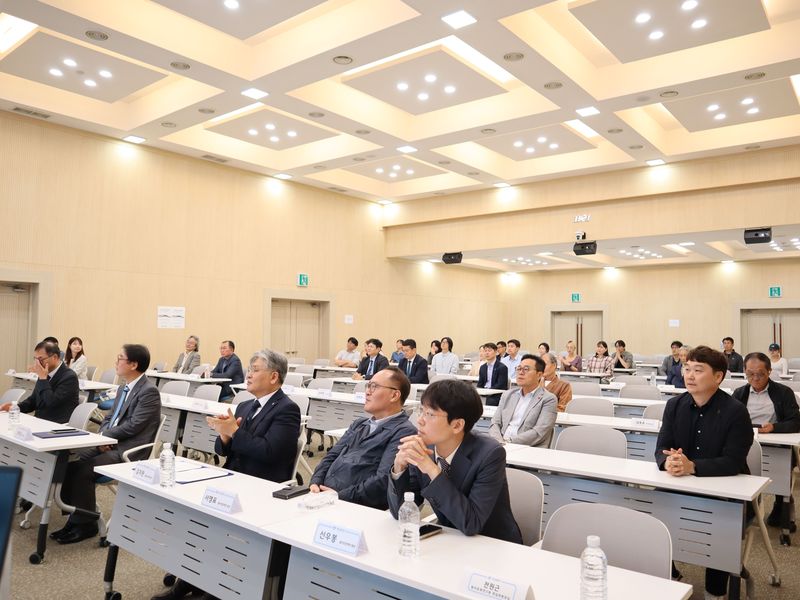
That day, the Tamna Culture Research Institute announced the official launch of the first HK3.0 research hub project selected since JNU was founded. The national research funding allocated over the next seven years amounts to 4.8 billion won. Yet what Kim repeatedly emphasized in the interview was not the project budget or the number of papers. It was how research would actually function within the local community.
"We must not stop at writing good papers inside the laboratory. We need to identify the problems faced by local communities together and create a structure in which research findings return to policy, education and the lives of citizens."
The research agenda is titled 'Qumda Humanities in an Era of Global Anomie: Toward Archipelagic Lives and Hybrid Ways of Knowing.' The research group uses Qumda as its English name.
Kim explained Qumda as a concept rooted in Jeju's accumulated experiences of inclusion and hospitality. It began with a word in the Jeju language meaning 'to embrace,' but does not remain a way of presenting the cultural virtues of a particular region.
The starting point was the Tamna Culture Research Institute's study 'Jeju Island's History and Refugees Through Qumda,' conducted since 2019. The concerns that led researchers to study hospitality and exclusion, migration and settlement in response to the arrival of Yemeni refugees in Jeju will expand under HK3.0 to include language communication and communities, the ecological crisis, and the relationship between humans and nature.
Kim emphasized, "Qumda must not be a preserved piece of traditional culture. It must be a present-day practice that heals local wounds and creates new relationships," adding, "The policy humanities we envision begin precisely at that point."
The 'global anomie' Kim refers to is a state in which the norms, relationships and solidarity that supported society are being shaken. His assessment is that different crises are overlapping all at once, including the digital and artificial intelligence (AI) transition, the climate crisis, growing inequality and migration, and the breakdown of communication across languages.
When asked why the solution should be sought in Jeju, he said that "Jeju is already a space where global changes are revealed in concentrated form."
Tourism development and the influx of outside capital, an increase in migrants, the weakening of the Jeju language and the reorganization of communities are all unfolding simultaneously. Long-term residents and migrants, development and conservation, standard language and regional language, and hospitality and exclusion meet in the same space.
Kim also spoke of reversing the direction of existing regional studies. Rather than analyzing Jeju through theories developed elsewhere, he intends to turn experiences and knowledge discovered in Jeju into new theories and policy models.
He said, "Jeju must not be merely an object of research," adding, "Theories should be created here, and models tested here should be usable in other regions as well." In other words, Jeju should become a 'theory production site' for the humanities.
The point Kim emphasized most strongly in the interview was 'the field.' At its center is the Qumda Living Lab.
Kim said, "We will establish the Qumda Living Lab, which moves beyond the ivory tower and into the field," adding, "Research and practice should not move separately. I want to create a virtuous cycle in which research findings reach the field and problems discovered there return to the research process."
The living lab moves away from a model in which researchers define the problems and deliver the results to residents. Residents and migrants, researchers, government agencies and field practitioners will work together to identify local issues and test solutions.
The Qumda Humanities Studio will bring local issues into the public forum and design policy ideas. The Qumda Academy will disseminate research findings among citizens and in educational settings, while also operating educational programs for immigrants. The Qumda Knowledge Hub will make accumulated research materials available to the public.
This is also why Kim uses the term 'policy humanities.' He emphasized, "I do not want to divide roles by saying that policymakers alone create policy while humanities scholars merely interpret it," adding, "We need to study problems occurring in local communities and go all the way to connecting the results to public discussion and policy."
The research organization was not designed to seek answers within a single discipline. Instead, it uses a collaborative TIE research structure connecting Transhistorical (T), Interlingual Communication (I) and Social Intersection (E).
The Transhistorical team compares the Jeju 4·3 Uprising, migration and settlement, colonial experiences, maritime exchanges and the movement of Jeju people in Japan with the histories of other islands, including Taiwan and Okinawa.
The Interlingual Communication team examines through field data how the Jeju language, standard language and migrants' languages meet and conflict in everyday spaces. It analyzes forms of address and honorifics, code-switching and spontaneous speech to identify both how linguistic differences lead to exclusion and the possibilities for mutual understanding.
The Social Intersection team studies the climate crisis, inequality, changes in communities and care, seeking institutions and coexistence governance that enable different people to live together.
Kim said, "It is not enough for historians to study only history and linguists only language, then combine the results at the end," adding, "We need to view the same problems from different perspectives and continually exchange data and interpretations."
This is also why Kim emphasizes the 'archipelago.' Rather than viewing a single island as an isolated space, he understands islands as a network of relationships that are separated from one another yet connected through history, movement, memory and language. Comparative research will expand across the Asia-Pacific islands, including Okinawa and Taiwan as well as Indonesia, the Philippines and Hawaii.
The Tamna Culture Research Institute has already established research networks with Osaka Metropolitan University, the University of the Ryukyus and Ritsumeikan University in Japan; Academia Sinica and National Sun Yat-sen University in Taiwan; and the University of Queensland (UQ) in Australia.
"It is important to create a structure in which people who study the islands of Asia and the Pacific come to Jeju, examine materials, discuss them together and produce research findings. We want to become a research hub that connects distant islands academically."
Over the project period, the research group aims to produce 104 papers in domestic specialized academic journals, six papers in internationally prestigious academic journals and 12 volumes in the Qumda Humanities series. It also plans to hold 18 domestic and international academic conferences and 44 colloquia.
The research foundation accumulated by the Tamna Culture Research Institute in recent years is also substantial. It has held 44 domestic and international academic conferences and published 17 volumes of specialized scholarly books and series. Its research funding record totals 2.789 billion won.
However, when asked about the most important achievement seven years from now, Kim returned to the story of people.
"Papers and books are important, but ultimately, people must remain."
The institute will establish a growth system for the next generation of scholars, extending from undergraduates through master's and doctoral programs to postdoctoral researchers and early-career scholars. Students will be given the opportunity to experience the entire research process, including data collection, field research, data construction, academic conferences, paper writing and living labs.
He emphasized, "Young people and future generations must not remain on the margins of research," adding, "We need to create pathways that allow them to conduct research and participate in the field directly while growing into independent researchers."
The institute plans to expand and reorganize the Tamna Culture Research Institute into the Tamna Academy and launch the Qumda Humanities Society, with the aim of maintaining its research personnel and networks even after government support ends.
Kim said that what happens after the seven-year, 4.8 billion won project matters more than either number itself.
"A single seven-year project will not complete a world-class research institution. But we must at least lay the foundation for moving in that direction. I hope the idea called Qumda, which began in Jeju, will extend to other islands and regions and remain as knowledge that helps different beings find ways to live together."
As the interview came to an end, he returned to words from the launch declaration.
"An island is not a space of isolation but a space of relationships. Expanding a territory of inclusion rather than exclusion is why Qumda Humanities, which began in Jeju, must speak of global coexistence."
[email protected] Jung Yong-bok Reporter