Kim Min-seok: "We can't pretend differences in political lines don't exist ... It's important not to escalate internal party conflict"
- Input
- 2026-09-18 14:39:47
- Updated
- 2026-09-18 14:39:47
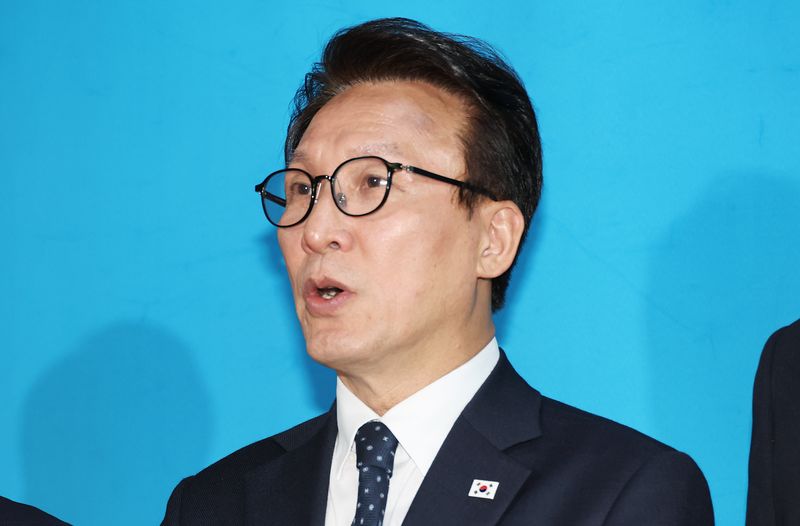
[Financial News] Kim Min-seok, leader of the Democratic Party of Korea, said on June 18 regarding unity within the party, "Politicians naturally have differences in their political lines. We cannot ignore those differences or pretend they do not exist, but it depends on how wisely and peacefully we manage them."
Kim made the remarks during an appearance that afternoon on Blue Seoul, the Democratic Party of Korea's Seoul City Party branch YouTube channel. "It isn't enough to simply say every day, 'Let's do well together,' and these differences are not entirely without reason or basis," he said.
There are always debates, conflicts and a certain amount of tension within a party, Kim said. "Without them, an organization is dead. They have recently surfaced in a concentrated way around the national convention, but various issues had been building up even before that."
He emphasized, "We know that, so it is important to make an effort not to further escalate the conflict or tension. Ultimately, the key in politics is to work through relationships while getting things done."
He added, "It would be nice if the president's approval rating rose by 20% tomorrow, but that is unlikely. Still, we earnestly hope the overall trend has begun to rebound. Step by step, we must address policy and conduct, resolve political issues, and bring the party together with great humility and sincerity."
The remarks are understood to have been aimed at conflicts within the party, including differences in political lines with former leader Jung Cheong-rae that emerged during the national convention, as well as recent disputes with the party's hard-line faction and the Rebuilding Korea Party (RKP) over the nomination of Kim Ji-yong as the first nominee for chief of the Serious Crime Investigation Agency.
Kim also described the low level of support among young people as "a matter of whether the party lives or dies." He said it depends on "whether the party can talk with younger people again and rebuild a close relationship with them."
Kim said, "Even when the president's approval rating was at 60% to 70%, support among people in their 20s and 30s differed by 20%. If we fail to solve this problem, our party has no future. Five years from now, our party will no longer win any election or receive the people's support."
He added, "I suggested that we not use the term 'party headquarters' for the provisionally named youth party office, but call it 'Hub 1, 2 and 3.' It could refer to people in their teens, 20s and 30s, or to the day the December 3 martial law declaration was brought under control." He said, "We initially considered Gwanghwamun, but it is highly likely that the location will be moved to Yeonnam-dong or around Hongik University Station, where younger people can come and go freely."
[email protected] Kim Kyung-min Reporter