Jeju National University Launches Its First HK3.0 Program, Seeking Solutions for Coexistence Through “Qumda” With KRW 4.8 Billion in Funding
- Input
- 2026-09-18 14:39:13
- Updated
- 2026-09-18 14:39:13
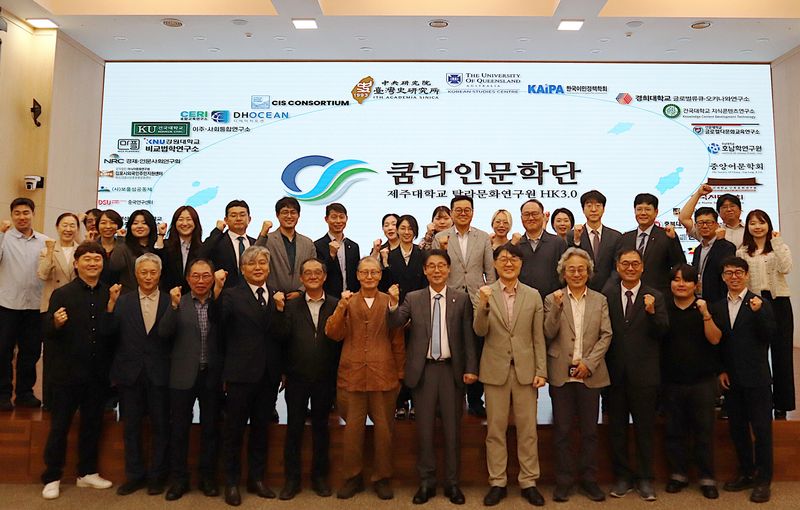
【Financial News, Jeju—Jung Yong-bok】 Jeju National University has officially launched its first Humanities Korea 3.0 (HK3.0) program since its founding. A seven-year humanities research initiative will seek to expand Jeju's accumulated experience of inclusion and hospitality into solutions for global conflicts involving refugees, migration, language and ecological crises. It will also connect research findings with local communities and public policy.
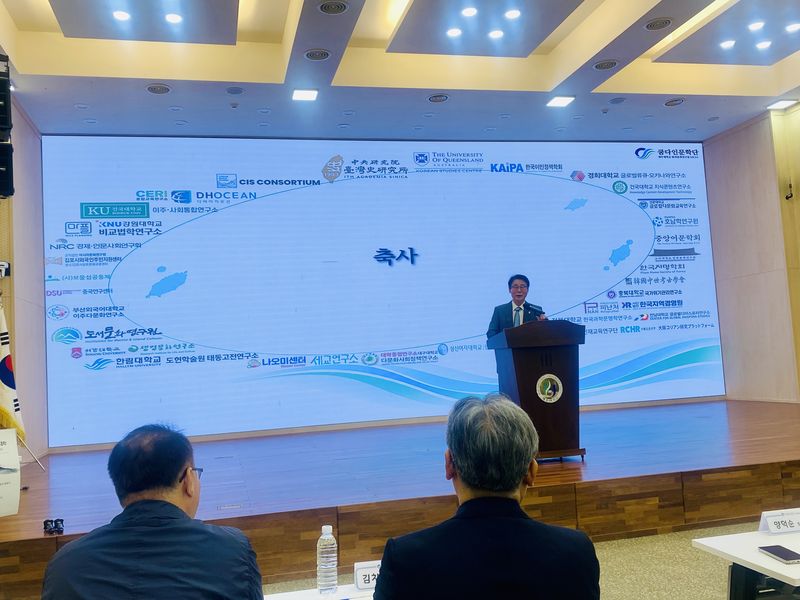
According to JNU on the 18th, the Tamna Cultural Research Institute held a launch ceremony for the Qumda Humanities Research Group that morning in the main conference room of Ara Convention Hall and officially began the HK3.0 research program.
HK3.0 is a program through which the Ministry of Education and the National Research Foundation of Korea (NRF) provide long-term support to university research institutes, fostering humanities research hubs as well as specialized researchers and the next generation of scholars. The Tamna Cultural Research Institute at JNU was finally selected in August for the research hub program and will receive a total of KRW 4.8 billion in state funding over the next seven years.
This is the first time JNU has been selected for a Humanities Korea program since its founding. While the announcement of the selection last month signaled the start of the long-term research program, the launch ceremony clarified the research group's structure, practical objectives and directions for cooperation with local communities and international partners.
The central agenda is “Qumda Humanities in an Age of Global Anomie: Toward Archipelagic Life and Hybrid Knowledge.”
Qumda is a research concept derived from a Jeju word meaning “to embrace.” The vision is to develop Jeju's accumulated experience of inclusion and hospitality, shaped through migration, settlement, conflict and coexistence, into policy-oriented humanities that can be applied to solving problems in modern society.
The “global anomie” on which the research group focuses refers to a situation in which existing norms and social relationships are destabilized. The research begins by seeking the conditions under which different groups can coexist amid a reality shaped by intertwined problems, including spatiotemporal instability, infrastructure disparities, ecological crises and the breakdown of linguistic communication.
The research connects two perspectives: “archipelagic life” and “hybrid knowledge.” Archipelagic life focuses on how individual islands remain separate yet connected through networks of relationships. Hybrid knowledge explores the knowledge and potential for mutual understanding formed when different histories and cultures meet.
The project will go beyond regional studies focused solely on Jeju and expand into comparative research on islands across the Asia-Pacific. Using research networks established in Okinawa, Osaka, Taiwan and Australia, the researchers will conduct joint studies on migration, colonialism, maritime exchange, local languages, care and coexistence.
The research foundation built by the Tamna Cultural Research Institute over the years also serves as the basis for the long-term program. The institute has hosted a total of 44 academic conferences—35 domestic and nine international—and established joint research networks with research institutions across the Asia-Pacific, including those in Japan, Taiwan and Australia.
The research system consists of three teams: Transhistorical Studies, Language Communication and Social Intersection.
The Transhistorical Studies team will compare the memories of migration, colonialism and maritime exchange across Asia-Pacific islands. The Language Communication team will analyze the linguistic practices of Jeju speakers, migrants and diasporas to study linguistic citizenship and the possibility of coexistence. The Social Intersection team will theorize the causes of crises and the conditions for coexistence based on island ontology and the ethics of care.
The seven-year research plan is also divided into stages. Beginning with a diagnosis of global anomie in the first year, the project will successively examine the limitations of a single order, the emergence of the oppressed majority, practices and interventions, and debate and deliberation. It will then establish alternatives through Qumda humanities before applying them to local communities in the final stage.
Another feature of the program is its commitment not to confine research results to academic papers and conferences.
The Tamna Cultural Research Institute plans to establish the Qumda Living Lab, where residents and researchers will address local issues together, and operate the Qumda Humanities Studio, Qumda Academy and Qumda Knowledge Hub. The aim is to create a cycle in which local problems are identified and research findings are connected to policy proposals, education and cultural programs.
Cultivating the next generation of scholars is another major pillar. Undergraduate students will be offered introductory regional studies courses, reading groups, living labs and research project internships. Graduate students will receive support for joint publications, presentations at domestic and international academic conferences, and exchanges with research institutions. The participation of early-career researchers in research, education and policymaking will also be expanded gradually.
Yang Deok-soon, president of JNU, said, “The research agenda put forward by the Tamna Cultural Research Institute is timely in an era of deepening conflict, division and hatred,” adding, “At the university level, we will support a research foundation for resolving the complex conflicts facing humanity today, based on the spirit of Qumda, which embraced the wounds of the Jeju 4·3 Incident and the Korean War.”
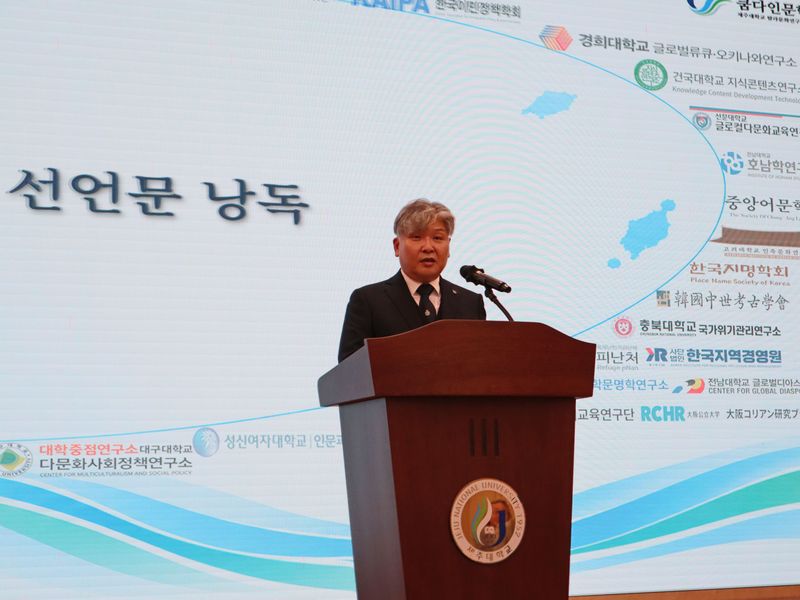
In his launch declaration, Kim Chi-wan, director of the Tamna Cultural Research Institute at JNU, identified practical research conducted with local communities to find solutions, research alliances linking regional, national and academic boundaries, and the cultivation of the next generation of scholars encompassing young people and future generations as key priorities.
Kim said, “We will start in Jeju, but we will not remain in Jeju,” adding, “We will pursue research that makes islands spaces of relationships and places where new ways of thinking begin.”
After being selected for the Humanities and Social Sciences Research Institute Support Program in 2019, the Tamna Cultural Research Institute has studied hospitality and exclusion in Jeju, refugees and migration, and coexistence under the theme “Jeju Island's History and Refugees Through Qumda.” Through HK3.0, it will expand its research to migrants and language, ecological crises, care and changes in communities, while building an academic cooperation platform connecting Asia-Pacific island regions with Jeju as its starting point.
[email protected] Jung Yong-bok Reporter