'Making Pharmaceutical Molecular Structures Easier to Synthesize': Synthesis Control Method Developed
- Input
- 2026-09-20 12:00:00
- Updated
- 2026-09-20 12:00:00
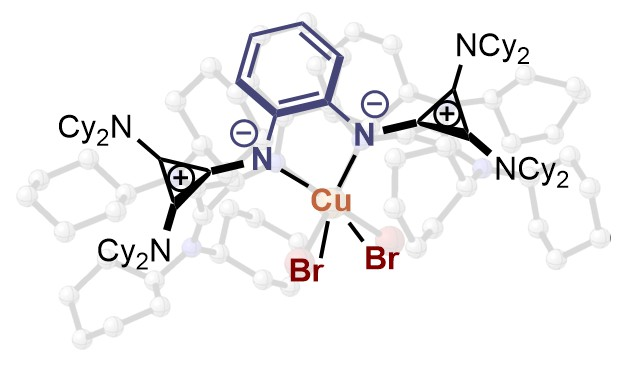
Korea Advanced Institute of Science and Technology (KAIST) announced on the 20th that a research team led by Sarah Yunmi Lee, a professor in the Department of Chemistry, has developed a method to effectively control the process by which a copper catalyst generates radicals and returns to its original state, using a 'ligand' that attaches to a metal catalyst to control its properties.
The research team used an organic molecule called cyclopropenimine (CPI) as a ligand. The CPI ligand attaches to the copper catalyst and regulates the oxidation-reduction process, which involves the exchange of electrons, thereby ensuring a smooth continuation of the radical generation process and the subsequent restoration of the catalyst to its original state.
The research team compared various types of ligands and found that while some ligands were highly effective at generating radicals, they produced almost no final products. In contrast, the CPI ligand ensured a balanced progression between radical generation and catalyst regeneration. If the catalyst is considered a repetitive "worker," the CPI ligand acted as an "assistant," enabling the worker to continue with the next task without stopping after a single session.
As a result, they succeeded in synthesizing '3,3-disubstituted oxindole,' an important cyclic molecular structure utilized in pharmaceuticals and bioactive substances, with high yield. In particular, substances with attached bromine reacted efficiently even at room temperature. They also succeeded in reacting substances with strong carbon-chlorine bonds that are not easily broken.
This study is evaluated as demonstrating the potential to design more efficient catalysts and expand into new reactions by going beyond merely increasing the reactivity of specific steps and controlling the balance of the entire catalytic cycle, including radical generation and catalyst regeneration. Utilizing these principles increases the possibility of using materials that were previously difficult to utilize due to their poor reaction rates as new synthetic materials. It is expected that this will be applied to the development of new synthesis methods for producing complex molecules, such as pharmaceuticals and bioactive substances, under milder and more efficient conditions.
This study was published online on August 3 in the Journal of the American Chemical Society (JACS), an international academic journal published by the American Chemical Society (ACS).
[email protected] Yeon Ji-an Reporter