Saudi Arabia's oil exports plummet in August and September... down more than 70% year-to-date
- Input
- 2026-09-18 11:22:22
- Updated
- 2026-09-18 11:22:22
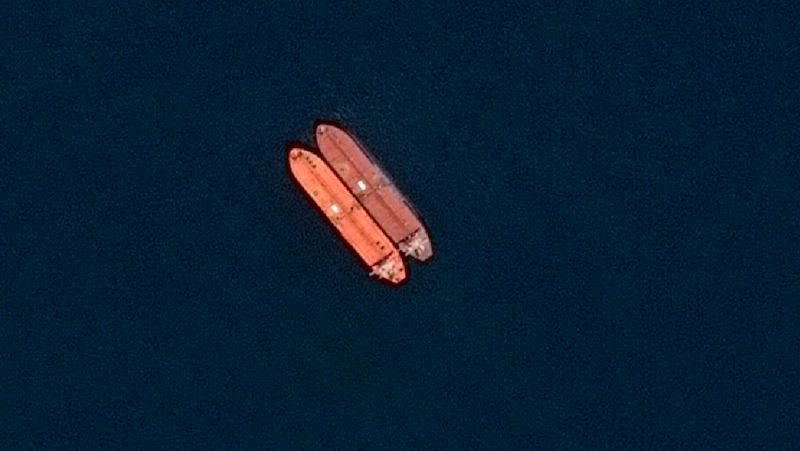
[Financial News] Saudi Arabia, which has been struggling with exports due to recent clashes with Iran and pro-Iranian Houthi rebels, saw its oil exports plummet by nearly 70% between August and September.
Qatar's pan-Arab media outlet Al Jazeera reported on the 17th (local time) that Saudi Arabia's (hereinafter Saudi) oil shipments averaged 2.3 million barrels per day last August. Shipments between September 1 and 15 averaged 2.1 million barrels per day. Al Jazeera noted that Saudi Arabia's oil shipment volume was 7.5 million barrels per day in both January and February of this year, just before the start of the war with Iran, and analyzed that shipments in August and September decreased by more than 70% compared with that period.
Saudi Arabia, the leader of the Organization of the Petroleum Exporting Countries (OPEC) and the world's largest oil exporter as of last year, is facing difficulties in exports and production as the war with Iran intensifies. Bordered by the Red Sea to the west and the Persian Gulf to the east, Saudi Arabia extracted oil from oil fields concentrated in the east before the Iran war in February and exported it to Asia via the nearby Strait of Hormuz. However, the Strait of Hormuz became dangerous again after the United States and Iran clashed again last July.
Consequently, Saudi Arabia used a pipeline running east to west to send oil extracted from the eastern oil fields to the port of Yanbu on the western Red Sea coast. The oil departing from Yanbu headed south through the Red Sea, passed through the Bab el-Mandeb Strait, and headed toward Asia, but this route also became dangerous when Yemen's pro-Iranian Houthi rebels declared a blockade of the Bab el-Mandeb Strait last July.
After capturing Mocha, an important port city on the Red Sea, on the 10th of this month, the Houthi rebels completely seized control of the entire Bab el-Mandeb Strait on the 11th. Saudi Arabia also announced that it had temporarily suspended operations of its east-west oil pipeline after drones launched by pro-Iranian militias in Iraq attacked the pipeline on the 10th.
According to the U.S. Energy Information Administration (EIA), as of 2023, China was the largest purchaser of Saudi oil, accounting for 22% of the total volume. South Korea was second with 14%, followed by Japan (13%), India (10%), and the United States (5%).
Al Jazeera pointed out that, to overcome its export problems, Saudi Arabia reduces buyers' cost burden by delivering oil directly to a point outside the Strait of Hormuz and transshipping it at sea. It also explained that some vessels secretly navigate the Strait of Hormuz without ship identification systems.
[email protected] Park Jong-won Reporter